The death of Eric Otieno should have been impossible. The 19-year-old boda boda rider from Mathare was arrested on Saturday, August 2, 2026, and detained at Muthaiga police station on charges of "preparing to commit a felony".
He entered that station in good health. When his family came to collect him the following night, they found a young man wailing in pain, his body battered, telling them that officers had beaten him in the cell. His brother, Emmanuel Sakis, confirmed that Eric explicitly identified his arresting officers as the source of his injuries.
He was rushed to Mama Margaret Uhuru Hospital, where doctors pronounced him dead on arrival. A postmortem examination found physical marks and signs of psychological trauma consistent with the account he had given his family before he died.
A young man went into a police station alive and came out a corpse. That is not detention. That is execution.
What makes this case unbearable is not merely its horror but its familiarity. Eric Otieno is not the first. He is not even the most recent in a pattern that has begun to feel less like a series of isolated incidents and more like a system.
In June 2025, Albert Ojwang', a 31-year-old teacher and blogger, was arrested in Homa Bay, transferred to Nairobi Central police station, and beaten to death in a cell. The initial police statement claimed he had struck his own head against a wall.
An autopsy by five pathologists proved that was a lie. He died from blunt force head injuries, neck compression and multiple soft tissue injuries. Six suspects, including three police officers, now face murder charges in a trial that has been adjourned to December 2026.
One might have thought that the Ojwang' case would have served as a watershed. That the sight of police officers in the dock, the exposure of deleted CCTV footage, the humiliation of an Inspector General forced to retract a public lie, would have sent a message through every station in the country that the era of unaccountable custody deaths was over. One would have been wrong.
In December 2025, Jack Leon Matoke, a 23-year-old boda boda rider, died at Kawangware police post barely four hours after his arrest. Police claimed he hanged himself with his T-shirt, yet his family found his body still dressed in full riding gear, with no T-shirt produced.
In February 2026, Francis Mukura, 25, was arrested at Kagunduini market in Murang'a and found dead 11 hours later. Police claimed suicide, but an autopsy revealed he had been tortured before his neck was compressed with a rope. In May 2026, Benard Omae was arrested by officers from the Rapid Deployment Unit in Nairobi and found dead at Kibra police station after being allegedly subjected to a severe physical assault.
In October 2025, Erick Kiptanui Koros, a 40-year-old boda boda rider in Solai, was arrested over a Sh8,000 debt and found dead in his cell 30 minutes later. Police claimed suicide by hanging.
The Kenya Human Rights Commission reported nearly 160 cases of suspected extrajudicial killings and enforced disappearances across Kenya in 2025 alone. IPOA chairperson then, Ahmed Issack Hassan, told Parliament that at least 20 people had died in police custody in the four months preceding his testimony.
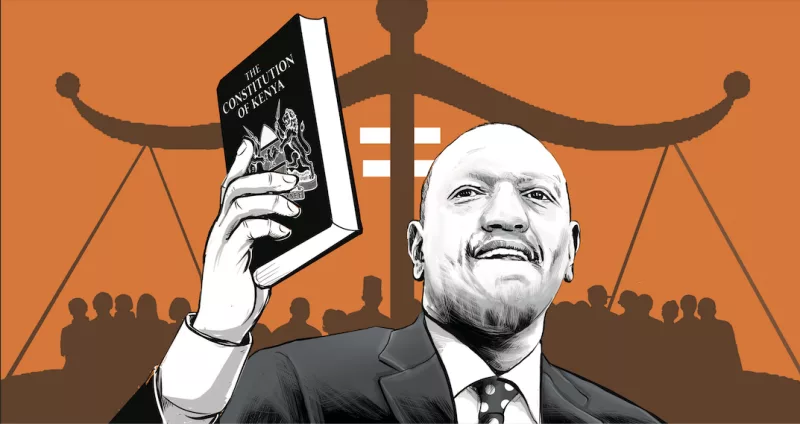
This is not a rogue operation. This is a culture. And the silence of the Kenya Kwanza administration in the face of it is not neutrality. It is complicity. President William Ruto described Albert Ojwang's death as "heart-breaking and unacceptable" and ordered a swift, transparent investigation.
That was more than a year ago. Since then, the bodies have continued to arrive at morgues across the country, and the statements from State House have grown quieter.
A government that pledged to end police brutality when it came to power in 2022 has presided over a system in which young men enter police stations and leave in body bags, and in which the official explanation is so routinely "suicide" that the word has lost its meaning in the context of police custody.
Interior Cabinet Secretary Kipchumba Murkomen, who has been vocal about goonism and political violence, has been conspicuously silent about the deaths of citizens in the very cells his docket oversees. That silence is not an oversight. It is a choice.
The constitution is explicit. Article 29 prohibits torture and cruel, inhuman or degrading treatment. The National Police Service Act places a duty of care on every officer for every person in custody. The Independent Policing Oversight Authority exists precisely to investigate these cases.
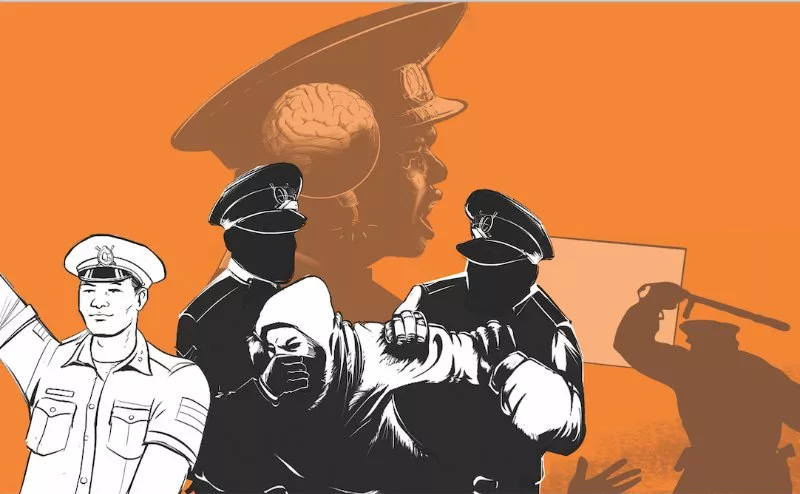
Yet IPOA is under-resourced, overburdened and routinely ignored by the very institutions it is meant to oversee. The result is a system in which officers believe, with considerable evidence to support the belief, that they can beat a man to death in a cell, claim he hanged himself, delete the CCTV footage and walk away.
Kenyans must condemn these heinous acts with the same moral clarity they bring to every other violation of human dignity. They must demand that the police force operates by the book, that every death in custody triggers an independent investigation and that every officer involved faces the full force of the law.
Not interdiction. Not transfer. Not quiet retirement. Prosecution, conviction and imprisonment. Because a country where the police station has become a killing field is not a country governed by law. It is a country governed by fear, and fear dressed in a uniform is still tyranny.