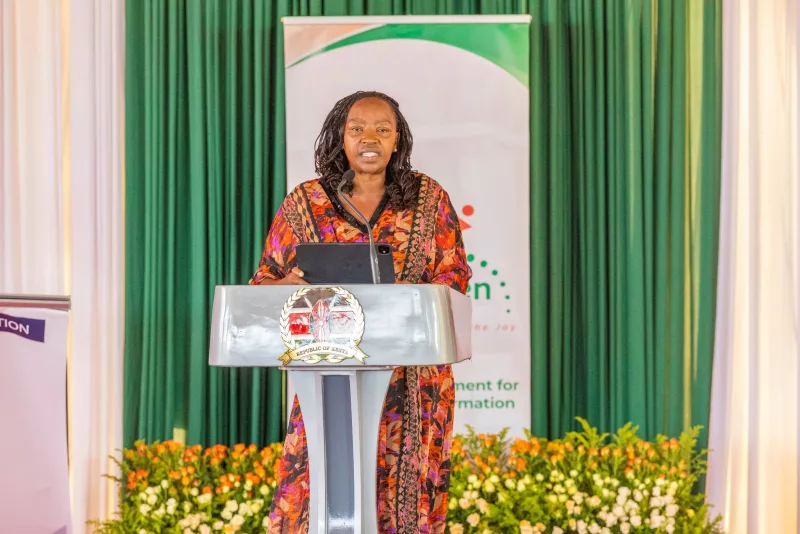
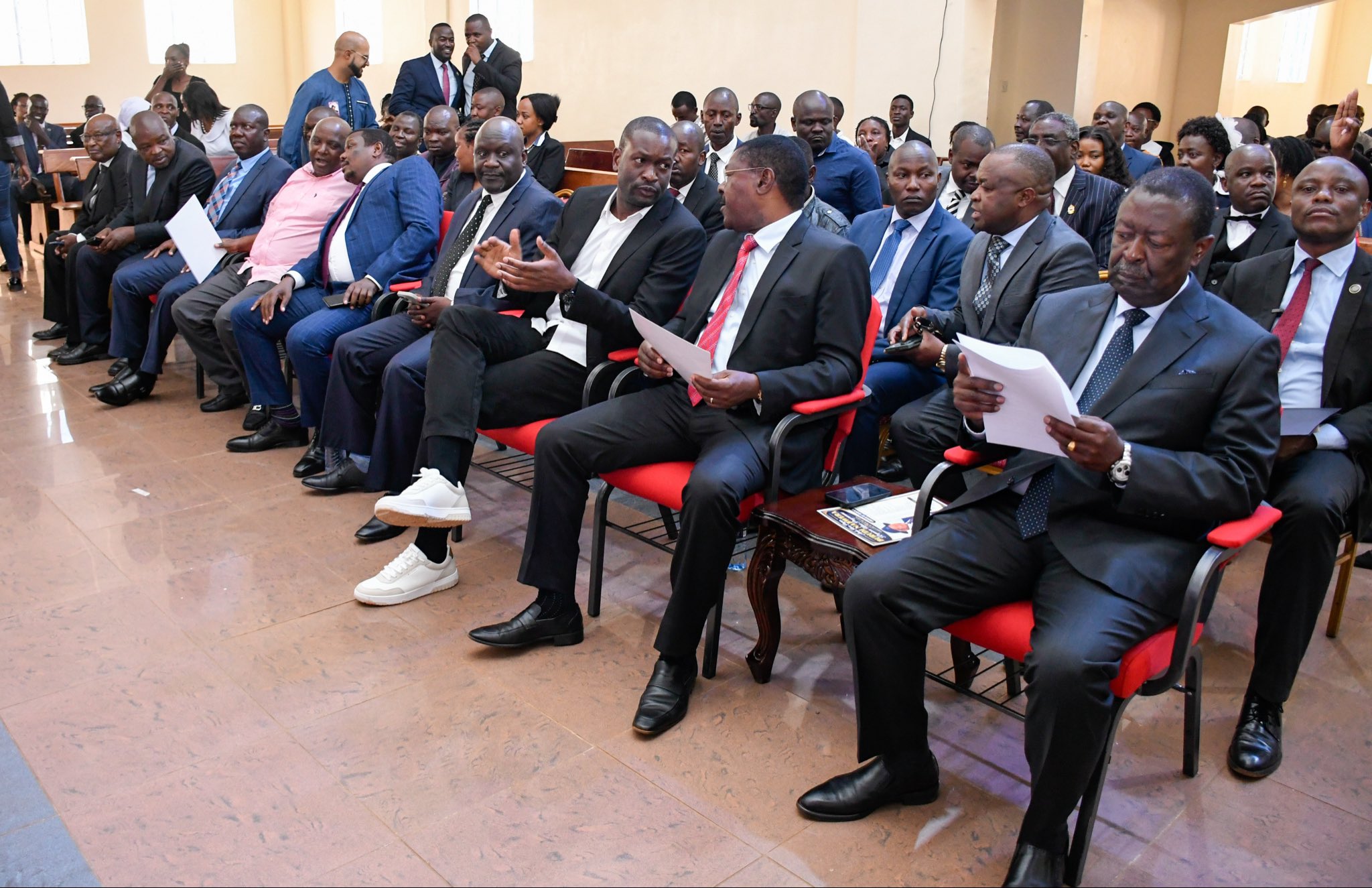
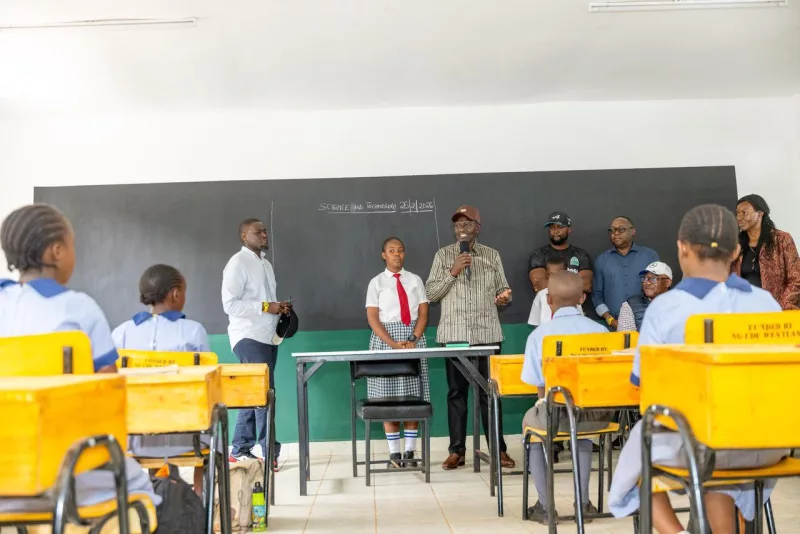
 President William Ruto teaching grade 5 pupils at Kangemi Primary on February 25, 2026 / PCS
When President William Ruto took office in 2022, Kenya was facing an estimated shortage of about 116,000 teachers as the education system expanded under the Competency-Based Curriculum and the 100 per cent transition policy.
The government made teacher recruitment and classroom construction central to its education agenda, promising to increase staffing, ease congestion and support the transition of learners into Junior Secondary School and later, Senior School.
Four years later, the government says it has recruited more than 100,000 teachers since 2022 and constructed more than 23,000 classrooms.
The staffing gap, however, remains significant.
The Teachers Service Commission has continued to report shortages even as the number of teachers in the system has grown, while rising enrolment and the introduction of new education levels have created additional demand.
Teacher recruitment: More than 100,000 hired
President Ruto has repeatedly cited teacher recruitment as one of the administration's major achievements in the education sector.
In June, he said the government had employed more than 100,000 teachers since 2022 and planned to recruit another 20,000.
“We have hired more than 100,000 teachers in just three years, with 20,000 more set to be hired this year, making it one of the most ambitious teacher recruitment drives in our nation’s history,” Ruto said.
Earlier, the government had announced a target of recruiting 100,000 teachers to help close the 116,000-teacher shortage recorded in 2022.
With the additional 20,000 planned recruitment, the government's total target rises to 120,000, while another government projection has put the longer-term target at 124,000 teachers.
The recruitment has included permanent, contractual and internship engagements.
The government has also sought to expand the pipeline of teachers through training. In Northern Kenya, for example, it has focused on recruiting and training teachers from the region to address shortages and retention challenges.
The gap: Has it really closed?
The number of teachers recruited since 2022 does not automatically mean that the original 116,000-teacher shortage has been eliminated.
The number of teachers required has changed as enrolment has increased and the education system has expanded to accommodate Junior Secondary School and Senior School.
Data compiled from the Kenya National Bureau of Statistics (KNBS) Economic Surveys for 2023–2026 and TSC submissions show the teaching workforce rising from 342,700 teachers in 2022 to an estimated 442,000 in 2026.
Despite that increase, a staffing gap of about 98,261 teachers was still cited by the TSC.
TSC chief executive Nancy Macharia told the National Assembly in 2025 that the shortage stood at 98,261 teachers, including those required for Junior Secondary School.
She warned that the demand could increase further with the transition of learners into Senior School.
The gap is also affected by retirements, exits, transfers and movement of teachers between levels of education.
The Institute of Economic Affairs has questioned whether headline recruitment figures fully reflect the net increase in teachers available in classrooms, noting that reported recruitments can include replacements and contractual engagements.
IEA data cited in the material showed that public primary school teachers fell from 219,727 in 2023 to 212,602 in 2024, partly as teachers moved into Junior Secondary School and others left the service.
Enrolment: More learners, more pressure
The expansion of the teaching workforce has taken place alongside an increase in the number of learners.
Public primary and Junior Secondary School enrolment rose beyond 10.7 million, while secondary school enrolment also increased.
The rise means that newly recruited teachers have been absorbed by a growing education system rather than simply replacing teachers who were missing from the classrooms in 2022.
The transition to Junior Secondary School has been a major source of pressure.
The introduction of Grades 7, 8 and 9 created the need for additional classrooms and teachers, while the move of the first CBC cohort into Grade 10 has introduced a new requirement for teachers with specialised skills.
Pupil-teacher ratio: Improvement, but uneven
The government has reported an improvement in pupil-teacher ratios following the recruitment drive.
Education Cabinet Secretary Julius Migos Ogamba has said the teacher-to-student ratio has improved from one teacher for every 45 learners in 2022 to one for every 29 learners.
Northern Kenya has been one of the regions with persistent teacher shortages, but the government responded by increasing the number of teachers trained and recruited from the region.
During Madaraka Day celebrations in Wajir, Ruto said 1,800 local teachers from Wajir, Mandera and Garissa had been recruited and would be deployed in the region.
He also said 4,616 young people from the three counties were enrolled in teacher training colleges.
The government has linked the strategy to the problem of retaining teachers in hardship areas, where schools have historically faced frequent vacancies because teachers recruited from other regions may seek transfers.
Classrooms: More than 23,000 added
The administration has also invested in classroom infrastructure to accommodate growing enrolment and the transition to Junior Secondary School.
The government says more than 23,000 classrooms have been constructed since 2022.
About 16,000 were built through the Ministry of Education, while another 7,000 were supported through the National Government Constituencies Development Fund.
The additional classrooms have been intended to reduce congestion and provide learning spaces for learners moving through the new education structure.
The infrastructure demand has, however, continued to evolve.
As the first CBC cohort moves into Senior School, attention has shifted towards laboratories and facilities required for specialised learning.
Senior School: A new infrastructure and staffing test
The transition to Senior School has introduced another layer to the teacher shortage.
The government says it is constructing 1,600 science laboratories to support the transition and strengthen STEM learning.
Ruto said in June that 52 per cent of learners in the first Grade 10 cohort had selected the STEM pathway.
The figure increases the demand for teachers in sciences, technical studies and other specialised subjects.
The challenge is therefore no longer only about increasing the total number of teachers. Schools also need teachers with the qualifications and skills required for the pathways selected by learners.
This includes areas such as Technical Studies, Performing Arts, Home Science and Sports Science.
Teacher recruitment has also been accompanied by concerns over career progression and welfare.
Macharia told the National Assembly that 178,871 teachers had been awaiting promotion, with inadequate funding affecting the implementation of career progression.
She said 151,611 teachers had been promoted over two years through common cadre and competitive processes.
The commission said funding remained a challenge, with the amount allocated for promotions falling below what was required to clear the backlog.
Ruto has said the government allocated Sh1.6 billion for teacher capacity building and another Sh1 billion for promotions.
The recruitment programme has therefore been running alongside efforts to retain teachers and improve their skills and career progression.