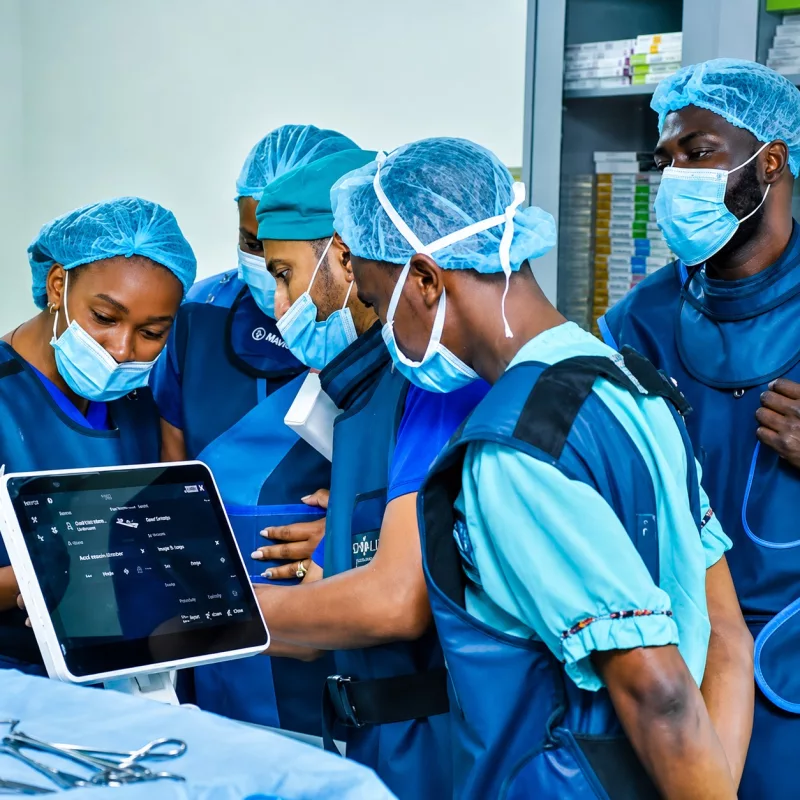
 The Nairobi West Hospital CathLab team performed a minimally invasive aortic repair (TEVAR) to treat a life-threatening Type B aortic dissection-restoring safe blood flow without open surgery. /HANDOUT
Kenya is entering an important new chapter in surgical care. As minimally invasive procedures become more accessible and the country invests in universal health coverage, the conversation must go beyond whether a patient can get surgery.
We must also ask: can we make that surgery safer, less painful and capable of getting patients home sooner?
This is where anaesthesia deserves a bigger place in the conversation.
Kenya’s Ministry of Health launched the National Surgical Services Strategic Plan 2026–2031, signalling a deliberate shift towards expanding access to safe surgical, obstetric and anaesthesia services.
The plan prioritises workforce development, infrastructure, referral systems and better health information.
Nearly 29 million Kenyans are now registered under the Social Health Authority, making the quality and availability of surgical care an increasingly important part of health reform.
Yet access remains uneven. Kenya has an estimated 0.37 physician anaesthesia providers per 100,000 people, according to the World Federation of Societies of Anaesthesiologists.
Meanwhile, minimally invasive surgery is still developing outside major urban centres. A 2025 study of laparoscopic surgery in rural Kenya noted that fewer than one per cent of operations involved laparoscopy, highlighting the gap between technological possibility and everyday access.
The good news is that this gap is beginning to close. In 2025, Kilifi County Referral Hospital performed its first laparoscopic operations, accompanied by training for local surgeons.
More recently, multidisciplinary programmes have also been strengthening surgical and anaesthesia capacity in county hospitals.
But surgical innovation must be matched by anaesthetic innovation.
For years, general anaesthesia has been considered the default for laparoscopic procedures. That assumption deserves closer examination.
In carefully selected patients undergoing procedures such as laparoscopic cholecystectomy, spinal anaesthesia can provide adequate surgical conditions while allowing the patient to remain spontaneously breathing and avoiding airway instrumentation.
It is not a replacement for general anaesthesia in every patient. Pneumoperitoneum, positioning, shoulder-tip pain and the possibility of a higher-than-intended block require careful patient selection, monitoring and a highly coordinated theatre team.
Evidence is also pushing anaesthesia towards more individualised approaches.
Recent research into opioid-free anaesthesia for selected laparoscopic patients has shown that reducing opioid exposure is feasible without compromising pain control, although the benefits vary according to the patient and technique.
This is why Kenya’s next surgical milestone should not simply be more operations. It should be better perioperative care.
At the Nairobi West Hospital, our experience has reinforced the value of bringing surgeons, anaesthetists and theatre teams into the same conversation.
When anaesthesia is planned alongside the surgical technique—not treated as an afterthought—we can focus on what ultimately matters to patients: safety, comfort and recovery.
As we gather at the 33rd Kenya Society of Anaesthesiologists Annual Scientific Conference in Mombasa, the opportunity is clear.
Kenya must build a surgical system where innovation is not confined to sophisticated equipment or major hospitals, but extends to how we keep patients safe before, during and after surgery.
The future of surgery is not only minimally invasive. It must also be patient-centred, evidence-driven and safely anaesthetised.
The writer is head of anaesthesia at the Nairobi West Hospital