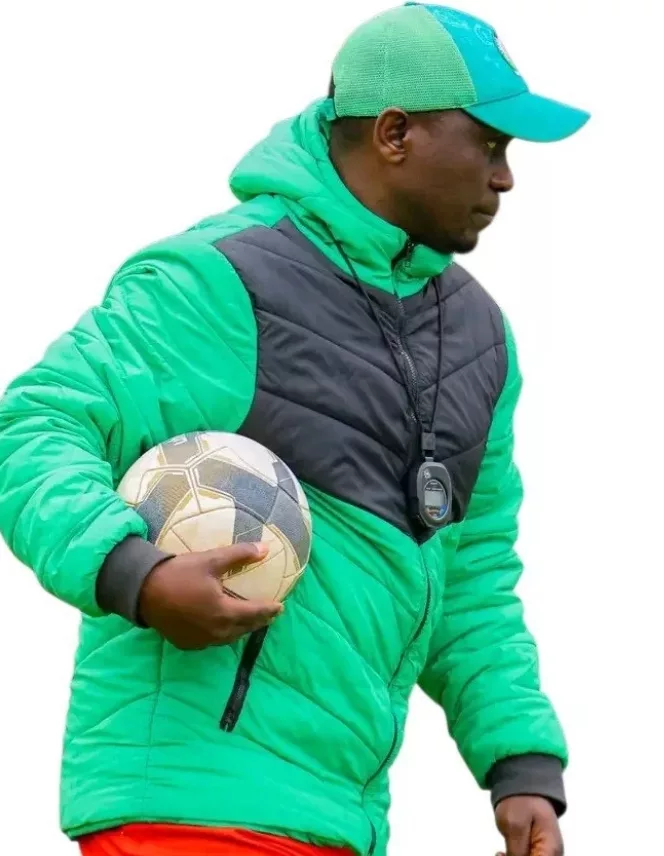
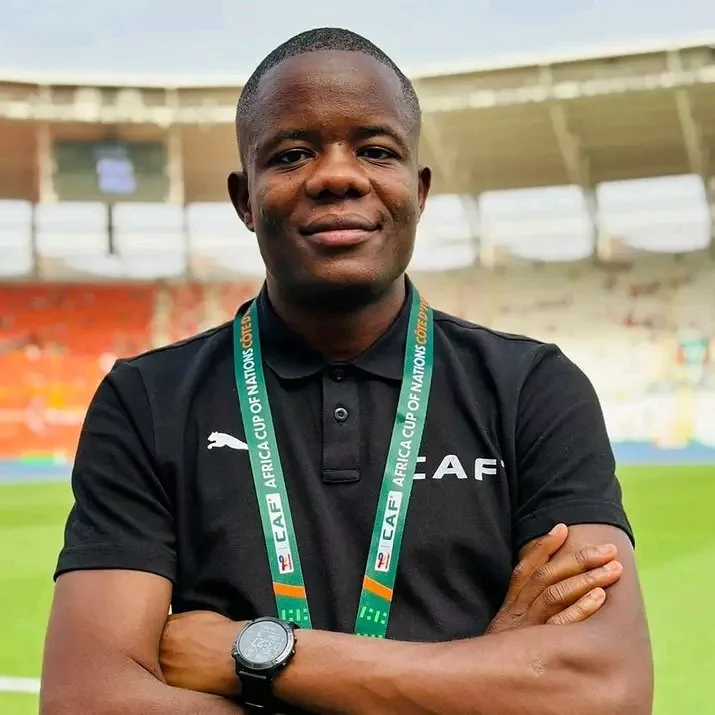
 Kenyan referee Stephen Yiembe/HANDOUT
 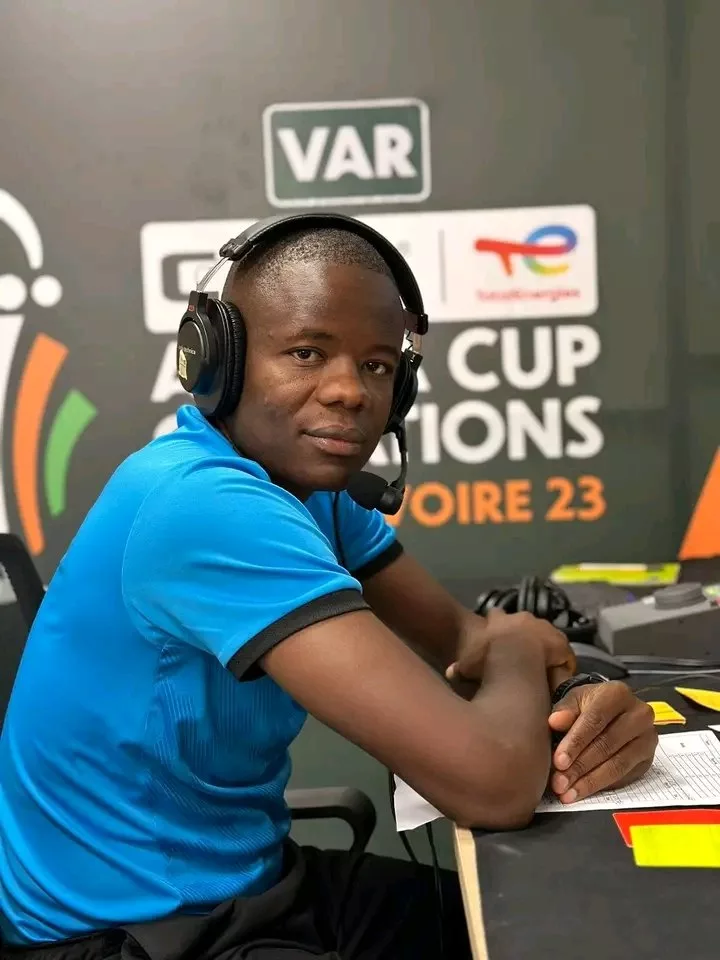 Kenyan referee Stephen Yiembe in his role as VAR official/HANDOUT
On August 12, 2026, Yiembe stood on the touchline at the Red Bull Arena as the second assistant referee, becoming the first Kenyan match official appointed to a UEFA club competition.
His presence formed part of a historic East African officiating team led by Somali referee Omar Abdulkadir Artan, with Djibouti's Liban Abdoulrazack Ahmed serving as the other assistant.
The appointment marked another extraordinary step in a career that has taken Yiembe from Kenyan domestic football to the Olympic Games, African Cup of Nations, FIFA Club World Cup, and finally the European stage.
His achievement was not a sudden breakthrough but the culmination of more than a decade spent developing the technical, physical and mental discipline required to survive at the highest levels of refereeing.
“I started this journey 10 years ago in Nakuru and scaled all the way up to the top level,” Yiembe once said, a reflection that captures the gradual nature of his rise from an aspiring official in Kenya to one trusted to operate alongside the world's leading referees.
Born in 1989 and educated at Sawagongo High School and Moi University, Yiembe began refereeing in 2012 before progressing into elite domestic football two years later. Those early years provided the foundation for a career built on positioning, fitness, concentration and the ability to make decisions under pressure.
For an assistant referee, those demands are particularly exacting. The official must maintain the correct line with the second-last defender, track defensive movements and make split-second offside decisions while moving at full speed.
“It hasn’t been a walk in the park for me to be where I am,” Yiembe said, acknowledging the sacrifices and persistence required to progress through the ranks.
The next major landmark arrived in 2018 when he earned his FIFA badge, formally opening the door to international football and major continental assignments.
The accreditation brought greater responsibility because international officials must apply the laws consistently regardless of the competition, country or players involved.
Yiembe's development was further accelerated by exposure to advanced referee education and international training, including a UEFA-linked programme in Zurich that broadened his understanding of modern officiating and introduced him to methodologies used at the highest level.
“I have come through the ranks courtesy of the hard work, dedication, support from FKF and colleagues as well as prayers,” he said, placing his progress within a wider network of people and institutions that helped him navigate elite refereeing.
That support was important, but opportunities alone could not guarantee advancement. Yiembe still had to perform whenever he stepped onto the field, with every appointment effectively another examination.
His performances eventually attracted greater attention from CAF, leading to assignments at competitions involving some of Africa's leading national and club sides.
He became part of a generation of Kenyan officials trusted with increasingly demanding matches, including the Africa U-23 Cup of Nations, African Nations Championship, CAF Champions League and Africa Cup of Nations.
“I consider it a miracle and a dream come true in my refereeing career,” Yiembe said of one of his early breakthroughs, revealing the significance of reaching stages that had once seemed distant.
His development also coincided with the growing influence of technology in football officiating. As VAR became increasingly important in major competitions, Yiembe expanded his experience beyond the traditional assistant-referee role and developed his capabilities as an assistant video match official.
That versatility strengthened his profile because modern elite officiating requires officials to understand the game from several perspectives. Traditional positioning and decision-making must now be combined with an understanding of video review procedures, communication protocols and the demands created by VAR.
“It feels great to be in the same space with senior referees whom I used and still draw inspiration from,” he said, highlighting the influence of experienced officials who had established themselves at the highest level.
Among those who influenced his development was veteran Kenyan referee Dr Peter Waweru Kamaku, whose own rise through African football provided Yiembe with both a professional reference point and proof that Kenyan officials could compete internationally.
Mentorship is particularly important in refereeing because technical knowledge is often developed through observation, discussion, and feedback. Young officials must understand not only which decision is correct, but also why a particular position, movement or interpretation is required in a given situation.
“It installs confidence in me,” Yiembe said of working alongside senior referees, reflecting the way experience can strengthen an official's belief when facing increasingly demanding assignments.
That confidence was tested on some of the biggest stages available to an African official. In 2024, Yiembe was selected for the Paris Olympic Games, becoming one of the East African officials entrusted with the football tournament.
The appointment placed him in an international environment featuring some of the world's leading young players and further demonstrated that his development was being recognised beyond Africa.
The following year brought an even greater opportunity when FIFA selected him for the expanded 2025 Club World Cup in the United States. He became the sole CECAFA-region representative among the tournament's elite officials and was appointed to matches involving major European clubs.
FIFA's official match documentation confirmed that Yiembe served as second assistant referee when Real Madrid faced RB Salzburg at Lincoln Financial Field in Philadelphia, with the Spanish giants winning 3-0.
Standing on the touchline while players such as Vinicius Junior, Jude Bellingham and Federico Valverde competed in a FIFA tournament illustrated the extraordinary distance his career had travelled.
“I believe CAF assessed my performances in the previous assignments and found them good enough to warrant a place in the list,” he said when discussing his progression, emphasising performance rather than reputation.
His Club World Cup participation was itself threatened by visa complications, creating uncertainty over whether he would reach the United States for an appointment that represented years of preparation. The eventual intervention that resolved the problem underlined how opportunities in international sport can sometimes depend on circumstances beyond an official's control.
“I am truly grateful for the government’s quick and decisive intervention,” Yiembe said after the visa issue was resolved.
Once in the United States, the focus returned to football. Yiembe responded by performing the role for which he had been selected, gaining valuable experience in a tournament that brought together Europe's biggest clubs, international stars and officials from around the world.
His assignment involving Real Madrid and Salzburg became particularly symbolic because it placed a Kenyan official directly alongside one of the most decorated clubs in football history. “Thanks to their intervention, I had the honour of representing Kenya on one of the biggest stages in world football,” he said.
The experience strengthened a career that was becoming increasingly diverse. Alongside his work as an assistant referee, Yiembe accumulated experience in video officiating, including an AVAR role at the Africa Cup of Nations.
His presence at the 2025 AFCON, where he was involved in the officiating team and later worked as an assistant video referee during the final between Senegal and Morocco, demonstrated that his development was not limited to a single aspect of modern match officiating.
“You can’t come this far without the blessings of the federation,” he said, acknowledging the role played by Football Kenya Federation in creating pathways from domestic football to the international stage.
Yet federation support could only create opportunities. Yiembe still had to perform once those opportunities arrived and repeated selection suggested that he was consistently meeting the standards expected at each level.
That progression has required constant adaptation. Tactical systems have evolved, defensive lines have become more aggressive, players have become faster, and VAR has introduced additional layers of communication and accountability. An assistant referee unable to adapt risks being left behind.
Yiembe's ability to operate in both traditional and video officiating roles, combined with his international experience and UEFA-linked training, has therefore become an important part of his profile. The UEFA Super Cup appointment was the natural continuation of that development.
When UEFA selected Artan as referee for the PSG-Aston Villa contest, Yiembe and Liban were appointed as his assistants, creating a rare all-East African officiating team at a major European fixture.
For Yiembe, the significance was deeply personal because he had spent years working towards a point where his nationality would not be viewed as a barrier to operating at the highest level. “I believe I did my best in the assignments,” he said previously, reflecting the professional mindset required of an official who understands that performance must remain the priority.
The Super Cup therefore became less about proving that a Kenyan could reach Europe and more about demonstrating that he could belong there.
That distinction matters because African officials have historically been rare in Europe's most prestigious competitions. Yiembe's appointment challenged that pattern while also highlighting the value of stronger links between CAF and UEFA.
The officiating team itself represented three countries from a region that has often received limited recognition in the global football economy. For Artan, the appointment was a historic moment as the first non-European referee to take charge of a UEFA Super Cup. For Yiembe and Liban, it represented another barrier being broken as East African officials took their places in a European showpiece.
“It means a lot for me to be shortlisted for the application course,” Yiembe said at an earlier stage of his international development. Those words now carry greater significance after his appearance in Salzburg.
The match itself ultimately belonged to Paris Saint-Germain, who defeated Aston Villa 2-1 to retain the UEFA Super Cup, but the Kenyan story was written independently of the final score.
Yiembe's role was never designed to dominate the contest. Indeed, the best assistant referee is often the one whose work becomes almost invisible because positioning is correct, decisions are accurate and communication with the referee remains seamless. That quiet professionalism is precisely what makes his journey worth examining.
Football's biggest stages are usually associated with players who score goals, coaches who devise winning systems and clubs that lift trophies, yet every major match also depends on officials capable of applying the laws consistently under extraordinary pressure. Yiembe has spent more than a decade preparing for that responsibility.
“I will continue doing my best to represent Kenya with pride,” he said after his Club World Cup experience, a commitment that now carries greater weight following his appearance in Salzburg.
His story is therefore bigger than the UEFA Super Cup because the appointment represents the outcome of years of patience, education, physical preparation, technical development and persistence through setbacks. The journey began in Nakuru, where the football environment was far removed from the glamour of European club competitions, but the principles required to succeed were already the same: discipline, concentration, consistency and an ability to learn.
“I have come through the ranks courtesy of the hard work, dedication, support from FKF and colleagues as well as prayers,” he reiterated, a description that perhaps best captures the foundation beneath the headline achievement.
For Kenya's younger referees, the most valuable part of Yiembe's story may not be the photograph from Salzburg or the list of famous clubs he has officiated, but the sequence of steps that made those moments possible.
There was the first domestic match, followed by progression into elite Kenyan football, the FIFA badge, continental assignments, advanced training, the Olympics, AFCON, the Club World Cup and finally UEFA. Each stage demanded that he prove himself again, while every successful appointment created the possibility of another opportunity.
His journey also demonstrates why investment in refereeing development matters. Players are not the only football professionals who require coaching, facilities, exposure and international competition.
Officials need the same infrastructure if countries such as Kenya are to produce referees capable of competing consistently on the global stage.
The success of Yiembe, Waweru and other Kenyan officials suggests that the talent exists, but sustained pathways are needed to turn potential into regular international representation.
Yiembe has already crossed a barrier that once appeared distant. His next challenge will be to maintain the standards that brought him to Salzburg while helping create an environment in which the next Kenyan official does not have to wait another generation for a similar opportunity.
“I consider it a miracle and a dream come true in my refereeing career,” he said when reflecting on an earlier milestone, but the dream has continued to expand with every new appointment.