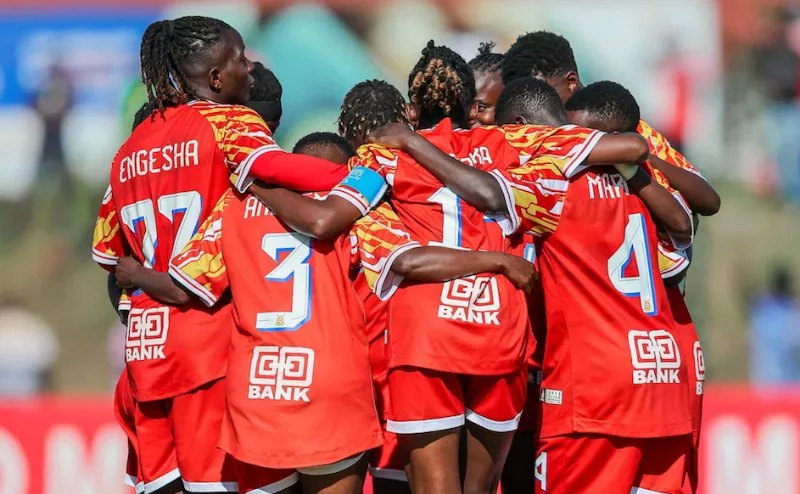
For many years, women’s football has had to fight for more than trophies and recognition. Female players have also had to challenge societal attitudes that question their place in a sport traditionally dominated by men, with their talent and achievements often receiving less attention, investment and commercial support.
In a society where football is frequently viewed as a man’s game, women who choose the sport as a career can find themselves battling stereotypes that undermine their ambitions.
While the women’s game continues to grow, that progress has not always translated into equal opportunities, financial security or professional respect. For many Kenyan women footballers, the struggle is not simply to prove their ability on the pitch, but to convince clubs, sponsors and other stakeholders that their careers deserve investment.
That reality has brought renewed calls for a minimum monthly salary of Sh50,000 for players in the Kenya Women’s Premier League, as stakeholders seek to make the domestic game more sustainable.
The proposed minimum would be a significant increase from the Sh10,000 monthly earnings cited by local stakeholders. Players in the Women’s National Super League, the second tier, reportedly receive match allowances of between Sh1,000 and Sh1,500. The challenge extends beyond low pay.
Unreliable club finances can affect salaries, travel, training, medical care and opportunities to compete, leaving players uncertain about whether football can provide a sustainable livelihood.
The consequences were evident during the 2025/26 season, when Kisumu All Starlets and Kisped Queens were expelled from the top flight after failing to honour three fixtures each.
Kisumu All Starlets missed an away match against Kenya Police Bullets in March, with coach Juma Said attributing the club’s struggles to its inability to meet travel expenses, players’ allowances and meal costs.
“We have been unable to honour our away matches because we can’t meet the travel cost, pay players’ allowances, meet their meal costs, among other costs,” Said noted. The club’s third walkover triggered automatic expulsion under Football Kenya Federation (FKF) competition rules.
Kisped Queens also forfeited three matches, exposing how financial difficulties can threaten not only players’ livelihoods but also the competition's integrity.
The local struggles reflect concerns raised in the 2026 FIFPRO Global Employment Report: Working Conditions in Women’s Football, released on October 12. Based on a survey and interviews involving about 800 players worldwide, the report warns that the growth of women’s football has not translated into secure careers for many players.

Globally, 49 per cent of respondents were considering leaving football earlier than planned. Among those contemplating an early exit, 59 per cent cited financial reasons, while 46 per cent pointed to psychological stress.
The report found that the average inflation-adjusted monthly club salary has tripled since 2017 to about Sh337,376. However, the median salary stands at US$1,669 (about Sh216,503), illustrating the disparity between the highest earners and the typical player.
These are global figures, not estimates of Kenyan players’ earnings. However, the findings raise questions about whether local football can provide dependable incomes and adequate support through injury, family responsibilities and the transition out of competitive sport.
Sherril Munyera, who moved from Zetech Sparks to Greece’s Panetolikos WFC, said financial considerations were among the factors motivating Kenyan players to seek opportunities abroad.
“This is my second month in Greece, and I started the season here. Money is a big motivating factor. Back in my country, most of us would play because of talent and passion, but the results will be wanting, mentally and health-wise,” Munyera said.
She was joined at the Greek club by Catherine Khaemba, formerly of Bungoma Queens, Nuru Hadima, who played for Kayole Starlets, and Ephy Awuor, formerly of Madira Soccer Assassins.
Munyera said exposure was another motivation, but the limited financial capacity of some Kenyan clubs continued to affect players’ welfare and development. She urged FKF to help the KWPL attract sponsors, warning that financial difficulties remained evident early in the 2026/27 season. “It is now Game Week Four and teams are struggling. I talk to my peers back home, so I am aware,” she said.
The FIFPRO report found that only 56 per cent of surveyed players had employment contracts, while 47 per cent said their clubs lacked sufficient staff. Only 13 per cent received a pension from their clubs.
For Kenyan players, the concerns extend to medical care, maternity protection and the security of their positions when they encounter challenges beyond football. Munyera said pregnancy could be particularly difficult for women in Kenya, where players risk losing their places at clubs.
“In Kenya, when that comes up, there is not that support. Instead, you get released from your team, and you get stigmatised,” she said. She added that injuries could also leave players vulnerable, particularly when clubs lack reliable medical support and secure employment arrangements.
The global report found that 57 per cent of surveyed players had struggled with their mental health, with half of those affected saying their clubs had not provided support. FIFPRO is calling for enforceable minimum employment standards covering remuneration, facilities, staffing and health, alongside mandatory psychological support.
There are, however, examples of how stronger institutional backing can improve players’ circumstances. Kenya Police Bullets chief executive Chris Oguso said the three-time reigning champions paid players between Sh40,000 and Sh150,000, depending on their level.
He added that some players benefited from employment within the National Police Service, providing them with an income beyond football. “Some are employed by the police, and that is already a plus for us,” Oguso said.
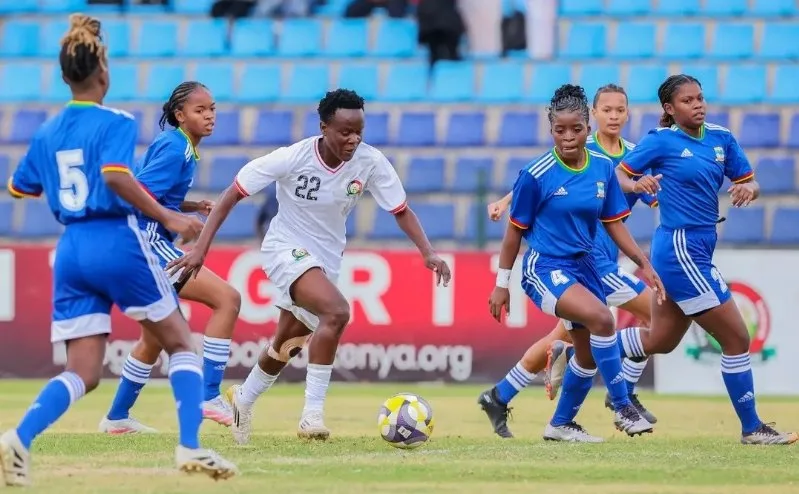
Harambee Starlets' Violet Nanjala tries to weave through Seychelles players in a recent match/HANDOUT
The club also offers winning allowances and individual performance bonuses, including Sh5,000 for scoring a goal and awards of up to Sh30,000 for outstanding performances. Oguso said players received equipment, mental health talks and guidance on balancing their sporting and professional responsibilities.
However, such arrangements are not necessarily available to clubs that depend on sponsors, well-wishers and limited football revenues. FKF Women’s Clubs Committee chairperson Richard Teka has said the federation is working with FIFA and other stakeholders towards a standard framework to improve players’ working conditions, with the intention of implementing standards across the league.
Plans for double-header match days, including events in Nairobi and outside the capital, are intended to increase visibility, attract supporters and create more attractive opportunities for sponsors.
But greater visibility must translate into revenue that improves salaries, medical care and other protections if players are to benefit directly from the game’s growth.

The proposed Sh50,000 monthly minimum would represent a significant step for players currently earning less, but it remains a proposal rather than an established league-wide standard. Its implementation will depend on sustained funding, clear regulations and clubs’ ability to comply.
The challenge facing Kenyan women’s football is therefore twofold: changing perceptions that have historically limited recognition of the women’s game and building a financial structure that allows players to earn a dependable living from their talent.
For players who have committed years to developing their skills, passion alone cannot pay bills, cover medical expenses or guarantee a future beyond the pitch. As the women’s game continues to grow, the test will be whether that progress delivers not just greater recognition, but also the financial security and professional respect female footballers need to build sustainable careers.