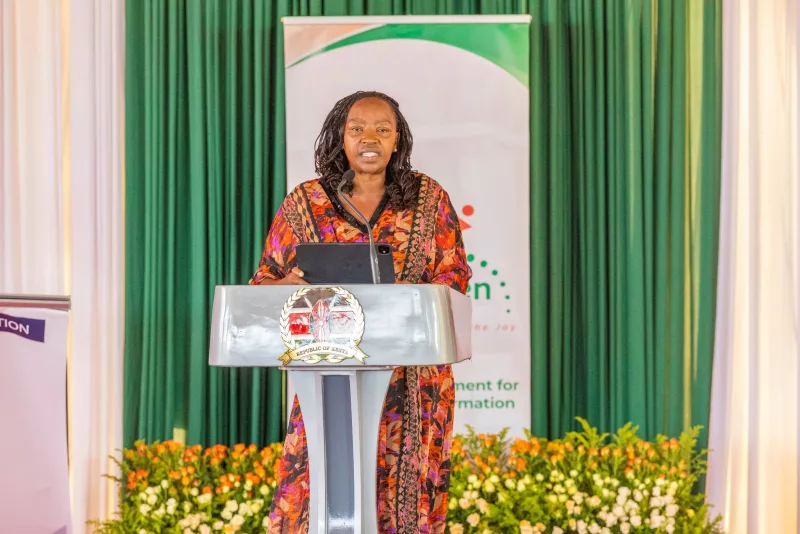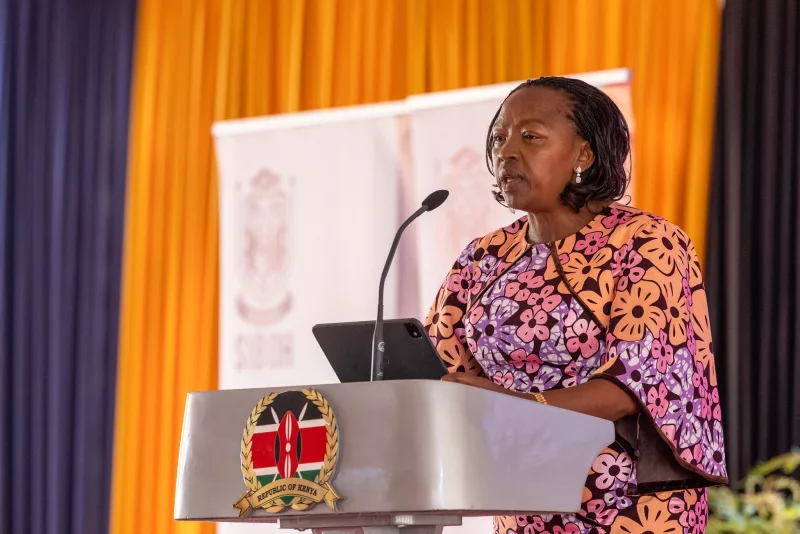
First Lady Rachel Ruto has called for urgent action to reduce maternal and newborn deaths in Kenya, saying the country must move from making promises to implementing measures that save lives.
Speaking at the Kenya Health Summit in Nairobi, Rachel said reducing preventable deaths would require stronger leadership, increased investment in healthcare, adequate staffing and reliable medical equipment and supplies.
She said Kenya continues to record high maternal and neonatal mortality rates, with official figures putting maternal deaths at about 355 per 100,000 live births and neonatal deaths at approximately 21 per 1,000 live births.
“No mother, no child should be lost to something preventable, so we must ask ourselves, how do we turn the promise to a reality?” she said.
Rachel said the solutions were within reach but required coordinated action by the government, healthcare workers, development partners and other stakeholders.
“The answer is not complicated. It takes leadership, investments, skilled healthcare workers, reliable equipment and supplies, referral systems that work and accountability across all stakeholders,” she said.
She said the statistics should not be treated merely as figures because every death represents a family and community affected by the loss.
“Those are not just numbers. Behind every single one is a mother, a newborn and a family that carries the loss forever and a community that feels it too,” she said.
The First Lady said efforts to improve maternal and newborn health must focus on ensuring women and children can access quality healthcare regardless of their financial circumstances or where they live.
She called for stronger healthcare systems that can respond effectively to emergencies, particularly in maternal and newborn care.
“As a goodwill ambassador for newborn screening in Kenya, I am encouraged by what the Ministry of Health has already committed to,” Rachel said.
She pointed to government measures including investment in essential maternal and newborn commodities, family planning supplies and the recruitment and deployment of thousands of nurses and midwives.
Rachel said adequate staffing was critical in ensuring health facilities have the capacity to respond to mothers and newborns, particularly during emergencies.
She also stressed the importance of functional referral systems, saying delays in transferring patients can make the difference between life and death.
The First Lady called for a healthcare system in which access to quality services is not determined by wealth or geographical location.
“Let us build a Kenya where a mother does not have to be wealthy to receive quality care, where a newborn’s survival is not determined by the county in which they are born,” she said.
She further called for health workers to be equipped with the tools and supplies they need to respond to emergencies.
“Where a health worker is not sent to a crisis without the tools to respond, where families choose between seeking treatment and putting food on the table,” Rachel said.
Her remarks come as Kenya continues to pursue Universal Health Coverage reforms aimed at expanding access to affordable healthcare.
The First Lady said the focus should now be on translating commitments and investments into measurable improvements in maternal and newborn survival.