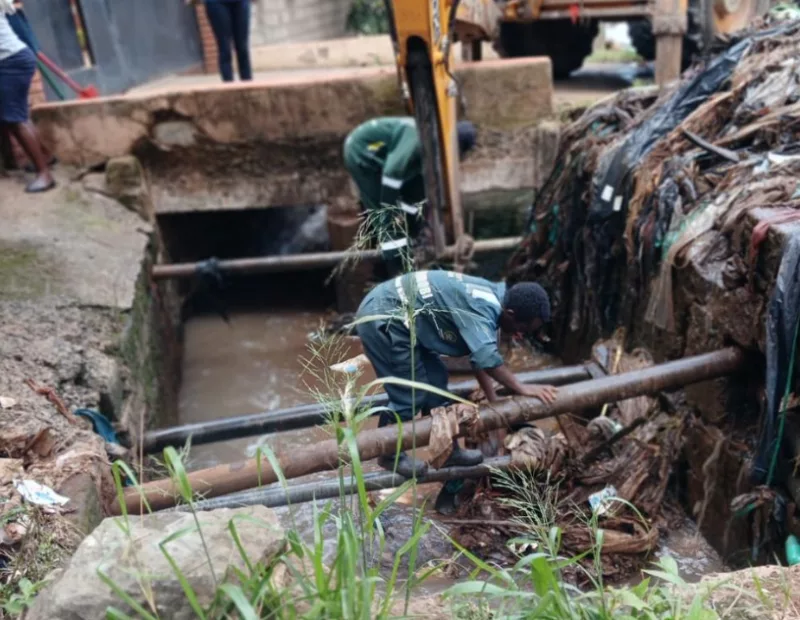
 Nairobi Governor Johnson Sakaja’s Green Army employees clear a drainage to avert flooding/FILE
Nairobi County has intensified preparations for the expected El Niño rains after identifying 227 flood-prone hotspots across 17 sub-counties.
The county government said the preparedness plan brings together multiple agencies as it begins implementing Sh2.4 billion worth of drainage and flood-mitigation projects aimed at reducing the impact of heavy rains.
The multi-agency coordination framework includes the Kenya Red Cross, Kenya Urban Roads Authority (KURA), Kenya National Highways Authority (KeNHA), National Disaster Management Authority, Nairobi County Disaster Management Team, Environment Department and Nairobi Rivers Commission, among other agencies.
Nairobi Governor Johnson Sakaja said joint planning would enable the county and its partners to anticipate emergencies, coordinate operations and respond more effectively when flooding occurs.
“This calls for us to prepare together, act early and protect lives and property,” Sakaja said.
The county has allocated Sh2 billion from the Sh2.4 billion budget for drainage and flood-control works targeting 19 roads identified as vulnerable to flooding.
The projects are at an advanced stage, with tenders already awarded. Contractors are expected to begin work once the remaining administrative processes are completed.
According to the county government, the projects will complement ongoing interventions under the Nairobi Regeneration Programme while addressing recurring flooding along roads and other critical infrastructure.
Sakaja said the investment was designed to deliver a long-term solution to Nairobi’s persistent flooding problem by improving the city’s drainage network.
“The Sh2 billion will support a comprehensive drainage overhaul that complements the ongoing Nairobi Regeneration Programme. Our goal is to permanently address the flooding challenges that have affected the city for many years,” he said.
The 227 hotspots identified by the multi-agency teams will serve as priority areas for preparedness measures, deployment of equipment and resources, and emergency interventions.
The assessment identified locations with blocked or undersized drainage systems, areas requiring desilting and waste removal, as well as river corridors and waterways vulnerable to obstruction.
The teams also identified roads and major transport routes prone to flooding, including areas where heavy rains could disrupt access for emergency response teams.
Communities considered vulnerable to flooding will receive particular attention, with the county preparing measures including early warnings, evacuation, temporary shelter and relief assistance where necessary.
To streamline operations, the county has divided the multi-agency response into five sub-committees focusing on Infrastructure and Drainage; Emergency Response and Evacuation; Shelter and Relief; Security and Traffic; and Communication.
The Infrastructure and Drainage Committee will oversee the clearing and improvement of drainage networks, rivers and other critical infrastructure.
The Emergency Response and Evacuation Committee will coordinate rescue operations, rapid response and evacuation in the event of flooding.
The Shelter and Relief Committee will identify safe accommodation facilities and coordinate the provision of food, water, medical care and other essential supplies to affected residents.
The Security and Traffic Committee will oversee security, traffic management and access for emergency response teams, while the Communication Committee will coordinate early warnings, public alerts and timely updates to residents.
The county government said the multi-agency approach is intended to ensure Nairobi is better prepared before the rains intensify and reduce the loss of lives, destruction of property and disruption of transport and other essential services.