 /AI illustrated
The Kenya National Commission on Human Rights (KNCHR) has raised alarm over what it says is a growing pattern of political intolerance, violence, intimidation and the alleged use of organised groups to disrupt political activities across the country.
In a statement issued on Tuesday, the commission said it had documented a series of incidents between June and August 2026 involving attacks on civilians, police officers, journalists, political actors, human rights defenders and participants in public and political gatherings.
The commission warned that the trend, if left unchecked, could undermine constitutional rights and democratic participation ahead of the 2027 General Election.
KNCHR Chairperson Claris Ogangah said the reported loss of lives, destruction of property, attacks and inflammatory political rhetoric were “deeply disturbing and wholly unacceptable in a constitutional democracy.”
The commission cited at least eight incidents recorded during the three months as evidence of what it described as an emerging pattern.
The incidents include the disruption of a public participation forum on the 2026/27 national budget at All Saints Cathedral in Nairobi on June 12, where armed men reportedly stormed the premises, assaulted participants and damaged property.
On July 3, KNCHR documented a fatal attack during a political rally in Keumbu, Kisii County.
A political convoy was attacked near Gilgil on July 11, while political activities were disrupted in Kisumu and Nyahururu the following day.
The commission also cited an attack on a church service at St Stephen's Cathedral in Kisumu, which resulted in loss of life.
On July 23, journalists from Mt Elgon TV were attacked while covering a political aspirant in Kimilili, Bungoma County. One journalist was seriously injured, according to the commission.
KNCHR also pointed to violence recorded in Ol Kalou in the period leading to the July 16 constituency by-election, referring to findings contained in its report, Perilous Politics: Human Rights Compliance Analysis of the 16th July 2026 Ol Kalou Constituency By-Election.
The commission said the incidents continued into August.
On August 12, youth advocates and human rights defenders associated with VOCAL Africa and partner organisations were reportedly attacked and dispersed outside the Mombasa County Assembly while presenting a memorandum on implementation of the Mombasa County Youth Policy.
A Nation Media Group photojournalist covering the event was also reported injured.
On August 14, KNCHR said citizens were subjected to violence in Nakuru Town West during a politically related convoy.
Two days later, on August 16, two people — a police officer and a civilian — were reported killed during politically related violence in Homa Bay County.
The commission also referred to reported attacks on political convoys in Mulot, Bomet County, and disturbances in Salgaa.
KNCHR said the incidents had affected people associated with different political formations as well as journalists, civil society organisations and human rights defenders.
Beyond the individual incidents, the commission said it was concerned about the language being used by political actors and the possibility that inflammatory statements could translate into physical violence.
It said it had documented political speeches that included calls for supporters to attack or use physical force against opponents, descriptions of rival groups using terms such as “animals”, “diseases” or “infestations”, and appeals to crowds that portrayed violence as a form of self-defence.
The commission acknowledged that some of the language could have been intended metaphorically but said the political context required greater caution from leaders.
“Political leaders hold significant influence over their supporters,” KNCHR said, warning that remarks made as metaphors could still be interpreted literally or acted upon by supporters.
The commission urged politicians to exercise restraint in their public statements and rejected violence against civilians, police officers, journalists and political opponents.
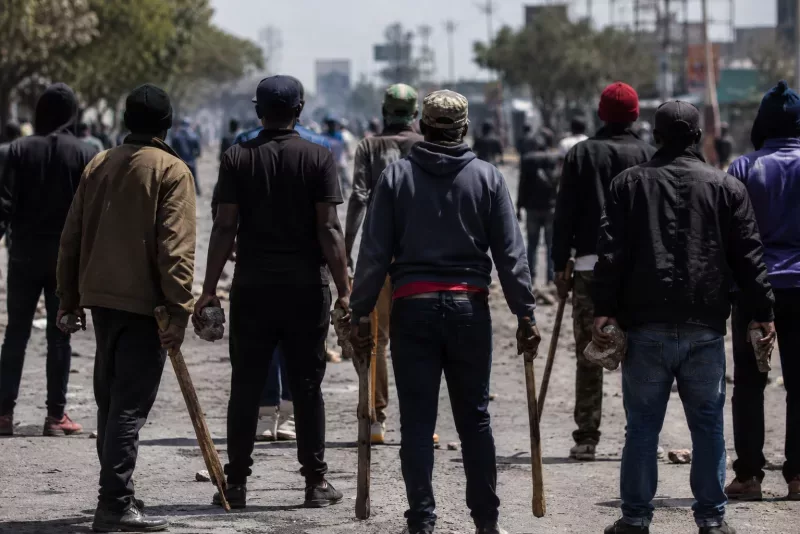
It also raised concern about the disruption of political activities through road blockages, barricades and the obstruction of convoys and processions.
According to KNCHR, such actions affect constitutional rights to freedom of movement, peaceful assembly, association and political participation under Articles 36, 37, 38 and 39 of the Constitution.
The commission warned that allowing such practices to become normal could have wider consequences for Kenya's democratic space as the country approaches the 2027 elections.
“Political differences must never be resolved through violence, threats, coercion or impunity,” the commission said.
KNCHR further raised concern over what it described as the alleged mobilisation of organised groups commonly referred to as “goons” in connection with political activities.
It called on the Directorate of Criminal Investigations to investigate reported incidents of violence, destruction of property and incitement and to ensure that those found culpable are prosecuted.
The commission specifically said investigations should cover not only those who carry out violence but also politicians, organisers, financiers and individuals who incite such acts.
It also called on the National Cohesion and Integration Commission (NCIC) to investigate allegations of hate speech and incitement within its mandate.
The commission urged the Inspector-General of the National Police Service to take what it described as a firm, impartial and lawful position against political violence and “goonism”.
It said police should provide equal protection to people exercising their constitutional rights, including journalists and media workers.
Political parties and their supporters were also urged to reject violence, intimidation and inflammatory rhetoric and respect people regardless of their political affiliation.
KNCHR called on authorities to strengthen early-warning and prevention mechanisms in areas where political tensions could escalate.
It also urged young people to reject recruitment, payment or mobilisation for political violence.
The commission linked its latest concerns to the findings of its Ol Kalou by-election report, urging relevant authorities to implement recommendations contained in that assessment.
KNCHR said it would continue monitoring political developments, engaging government agencies and working with civil society organisations, human rights defenders and other partners to strengthen early warning and response to human rights violations.