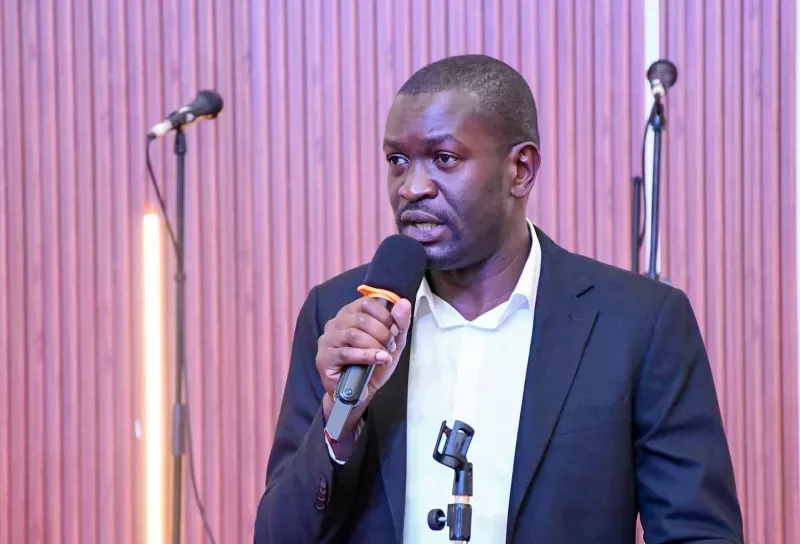
KMPDU Secretary General Davji Atellah during a past event. /COURTESY
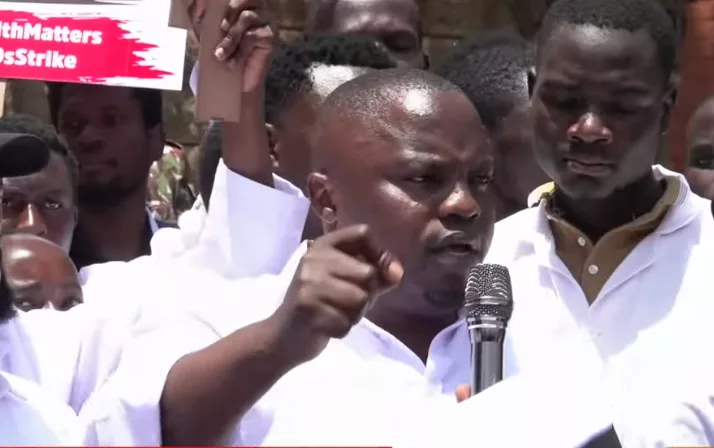
The Kenya Medical Practitioners, Pharmacists and Dentists Union (KMPDU) has condemned the arrest of medical interns in Uganda who were peacefully demanding better working conditions and their rights.
In a statement issued on Sunday, KMPDU secretary general Davji Atellah said the union condemns what he described as the harassment, assault and arbitrary arrest of interns taking part in peaceful demonstrations.
The union said demanding fair treatment, timely deployment and dignified working conditions was a legitimate labour concern and should not be treated as a crime.
“Medical interns are an essential part of healthcare delivery across East Africa,” the union said, noting that many continue to face delayed deployment, unpaid stipends, difficult working conditions and an overwhelming clinical burden.
KMPDU called for the immediate and unconditional release of all medical interns and healthcare workers detained for participating in peaceful demonstrations.
It also urged Ugandan security agencies to end intimidation, violence and arbitrary arrests against healthcare workers exercising their fundamental rights.
The union called for meaningful dialogue between the Ugandan government, the Ministry of Health and medical interns to address what it described as the longstanding internship crisis.
KMPDU further called for regional solidarity, saying the challenges affecting medical interns are shared across East Africa and require collective advocacy for decent working conditions in the healthcare sector.
“Healthcare workers should not have to choose between serving their patients and defending their basic rights,” the union said.
“There can be no sustainable healthcare system where medical professionals are silenced through fear, force and detention.”
KMPDU said it would continue to stand with Uganda Medical Association (UMA) and Ugandan healthcare workers in their pursuit of better working conditions and respect for their rights.
Agitation for better working conditions by healthcare workforce across the East African Community (EAC) member states has been a perenial feature, pointing to critical structural resource limits and severe frontline staffing shortages that often lead to overworked staff.
The situation is worsened by uneven distribution of health infrastructure and systems that face a combined burden of persistent communicable diseases and a rapidly rising prevalence of non-communicable diseases that strain primary healthcare.