
Read Also
Rising living costs are pushing more Kenyans into street protests, exposing a widening gap between the government’s economic claims and household realities, a new study has shown.
The latest Kenya Freedom Index by Odipo Dev and Amnesty International Kenya documents 1,292 protests between January 2025 and June 2026, with economic grievances emerging as the leading cause.
Of the total, 453 were recorded in the first six months of 2026, a 29 per cent increase from the same period last year.
The findings come as the government steps up its defence of President William Ruto’s economic record, with Treasury Cabinet Secretary John Mbadi insisting that the economy is performing well.
According to the report, many Kenyans are not feeling that recovery in their pockets.
In 2025, economic protests were largely driven by labour disputes, wages and poor working conditions. This year, the pressure has shifted more directly to households, with rising fuel prices becoming a major trigger.
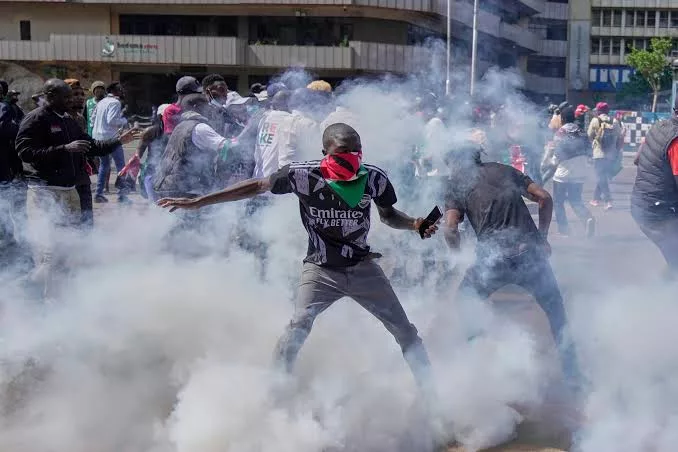
The May 18 anti-fuel-hike protests offered the clearest example. Fuel prices rose sharply, triggering demonstrations in several parts of the country as motorists, traders and other Kenyans complained about the impact on transport and the wider cost of living.
The protests also triggered a heavy security response. The Ministry of Interior reported 348 arrests, while the Directorate of Criminal Investigations reported 710 arrests on the same day.
The scale of mobilisation is significant for a government heading into the 2027 election.
The national government was the target of 183 protests in the first half of 2026, almost matching the 184 recorded throughout 2025, the index said.
At the same time, police dispersals during the first six months of this year reached 77 per cent of the total recorded in 2025, while arrests had reached 73 per cent.
Mbadi has sought to counter criticism by pointing to economic growth and other positive indicators.
But his recent claim that increased consumption of soft drinks showed Kenyans had more money has drawn criticism from the opposition, which argues that such measures do not reflect the daily struggles of households.
DCP has seized on the remarks to attack the government’s economic record.
“Let us remind you [government] of the questions that the people of Kenya are asking: On the cost of living, are ordinary Kenyans better off today than they were in September 2022? Show us the figures on household disposable income and purchasing power,” Nyandarua Senator and DCP secretary general-designate John Methu said.
He added that the government should stop giving Kenyans speeches and what he described as infantile arguments that more Kenyans are taking soda and, therefore, the economy is good.
“Kenyans do not eat speeches; Kenyans want money in their pockets. The economy must be felt in people’s pockets, homes, shops, farms and workplaces. Don’t just tell Kenyans the economy has grown,” Methu said.
The Freedom Index captures that disconnect through protests. The report says economic grievances remained the leading driver of demonstrations in both 2025 and the first half of 2026.
In 2025, labour disputes, pay and poor working conditions dominated. In 2026, fuel prices and other rising costs have become more prominent.
The DCP-allied MPs also referred to labour issues, particularly the nurses’ strike.
“On healthcare, is SHA actually delivering better and more affordable healthcare than what Kenyans had before? Give us the figures on access, claims and outstanding bills.
“But let us ask an even more fundamental question: Is Mr William Ruto aware that nurses in Kenya are on strike? … Nurses across all the 47 counties have been on strike since July 29, 2026. They have been camping at Delta House and nobody cares to listen,” Methu said.