Raised in a low-income household on the outskirts of Makueni
county, Mary* (not her real name) faced hardships from an early age.
At 15, she dropped out of school due to pregnancy. Her widowed mother could not afford to send her back to school after she gave birth, prompting Mary to marry her partner.
In 2000, three years into her marriage, Mary accompanied a sickly cousin to a Voluntary Counselling and Testing (VCT) centre to encourage her to get tested for HIV. At the time, testing cost Sh50. Confident in her own health, Mary paid the fee and took the test first to offer moral support.
The results came back positive.
“At 18 years old, I was overwhelmed with sadness and unanswered questions,” Mary recalls. Rushing home, she confronted her husband, who dismissed the diagnosis.
“He claimed it was chira [a traditional curse] and told me not to worry,” she says.
Her husband insisted that teenagers could not contract HIV, a myth Mary believed.
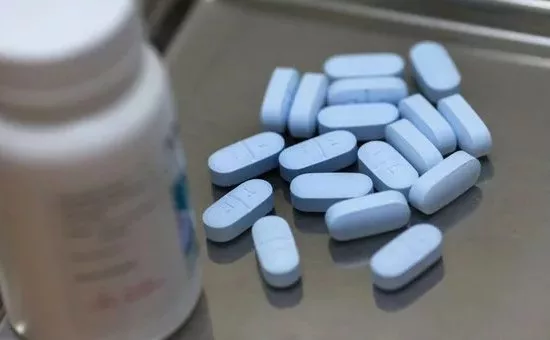
With antiretroviral therapy (ARV) not yet accessible to her, a neighbour living with HIV advised Mary to drink warm morning urine as a remedy. She followed the advice for a period before stopping, believing she and her daughter were healthy.
Fear of intense community stigma kept her silent. She had seen neighbours boycott a local vendor suspected of having HIV, claiming she infected her produce with contaminated needles.
In February 2005, Mary fell severely ill, experiencing numbness in her limbs and neck stiffness. Initial medical evaluations provided no clear answer, and her condition deteriorated until she was bedridden and unable to feed herself. Visiting relatives eventually took her to join her husband in Nairobi.
Instead of being taken to a hospital, she was brought to a prominent pastor who attributed her illness to witchcraft by her mother.
By August 2005, Mary suffered severe headaches, followed by blurred vision. Within two days, she lost her sight completely.
“It went dark in the house, so I called my neighbour and said, ‘I think Jesus is coming back,’” Mary recalls.
Her neighbour confirmed that her sight was gone, except for minimal light perception in her right eye.
Her husband responded with indifference and increased alcohol consumption. Pregnant with her second child and now visually impaired, Mary was eventually enrolled in the ARV programme at Mbagathi Hospital.
“I cried constantly, with little support from my husband,” she says.
Her mother stepped in, taking her to a hospital in Voi for comprehensive testing. There, doctors confirmed that her vision loss was a complication of advanced HIV.
Specialists recommended immediate referral to an eye centre in Moshi, Tanzania, or Light House in Nairobi to preserve her remaining vision in her right eye, but the family lacked the necessary funds.
Mary returned to her husband’s home, where she faced mounting neglect and domestic mistreatment. Her husband’s family advised him to take a second wife.
Though he was placed on Septrin, a prophylactic medication prescribed at the time for HIV-positive individuals with CD4 counts above 500, he eventually abandoned the household.
Mary stayed behind because her eldest daughter had been brought to Nairobi to live with her. In 2010, a road accident took away the remaining light perception in her right eye, leaving her completely blind.
Support arrived when representatives from Sight Savers visited Mary, providing mobility training with a white cane and encouraging her to enrol at the Machakos Institute for the Blind to learn Braille. However, her studies were cut short after one term due to an advanced pregnancy.
During this period, her eldest daughter developed an abscess. Subsequent medical tests revealed that the child had contracted both HIV and tuberculosis, requiring immediate ARV and TB treatment.
Returning home, Mary found her husband living with a second, heavily pregnant wife. Shortly thereafter, Mary lost her unborn child.
Overwhelmed by grief, illness and isolation, she attempted suicide twice.
Her husband continued a cycle of abandoning and returning to the family over the following years.
“He returned again in 2018 after my daughter completed Form 4,” Mary explains.
The domestic abuse persisted. At one point, he threw her ARV medication outside, publicly declaring her a “walking corpse”.
Mary eventually reported him for gender-based violence (GBV), leading to his arrest and an eight-month prison sentence.
Despite the ongoing trauma, Mary gave birth to her third child in 2015. With proper medical guidance on preventing mother-to-child transmission (PMTCT), she delivered a healthy, HIV-negative child via Caesarean section.
Today, Mary serves as a peer educator, human rights defender for persons with disabilities (PWDs) living with HIV, and a community health promoter.
Her advocacy against GBV deepened after her eldest daughter, now 29, was assaulted following her high school graduation in an act of retaliation targeted at the family. Mary ensured her daughter received medical care, and she later delivered an HIV-negative child.
Beyond personal trauma, Mary highlights structural barriers facing visually impaired individuals accessing HIV care. She recalls an incident where she was accidentally provided with the incorrect medication dosage.
“When I felt the bottle, it resembled my usual medication,” Mary explains.
After taking the wrong prescription for a month, her health declined rapidly, requiring hospitalisation until a friend identified the error.
To prevent such occurrences, Mary advocates for standardised Braille instructions on all ARV packaging, audio-enabled HIV testing kits tailored for visually impaired users, certified sign language interpreters across all health facilities to assist hearing-impaired patients, and systemic changes to reduce reliance on changing personal guides, which currently compromises patient confidentiality at clinics.
“HIV is manageable—it is the opportunistic infections that pose the real danger, and those can be treated,” Mary emphasises.
She calls on the Ministry of Health to conduct triennial data collection on PWDs living with HIV to ensure inclusive policy formulation.
“Living as a person with a disability while managing HIV presents a complex, multi-layered challenge that requires targeted interventions,” she says.
Eric Mutua, Head of Supply Chain and Commodity Security for HIV Products at NASCOP, emphasises the critical importance of early diagnosis.
“Undiagnosed HIV and delayed treatment initiation increase the viral reservoir in the body. Without intervention, individuals face heightened risks of superinfection with different strains through unprotected intercourse, as well as rapid progression to Advanced HIV Disease (AHD),” Mutua says.
Mutua notes that AHD, defined by a CD4 count of 200 cells/mm³ or lower, drastically increases vulnerability to severe opportunistic infections, including tuberculosis, cryptococcal meningitis, Kaposi’s sarcoma, skin malignancies and irreversible vision loss.
Early diagnosis and immediate ARV initiation are essential to restore immune function and rebuild CD4 cell counts, he says.
Addressing privacy concerns, Nelson Otuoma, Director of the National Network of People Living with HIV/AIDS in Kenya (NEPHAK), acknowledges that maintaining confidentiality remains a challenge for visually impaired patients.
NEPHAK assigns dedicated treatment buddies to assist patients, though he notes that broader structural improvements are still required.
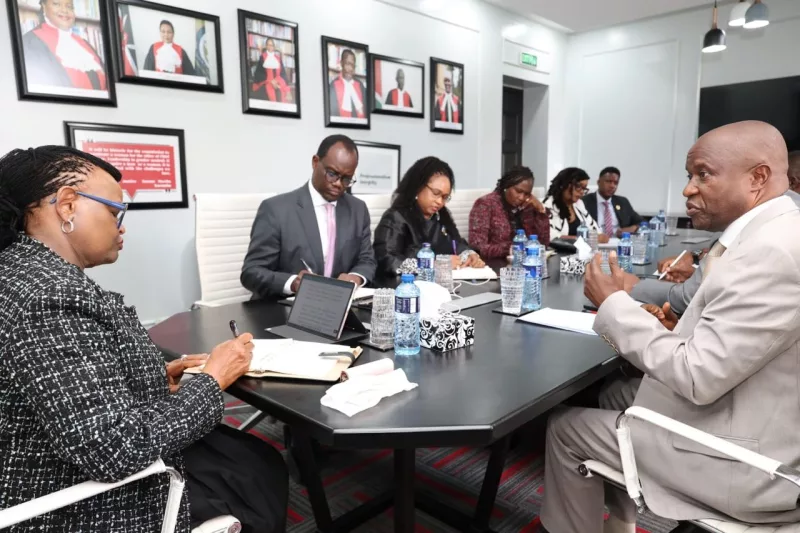
Reuben Musundi, Deputy Director for Partnership and Advocacy at the National Syndemic Diseases Control Council (NSDCC), says mapping exercises are currently underway in partnership with NASCOP and the National Council for Persons with Disabilities (NCPWD) to establish precise data on PWDs living with HIV.
“HIV data requires strict confidentiality management,” Musundi explains. “We are consolidating these metrics to align with the Persons with Disabilities Act and ensure accurate representation in upcoming Global Fund financing cycles.”
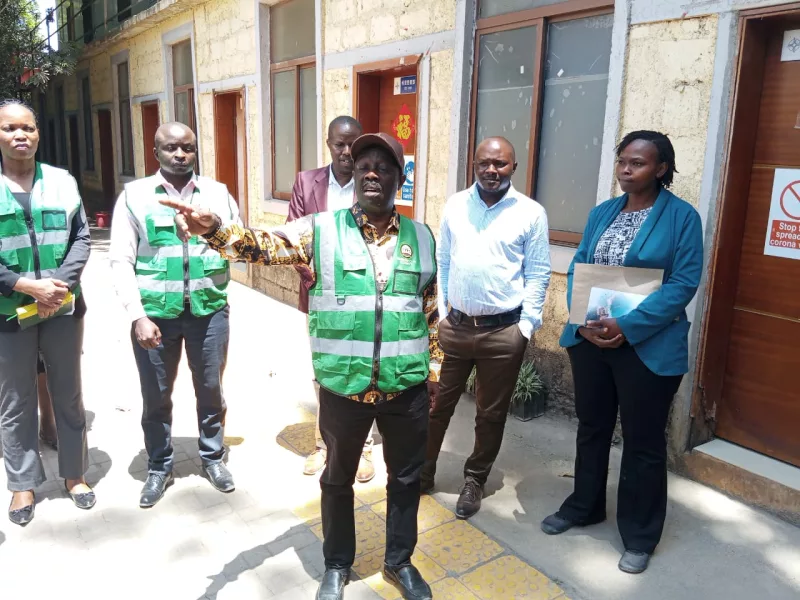
Musundi highlights ongoing systemic improvements, including the production of information and educational resources in Braille in partnership with the Kenya Society for the Blind and the Kenya Red Cross.
County-level training programmes are also being implemented to assist healthcare workers in the management and prescription verification for PWDs.
Efforts are further underway to ensure certified sign language interpreters are available across county health facilities and public policy consultations.
According to reports by UNAIDS, public health research indicates that approximately 25 per cent of the estimated 41 million people living with HIV globally experience some form of disability.
This represents an estimated 10 million individuals facing the dual challenges of disability and HIV management worldwide.
INSTANT ANALYSIS
Mary’s story exposes the devastating consequences of delayed HIV diagnosis, misinformation, stigma and inaccessible healthcare for people living with disabilities. Her experience shows how HIV can become far more dangerous when patients lack timely treatment, accurate information and supportive care. The case also highlights the intersection between disability, gender-based violence, poverty and discrimination, revealing barriers that go beyond medicine.
Her misdiagnosis, medication error and struggle to access specialist eye care demonstrate gaps in an overstretched system that can have life-changing consequences. Yet her transformation into an advocate offers hope. Her story underscores the urgent need for inclusive HIV services, accessible information, confidentiality and stronger protection for vulnerable patients.