
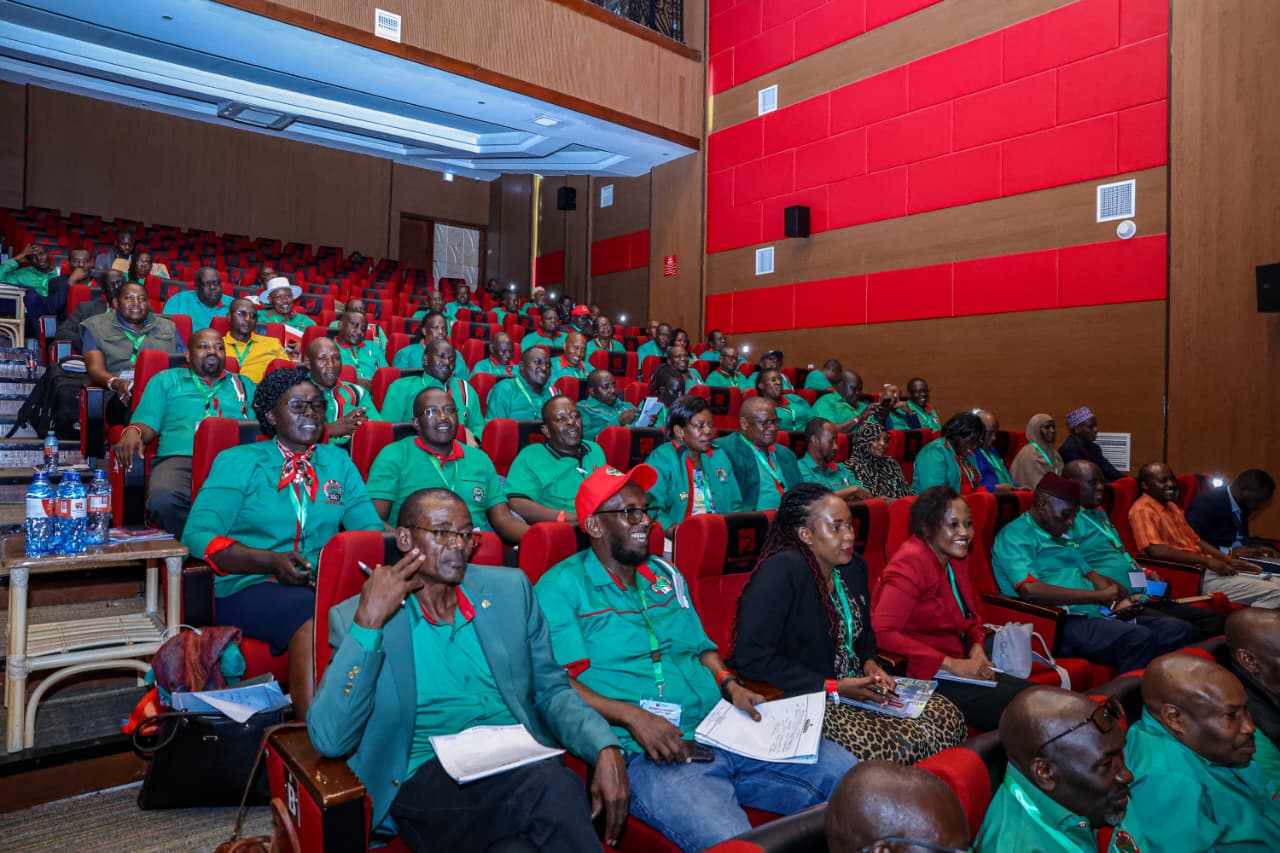
Teachers involved in the management of national exams and assessments could soon be barred from going on strike during examination periods.
A proposed law before members of the National Assembly seeks to introduce tougher new controls on management of the country’s examination system where teachers play a central role.
The Kenya National Educational Assessments Council Bill, 2026, seeks to scrap the Kenya National Examinations Council and replace it with a new entity.
The new agency would be known as Kenya National Educational Assessments Council
Among the changes in the state-backed law is a provision that seeks to limit the constitutional right to strike for people involved in national assessments.
Under Clause 60, the right to strike guaranteed under Article 41 of the constitution would be limited during an assessment period.
“A person engaged in the management, organisation or administration of any national assessment shall not go on strike during an assessment period,” the bill sponsored by Majority leader Kimani Ichung’wah reads.
This would be where industrial action, in the opinion of the council, could compromise the integrity or security of an assessment.
Strikes would also be checked against whether they would interfere with the rights of others or disrupt the orderly conduct of the examination.
The provision would directly affect teachers who serve as centre managers, invigilators, examiners and other officials during national assessments.
It could therefore prevent teachers from withdrawing their labour at the very time national examinations are being administered.
Knut secretary general Collins Oyuu, when contacted by the Star on the proposed law, said it doesn’t sit well with the union.
“The proposal is fundamentally flawed. The right to withdraw labour cannot be suspended. Exam administration is work and our members’ right cannot be curtailed,” Oyuu said, adding that Knut will restate the position when it submits views on the bill to Parliament.
The new law comes as the government seeks to transform the country's assessment system under the Competency-Based Curriculum.
The system is moving away from an examination model dominated by final tests towards continuous, school-based and digital assessment.
The proposed Kenya National Educational Assessments Council will have powers over examinations, continuous assessment, certification and digital testing.
The proposed law also creates a tough criminal regime for examination malpractice in efforts by President William Ruto’s administration to curb exam cheating.
It also spells tougher penalties for unauthorised possession or sharing of examination papers, misuse of assessment materials, impersonation, forgery and offences committed by assessment officials.
The proposed council would have powers to conduct both conventional examinations and e-assessments.
E-assessment is defined in the bill as the use of digital, online or computer-based assessment.
On penalties for examination offences, a person who obtains unauthorised possession of an assessment paper, material or information could face up to 10 years in prison, a Sh2 million fine, or both.
The same penalty would apply to a person who “knowingly gains unauthorised possession of examination material or information.”
Sharing examination papers or related information through mass communication channels could attract up to five years in prison, a Sh5 million fine, or both.
The bill also makes it an offence to negligently or deliberately lose, misuse or handle examination material in a manner that prejudices the fair conduct of an assessment.
Such an offence could attract up to five years in jail, a Sh1 million fine, or both.
Counterfeiting an assessment report, certificate or diploma would attract a heavier penalty of up to 10 years in prison or a Sh10 million fine, or both.
RULES FOR CANDIDATES
The proposed law gives the new council wide powers to deal with candidates found guilty of malpractice.
A candidate involved in malpractice could have the entire assessment disqualified.
They risk being barred from taking another assessment administered by the council for up to three years.
The bill specifically identifies malpractice to include plagiarism, collusion, and receiving unauthorised assistance.
Using unauthorised materials or accessing other internet browsers for answers during an assessment would also be punishable.
The council would also be empowered to withhold results while investigating suspected malpractice.
Impersonating another candidate could attract up to two years in prison or a Sh2 million fine.
Allowing another person to sit an assessment on one's behalf would carry similar penalties.
School heads also face heavier legal obligations starting with ensuring that candidate details are properly captured and that assessment procedures are followed.
The bill proposes criminal penalties where a centre head registers non-existent candidates or negligently fails to register eligible learners.
A head who negligently loses examination material could also face prosecution.
Assessment officers whose actions or omissions result in an assessment irregularity, face a penalty of up to five years in prison, a Sh5 million fine, or both.
Another major change in the bill is the proposed restriction on access to examination information.
Clause 61 says the new council would not be obliged to release information, data, scripts or other assessment material.
This will be where disclosure could compromise the integrity of an assessment, interfere with the assessment process or breach privacy.
If enacted, KNEAC would have stronger legal grounds to withhold sensitive assessment information.
The bill also allows the council to establish and regulate e-assessment centres, marking centres and distribution centres.
The proposal points to a future in which more examinations and assessments could be administered electronically.







