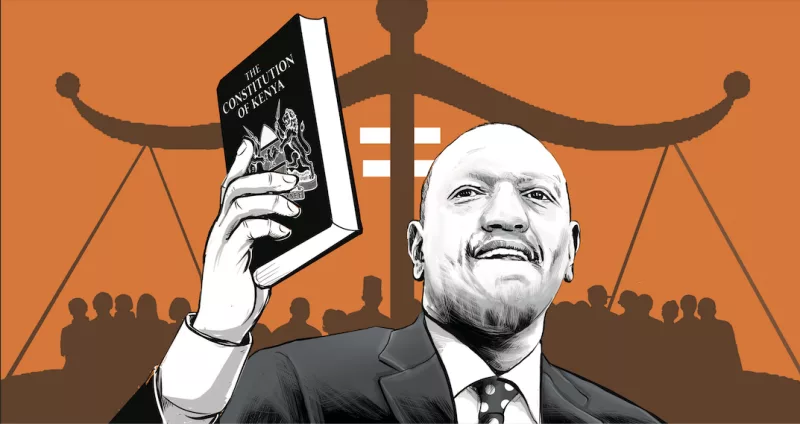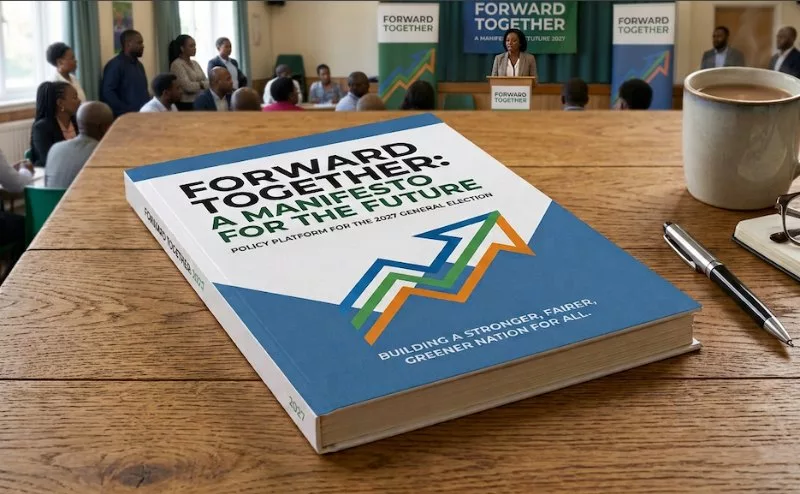
Every five years, Kenyans sit through the same show: a manifesto promising to "transform" agriculture, revolutionise healthcare, industrialise the economy – promises that resurface, unmet, in the next campaign.
The cycle repeats because manifestos run on slogans, not honest diagnosis of Kenyans’ real issues. Kenya needs commitments tied to laws, budgets and institutional reform, not merely another vision statement.
As we enter the home stretch to the 2027 general election, six issues deserve to anchor a serious manifesto: water and food sovereignty, financing for healthcare and education, agriculture, manufacturing and energy.
Politicians talk about water security, rarely about who controls the water. Under the Water Act 2016, groundwater is a public resource, and every borehole requires permits, surveys, fees and metering. The principle is sound; the implementation isn't; commercial users absorb those costs easily, smallholders cannot.
Fees calibrated for commercial operators are unsustainable for a household sinking a borehole on its own land, which should draw on the water beneath it without industrial-scale regulatory weight.
Progressive legislation would support household abstraction, distinguish subsistence from commercial use, and reserve heavier compliance for large users in water-stressed catchments - not less regulation everywhere, but regulation calibrated so households extract value from their land instead of being priced out of it.
Kenya's food debate has been swallowed by the GMO fight, crowding out a more basic question: who controls the country's food systems? That fight has drowned out the decline of the National Cereals and Produce Board's grain reserve, chronic import dependence and underinvestment in public seed development.
A food sovereignty manifesto would rebuild grain reserves with predictable funding, strengthen public seed breeding and protect farmers' rights to save and exchange indigenous seed – resilience comes from domestic institutions, not imports.
Healthcare and education show the same pattern: ambitious reforms with no sustainable way to pay for them. The Social Health Authority replaced NHIF on a promise of universal coverage, but a funding gap and delayed hospital payments expose how shaky that promise is when it leans on a struggling informal economy.
Public universities face the same squeeze, even under a new funding model. A transformative manifesto must specify how reforms get funded in the long term, with predictable, multi-year Treasury commitments and enforceable disbursement schedules.
Agriculture contributed 23.2 per cent of GDP in 2025, thanks to fertiliser subsidies that pushed maize production up – real gains, not structural transformation. The sector remains hobbled by weak extension services, inadequate storage and fragmented land holdings; subsidies lift yields for a season but cannot substitute for investment in productivity.
A serious manifesto would treat subsidies as temporary support, not strategy, and commit to sustainable, measurable gains in extension, irrigation and post-harvest infrastructure.
Manufacturing's share of GDP has slid from around 11 per cent in 2011 to just over seven per cent today, moving Kenya further from its Vision 2030 target. High electricity costs, inconsistent tax treatment, delayed VAT refunds and illicit trade keep chipping away at industrial competitiveness.
Instead of another round of Special Economic Zones, a credible manifesto would guarantee stable tax treatment for industrial inputs, clear VAT arrears on fixed timelines and strengthen enforcement against illicit trade — manufacturing needs certainty, not another announcement.
Kenya has built one of Africa's cleanest electricity systems, generating nearly 90 per cent of its power from renewables — geothermal, hydro, wind and solar — with geothermal alone supplying almost half. Yet households and businesses pay some of the region's highest tariffs.
That's not a generation problem: installed capacity is roughly 3,300 MW, of which renewables make up 75–77 per cent, the rest thermal backup for dry seasons or low-wind periods. Renewables run at higher capacity factors, so they produce nearly 90 per cent of electricity consumed despite a smaller share of the hardware.
The challenge is not building more power generation plants; it is making consumers benefit from what's built – universal connectivity. Legacy power purchase agreements, system losses and a tariff structure that doesn't pass through geothermal's low marginal cost keep bills high.
A serious manifesto would finish electricity market reforms, publish a timetable for competitive renewable auctions and tie industrial tariffs to geothermal's real cost rather than legacy contracts. Kenya needs pricing that reflects the clean energy it already produces, not more megawatts on paper.
These six issues are not separate policy silos; they are the same argument applied to different sectors, feeding one outcome: households and firms that build wealth instead of navigating the state.
A household that can affordably draw water from its own land, a farmer with reliable extension and storage, a manufacturer facing predictable tax treatment, a patient covered by a working health scheme — each is a Kenyan with more capacity to produce, save and invest.
The 2027 election should not be won by whoever offers the grandest promises, but by whoever presents the most credible plan for implementing them: a manifesto that reads like an audited delivery plan, with timelines, funding commitments and measurable outcomes attached. That's the standard every candidate should be judged against.
The writer is a communications consultant