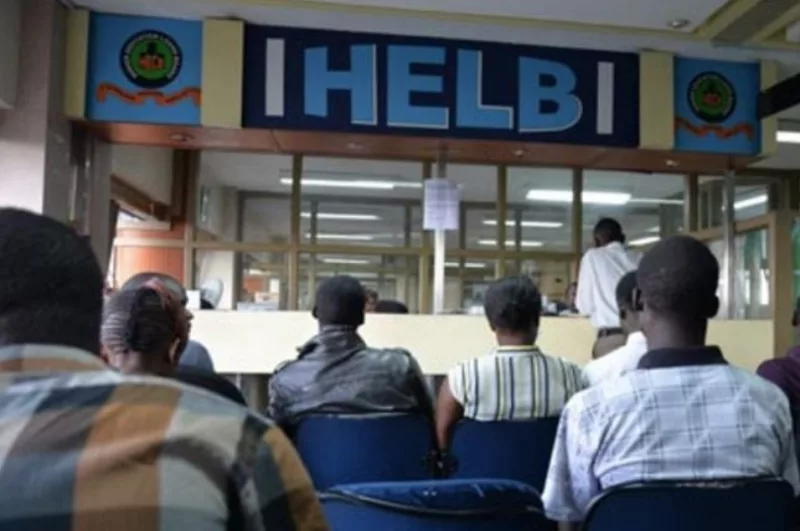
 University students wait to apply for loans at Helb headquarters in Nairobi. /FILE
HELB is set to be scrapped and replaced by a new Tertiary
Education Funding Authority in sweeping reforms that will overhaul how
university and college students receive government support.
Under the Tertiary Education, Placement and Funding Bill,
2026, tabled in the National Assembly by Majority Leader Kimani Ichung’wah,
Higher Education Loans Board (HELB) would cease to exist as a legal entity.
The proposed law also creates a new central placement body
and, if approved, will consolidate student admission, loans and scholarships
under two powerful state agencies.
Its functions will be transferred to the proposed Tertiary
Education Funding Authority.
A Kenya Universities and Colleges Central Placement Service
has been proposed as the successor to the existing placement board.
If enacted, the law would repeal the Higher Education Loans
Board Act, Part VI and VIII of the Universities Act, and Part IX of the
Technical and Vocational Education and Training Act.
It would also bring the Universities Fund Board and the
Technical and Vocational Education and Training Funding Board under the new
Tertiary Education Funding Authority.
According to the Bill, placement will be a critical gateway
to government financing.
It provides that the Placement Service shall place all
eligible students seeking to join public tertiary institutions.
The agency will also maintain an updated list of accredited
institutions, programmes, capacity and approved costs.
It further states that “funding under the proposed law shall
be for students who have been placed by the Placement Service”.
As such, admission and financing would be closely linked.
“We are working to ensure every student who qualifies for
university entry is fully funded regardless of their background,” Deputy
President Kithure Kindiki said yesterday at the launch of the national
conversation.
The state is seeking to establish a central system through
which students are placed and subsequently considered for government support.
The Placement Service would also offer coordinated career
guidance to young people intending to pursue tertiary education.
Public tertiary institutions would be required to submit
details of programmes, available capacity and approved programme costs before
the release of national examination results.
The Placement Service will be required to validate the
information with the relevant regulatory bodies and publish the programmes,
capacity and costs on its portal.
Students could, however, be placed in private tertiary
institutions where they request it and where there is no vacancy in a public
institution for their preferred course.
“The service shall develop a placement framework to guide
the placement process,” the Bill reads, in a win for private universities that
have been struggling with placements from the state agency.
The Bill, if enacted, would see more students become
eligible for education loans.
It states that every student or trainee admitted to a public
or private tertiary institution shall be eligible for an education loan.
This would be provided that the applicant is a Kenyan
citizen and meets the requirements of the law.
The proposed law would cover students in universities,
colleges and TVET institutions.
The proposed Tertiary Education Funding Authority would be
responsible for mobilising funds.
It will set funding criteria in consultation with the
Education Cabinet Secretary.
It will also be the agency tasked with issuing loans and
administering scholarships.
The authority would also maintain a central data management
system covering students receiving funding, loan repayments and placement.
The proposed law would establish a Tertiary Education Fund,
which would finance education loans.
The fund would receive money appropriated by Parliament,
investment proceeds and repayments of loans issued under the new law.
It would also receive funds from the repealed HELB Act,
interest earned from repayments, grants, donations and other lawful revenues.
The government is also seeking to broaden the pool of money
available for student financing beyond traditional budget allocations.
The proposed authority would be empowered to raise funds
through Treasury bills and bonds, concessional loans, government grants,
savings schemes, unit trusts, commercial partners and loan repayments.
More significantly, it would be allowed to mobilise private
capital and non-traditional sources of education finance.
The list includes domestic pension funds, collective investment
schemes, sovereign wealth funds and climate finance.
The authority could also establish a savings scheme allowing
individuals to save for the tertiary education of a specific child.
Tertiary education financing is being designed to be less
dependent on annual Exchequer allocations amid the pressing demand.
LOAN REPAYMENT
Students benefiting from the new financing system would have
to begin repaying their loans within one year of completing their studies.
The repayment would include the principal, accrued interest
and other applicable charges.
Borrowers in formal employment would be required to disclose
their loan status to their employers.
The authority would be barred from deducting more than 25
per cent of a borrower’s salary.
For borrowers in informal employment, the Bill provides for
a payment plan to be agreed with the authority, stating the mode and frequency
of repayment.
Employers would have to remit deductions within nine days
after the end of every month.
An employer who deducts money from an employee but fails to
remit it on time would face a penalty equivalent to five per cent of the
repayment for every month, or part of a month, that the money remains unpaid.
The authority would also have powers to recover outstanding
sums as civil debts.
The new authority will succeed the Higher Education Loans
Management Board, the Universities Fund Board and the TVET Funding Board.
Similarly, the new Placement Service will take over from the
existing Kenya Universities and Colleges Central Placement Service Board.
Staff working for HELB, the Universities Fund and the TVET
Funding Board would automatically become employees of the successor
institutions.
The proposed funding authority would have broad powers
beyond disbursing student loans.
It would manage and recover loans and set interest rates in
consultation with the Cabinet Secretary.
It would also have powers to enter and inspect business
premises and employers for compliance with loan repayment requirements.
The authority would be empowered to request data from
individuals and institutions and use existing government and third-party
databases in carrying out its functions.
Both the Placement Service and Funding Authority would be
governed by boards.
The President would appoint the chairpersons, while the Education Cabinet Secretary would appoint independent members.