Leverage trading means putting down a small deposit, called margin, to control a much larger position in the market. If you have seen trading ads promising big returns from a small amount of money, leverage is usually the mechanism behind that claim. It works exactly the same way in reverse, though, magnifying losses just as easily as gains. Here is what leverage actually does to your money, with worked numbers, before you try it yourself.
What "leverage" actually means, in plain terms
Say you deposit Sh10,000 with a broker offering 10:1 leverage. Instead of only being able to trade Sh10,000 worth of a currency pair or other instrument, that deposit lets you control a position worth Sh100,000. The broker is effectively letting you trade with borrowed exposure, using your deposit as security.
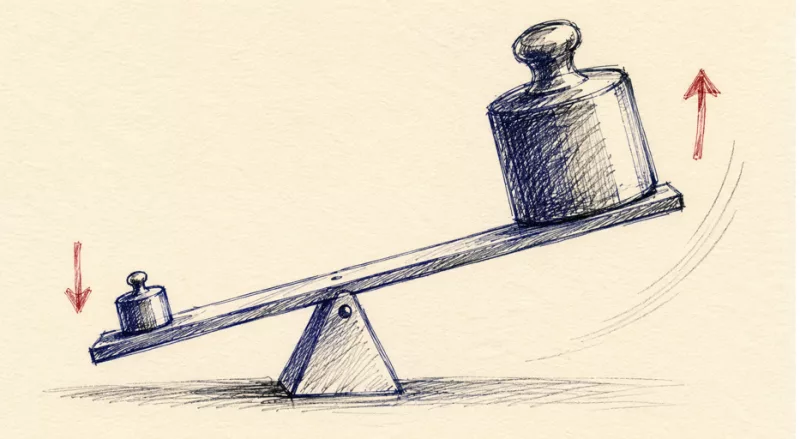
The ratio describes how much bigger your position is than your deposit. At 10:1, your position is ten times your margin. At 100:1, it is a hundred times. The higher the ratio, the smaller the price move needed to significantly affect your account.
A worked example: how leverage changes your gains and losses
Using the Sh100,000 position from above, a 5% move in your favour is worth Sh5,000. Against your original Sh10,000 deposit, that is a 50% return. Without leverage, buying Sh10,000 worth of the same instrument outright would only earn you Sh500 on that same 5% move, a 5% return.
The same 5% move against you erases half your deposit in the leveraged position, compared with a 5% dent in the unleveraged one. Leverage does not change how much the market moves. It changes how much that movement is worth to your account.
Margin calls and negative balance protection: what happens if a trade goes against you
As losses eat into your deposit, brokers use a margin call to warn you that your account is running low on the funds needed to keep a leveraged position open. If losses continue and you do not add funds, the broker will typically close, or stop out, the position automatically before your losses can exceed what is in your account.
Negative balance protection is a safeguard on top of this, capping your total losses at the funds in your account rather than leaving you owing the broker money if a market gaps sharply. Regulated brokers in most major markets are required to offer this, but it is worth confirming directly rather than assuming.
Why leverage limits exist, and what Kenya's rules say
Brokers licensed by the Capital Markets Authority to offer online forex trading in Kenya are capped at a maximum leverage of 1:400 on major currency pairs, under the 2017 regulations governing the sector. That cap sits well below what some offshore brokers advertise under other jurisdictions, and it exists specifically to limit how fast a retail account can be wiped out.
Even at that Kenyan cap, the risk is real. A Sh10,000 deposit at 1:400 leverage controls a position worth Sh 4,000,000. A price move of just 0.25% against that position is enough to erase the entire deposit, which is exactly why margin calls and stop-outs exist as a circuit breaker.
A short checklist before you try leverage trading
Before you put real money intoleverage trading, a few habits are worth building first:
● Practise on a free demo account until you understand how margin and stop-outs behave in real time.
● Work out the exact position size a given leverage ratio lets you control before you open a trade, not after.
● Use a stop-loss order on every position, so a bad move closes automatically rather than compounding.
● Confirm the broker offers negative balance protection before you fund a live account.
● Start with lower leverage than the maximum on offer, even if a higher ratio is available.
Common questions
Is higher leverage always riskier? Yes, in the sense that it takes a smaller price move to significantly affect your account. Higher leverage does not increase your chances of winning a trade, only the size of the outcome either way.
Do I need experience to use leverage? No broker requires it, but that is exactly why beginners are most at risk. Spend real time on a demo account before using leverage with money you cannot afford to lose.
Can I lose more than my deposit? That depends on whether the broker offers negative balance protection. Confirm this directly, since it caps your losses at the funds already in your account.
Is leverage trading legal in Kenya? Yes, both through CMA-licensed brokers, which are capped at 1:400 on major pairs, and through internationally regulated offshore brokers, which Kenyan residents can also use.
What leverage ratio should a beginner use? There is no single correct number, but starting well below the maximum available, and increasing it only once you understand how margin calls behave, is a reasonable approach.
Leverage trading can turn a small deposit into meaningful exposure to the market, but it applies that same multiplier to your losses. Understand the math before you use it, keep your position sizes deliberate, and treat the leverage ratio as a risk setting you control, not just a feature to max out.