For weeks during the protests of 2024, the government office of communication was filled with tension, hectic activity and trying to keep up with public outrage.
As thousands of young Kenyans took to the streets over the Finance Bill, the officials whose job was to explain, defend and communicate government policy found themselves working deep into the night, trying to keep pace with an unfolding crisis.
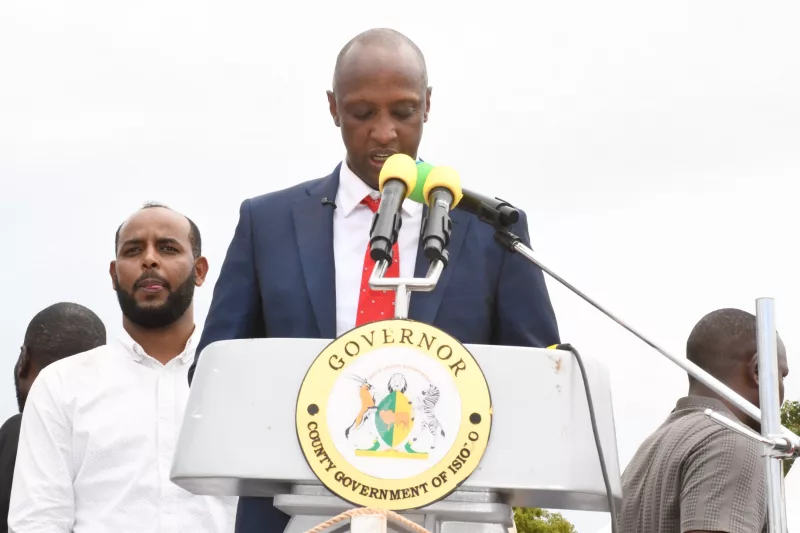
Outgoing Government Spokesperson Isaac Mwaura says those were the most difficult days of his 33-month tenure.
Mwaura has now been redesignated by President William Ruto as Head of the Office of Diversity, Inclusion and Disability Rights in the Executive Office of the President.
“The most challenging moment was the Gen Z protest of 2024. We were literally sleeping in the office,” he said.
The protests, which began as opposition to the Finance Bill, quickly grew into one of the biggest political challenges faced by the Kenya Kwanza administration.
For Mwaura and his team, they also exposed the difficulties of communicating government policy at a time when public anger was rising rapidly and information was moving at unprecedented speed across social media.
Mwaura said government officials had identified contentious provisions in the Finance Bill before it reached Parliament but decided to leave the legislation to lawmakers.
“By the time the issue, the bill was taken to the Cabinet, we could realise there were some clauses that would make us unpopular. But we said, let Parliament deal with it. But by the time Parliament was dealing with them, the damage had been done,” he said.
As demonstrations intensified, his office was forced to rethink how it communicated with the public.
“We really tried our best, we had to be very innovative and we were able to hack it,” Mwaura said.
But his assessment of the protests remains sharply contested.
While the demonstrations were triggered by opposition to the Finance Bill, Mwaura described them as something much bigger, saying they amounted to an attempt to overthrow the government.
“I’m going to say that was more of a coup, it was not really about the bill. It was about overthrowing a government, a legitimately elected government,” he said.
Beyond the protests, Mwaura said his tenure exposed deeper challenges in how the government communicates.
Public distrust, misinformation and conflicting statements from different state agencies, he said, have continued to complicate efforts to deliver a coherent government message.
The role of his office has also changed.
Mwaura said it had evolved from being the government’s primary communication channel into an aggregator of information from ministries, departments and agencies.
“We don’t have the monopoly of communication, but we have the legitimacy of speaking for government,” he said.
One of the biggest frustrations, he said, has been officials releasing information independently, sometimes because they want to break news themselves.
“Communication discipline and etiquette are still a challenge. You need superior systems, superior content, and superior reach,” Mwaura said.
Mwaura leaves the office having overseen a significant expansion.
He said the team grew from seven staff members to 80, with six departments established during his tenure.
The office also introduced 33 communication products, including the weekly Government Bulletin and the Sema na Spox Bonga na Gava podcast.
More than 250 national press briefings were held during his tenure, alongside an expanded use of digital platforms and multimedia communication.
But it is the tumultuous days of 2024 that appear to have left the deepest mark.
For an office whose business is words, the Gen Z protests presented a moment when words struggled to keep pace with public anger.
He leaves behind a government communications office that is considerably larger and more digitally oriented than the one he inherited — and a candid account of the most turbulent period of his tenure.