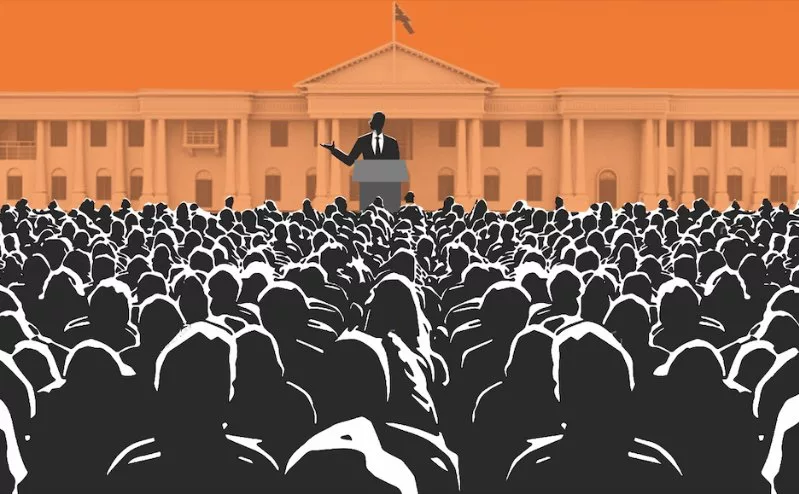
Kenya’s 2027 general election may still be a year away, but the political environment in which that election will be fought is already taking shape. It is not only visible in the rallies, convoys, branded T-shirts, political songs and promises, but is also emerging in a quieter form of political engagement characterised by the growing practice of the President meeting large, organised groups representing different sections of society.
Since September 2025, State House has hosted engagements with constituencies ranging from teachers and religious communities to grassroots leaders and professional groups. More than 10,000 teachers attended a meeting with President William Ruto in September 2025, followed in 2026 by about 6,500 Akorino faithful and thousands of grassroots leaders from Kirinyaga.
The President has also met diaspora representatives and religious leaders, including Muslim leaders at State House, Nairobi, on August 5, before hosting more than 10,000 private security officers the following day. Individually, each meeting can be understood as part of the ordinary work of a President engaging citizens; all things considered, their scale, frequency and timing are manifestations of what the stage is being set for.
These large gatherings are accompanied by material benefits, as reported at the September 2025 teachers’ meeting, where Kuppet chairman Omboko Milemba said each of the 10,000 teachers received Sh10,000 as transport reimbursement, amounting to approximately Sh100 million, with similar reports emerging from some more recent gatherings.
The use of public money in connection with large organised constituencies raises reasonable questions about how such payments are authorised, accounted for and justified, and whether they serve a clearly defined public purpose.
The issue goes beyond the amount involved. It relates to the broader responsibility attached to public office. Article 73 of the constitution treats state office as a public trust, while Articles 201(d) and 232(1)(b) require public resources to be used prudently, efficiently and economically.
As the country moves towards a general election, these obligations take on added significance because Kenya’s electoral laws also guard against material benefits being used to influence political choices. Section 62 of the Elections Act addresses treating, including giving or promising money or other provisions to “corruptly influence” voting, while the Election Offences Act prohibits the use of public resources for campaigning during an election or referendum.
These provisions do not prevent the government from responding to citizens’ needs, but they make the purpose, authorisation and circumstances surrounding such benefits legitimate subjects for public scrutiny.
Beyond individual engagements lies the less visible advantage of incumbency. A sitting administration has the state’s institutions, programmes, platforms and the visibility of the presidency at its disposal, advantages that political competitors cannot easily reproduce.
None of this is unusual in government, but when the same machinery repeatedly brings large organised constituencies into direct contact with those in power, it can shape the political environment in which citizens form their choices.
This is why Article 81’s promise of free and fair elections matters. Fairness must also be considered in the conditions under which political preferences are formed, particularly where access to state platforms and public resources can give one side a visibility that others cannot reasonably match.
As Montesquieu put it, “Power ought to be a check to power”. For an incumbent, that principle matters most when political advantage is within reach.
Programme Manager for Political Accountability in State Institutions at the Kenya Human Rights Commission