Kenyan advocates—the men and women who willingly sweat in heavy dark robes and synthetic horsehair wigs before shouting "My Lord"—have descended upon the scenic Diani in Kwale county.
The annual Law Society of Kenya (LSK) Convention is underway, tackling the theme: Business Unusual: Legal Practice in the Era of Artificial Intelligence. The sub-themes of electoral justice and alternative dispute resolution are also in discussion.
Naturally, I scoured the formal programme to see just how deeply the executive and judiciary branches are invested in the convention. I focused on the executive for three reasons.
First, the current administration practically rode into power on a wheelbarrow named 'The Rule of Law'.
In fact, the 49th LSK president, Nelson Havi, famously loaded a section of his council and assorted henchmen onto a symbolic wheelbarrow and wheeled them straight into the President's camp.
These learned friends lent massive legitimacy to the quest for power—only to become the very first passengers pushed off the wheelbarrow once the government was formed.
Havi was undervalued; he bolted out. His deputy, Ambassador Caroline Kamende, was recently axed from a prime diplomatic posting, just when she was settling down.
Second, the LSK and the executive are legally joined at the hip. Under the LSK Act, 2014, the object and function of the Society are to assist the government on legislation, the administration of justice and the practice of law in Kenya.
It is also to uphold the Constitution of Kenya, advance the rule of law and the administration of justice, and to protect public interest.
Of the Society’s guiding principles, the majority are outward facing. These are the advancement of constitutionalism, justice and the rule of law, facilitation of access to justice, and the protection of public interest.
Third, the bar and the bench are on a warpath at the moment. A targeted boycott of certain judges and judicial officers is currently underway, creating a paralysis in the administration of justice.
I did not thus expect high-profile judiciary investment in the discussion, although a brand-new Court of Appeal judge, Justice (Dr) Johnson Okello, is addressing the convention.
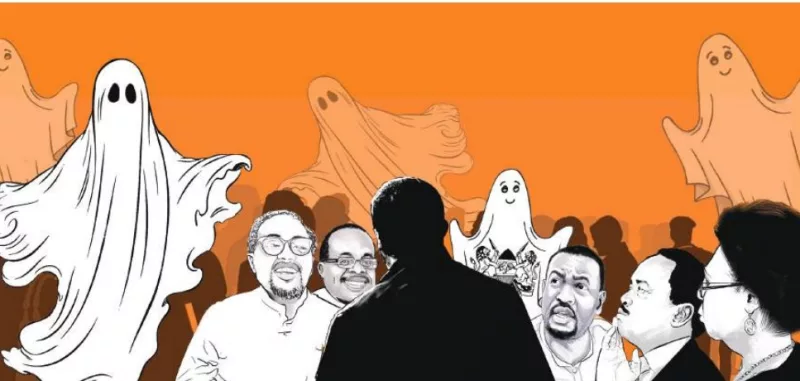
I expected the executive to take greater judicial notice of the convention than the judiciary. Instead, they too have completely ghosted it, or were ghosted by the organisers.
Aside from the president's Special Envoy on Technology, Ambassador Philip Thigo, and Secretary to the Cabinet Mercy Wanjau, the administration’s legal heavyweights are nowhere to be seen.
Not even Attorney General Dorcas Oduor—the actual titular head of the Kenyan Bar—has a formal role on the Diani stages.
The high-profile LSK alumni who scaled the heights of state power – Deputy President Kithure Kindiki, CS Kipchumba Murkomen and their parliamentary wingmen Moses Wetang’ula and Amason Kingi – are all missing in action.
The snub becomes hilarious when you look at the Annual Gala Dinner programme. Executive representation, just like the judiciary’s, sits at absolute zero.
Instead, Nairobi Senator and presumptive presidential aspirant Edwin Sifuna is the chief guest, strangely "deputised" by his senior, former vice president and opposition veteran Kalonzo Musyoka.
Granted, the LSK chooses its own guest list. But the RSVP list speaks volumes about the current chilly state of affairs between the state and the bar. This is a massive oversight for an administration perpetually wrestling with public confidence.
The rule of law is the fulcrum of national development, yet this government, like its predecessor, has become a perennial loser in court—largely thanks to the LSK's relentless defence of the constitution.
Under Havi, the "null and void" chorus began, and it only grew louder under Faith Odhiambo. The jury is still out on Charles Kanjama’s current tenure, but the early signs point to more of the same.
Taking that cue, and the recent court victories in public interest, the LSK will undoubtedly continue to pin the executive against the wall and to exact premium gains for the rule of law.
This is what the Society must do to live up to its statutory mandate.
The choice for the executive is simple. It can choose to embrace the Society as an invaluable and uncompromising ally in the promotion of the rule of law or choose to view the Society as an enemy, and absorb the punches as they come.
Advocate of the High Court and a Senior Project Manager with the Friedrich Naumann Foundation. The views expressed here are his own