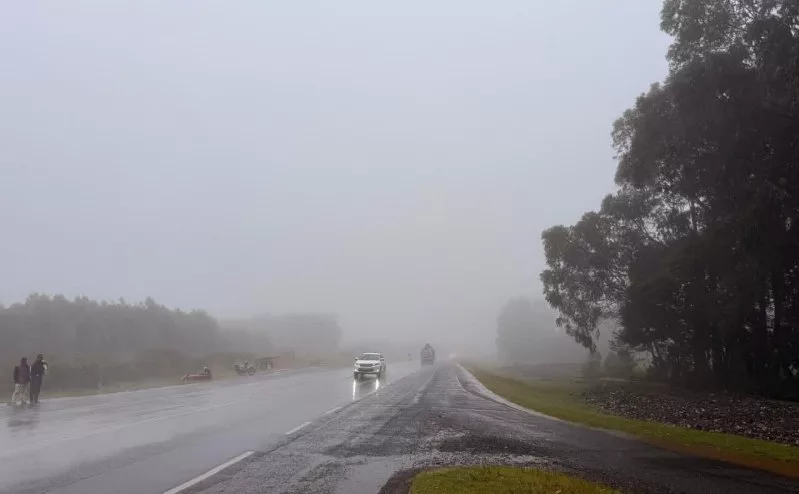
 Fog covered regions in parts of Kenya / FILE
Kenya is facing increasingly erratic rainfall patterns, with prolonged dry spells occurring alongside intense wet spells that can trigger flooding, according to the World Meteorological Organisation’s State of the Climate in Africa 2025 report.
The report says East Africa has experienced strong precipitation variability, with intense wet spells causing widespread flooding in Kenya, Ethiopia, Somalia and Tanzania.
At the same time, rainfall has declined significantly in parts of the Horn of Africa, particularly during the March-May long rains season.
The contrasting conditions are making rainfall increasingly difficult to predict and posing challenges for communities that depend on seasonal rains for farming, livestock and water supplies.
“Precipitation is a key component of the hydrological cycle, providing water for livelihoods, agriculture, industry and hydropower, but its high variability can also lead to droughts, floods and landslides,” the WMO report says.
The report notes that rainfall across Africa has become highly heterogeneous, with the dominant long-term signal being a decline in mean precipitation.
In East Africa, however, the problem is not simply that there is less rain. The timing, intensity and distribution of rainfall are also changing.
The WMO says East Africa has experienced intense wet spells capable of producing widespread flooding, while the Horn of Africa has simultaneously recorded significant reductions in rainfall, particularly during the March-May season.
Around the Horn of Africa, annual rainfall was unusually low. The report says both the long and short rainy seasons in East Africa were drier than normal, with particularly dry conditions affecting Kenya and Somalia.
The Greater Horn of Africa experienced particularly dry October-December short rains after average to below-average rainfall during the first half of the year. Kenya and Somalia recorded poor crop and pasture conditions.
The WMO report says floods were among the most frequently reported climate-related disasters across Africa in 2025, accounting for more than half of reported extreme events.
In East Africa, drought affected more than 8.5 million people in Kenya and Somalia, while floods also caused significant loss of life.
The shifting rainfall patterns are influenced by large-scale climate systems, including the El Niño-Southern Oscillation, Indian Ocean conditions and the Indian Ocean Dipole.
The report says the Dipole Mode Index was negative for most of 2025 and shifted significantly from a moderate positive phase in March-April to a negative phase from August through the end of the year. This shift potentially increased dryness in the Horn of Africa during October-December.
The WMO says at least 13 million people across Africa were affected by extreme events in 2025, with more than 3,000 deaths recorded.
It warns that critical gaps remain in multi-hazard early-warning systems, with fewer than 40 per cent of African countries reporting preparedness and response capabilities.