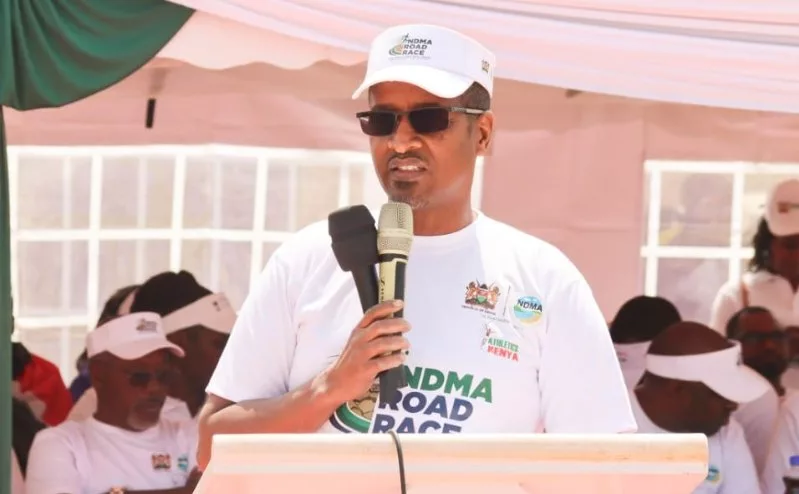
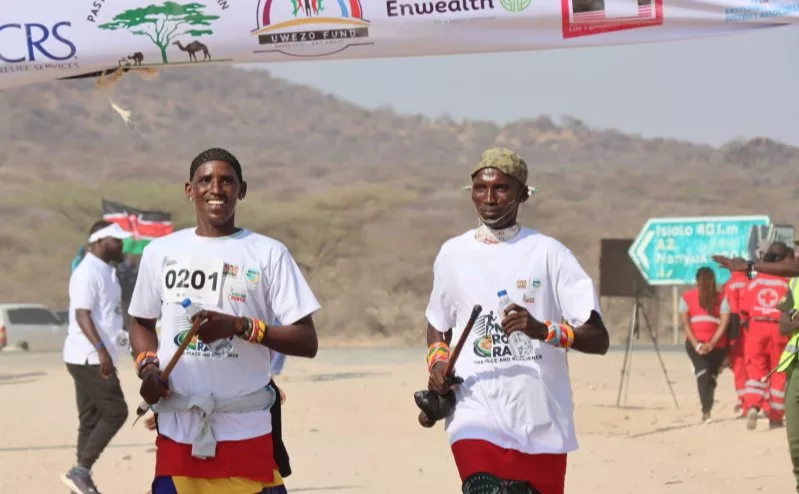
NDMA CEO Lt. Col. (Rtd) Hared Hassan Adan officiating a race 50 raise funds for water services expansion at Archer's Post in Isiolo county on August 9, 2026/ ALICE WAITHERAThe government has been urged to develop targeted empowerment programmes for Maasai morans as part of efforts to tame cattle rustling and other forms of insecurity in the Northern region.Local leaders and peace advocates argued that using force and coercion to deal with morans was not sustainable, urging the government to create opportunities where they could channel their energy into productive activities.Pastoral Heritage Concern NGO's official Mohamed Gabow called for the recruitment of morans into disciplined services and other sectors where they could contribute to the country’s development.He spoke at Archers Post in Isiolo county during a National Drought Management Authority (NDMA) road race on Saturday.“It is not possible to stop human beings from doing what they are doing using coercion. We believe that these morans can do something, yet there is no single programme that targets them like we have youth empowerment programmes and programmes for women,” Gabow said.The race was organised to rally communities in Samburu, Laikipia, Isiolo and Meru behind peace initiatives while mobilising support for drought resilience projects in the affected counties.Gabow attributed cattle rustling and highway robberies among some morans to lack of employment opportunities and the effects of climate change, which have disrupted traditional pastoral livelihoods.Participants during a race organised to expand water coverage in Northeastern counties /ALICE WAITHERAHe disclosed that Pastoral Heritage Concern had launched a start-up programme to help morans rebuild their lives through livestock trading in Samburu, Marsabit, Isiolo and other counties in the Northern region.“We are carrying out a start-up programme for the Morans where we give them money to sell livestock in every market. We appeal to the government to employ these Morans," Gabow appealed."They can join the National Youth Service, the police or even the Kenya Wildlife Service. They do not need certificates; their certificates are their strength.”
Advertisement
Advertisement
The organisation, which focuses on peace-building and reforming morans, has been supporting young pastoralists to engage in alternative livelihoods as part of efforts to reduce their involvement in conflict and livestock theft.
NDMA chief executive officer Lt Col (Rtd.) Hared Adan explained that the road race was deliberately designed to bring morans from the four counties together through sport while strengthening peace efforts and raising funds for drought resilience projects.He said some areas are still experiencing insecurity, but the authority is working with government agencies and development partners to address the challenges and promote development in pastoral communities.“We will work on bringing communities together. They have to stop these issues that are of no importance. There can’t be development without peace. I call on these communities to think before going to invade our people,” Adan urged.Morans participating in a race organised by NDMA to expand water coverage in Northeastern counties /ALICE WAITHERA
Advertisement
Advertisement
The inaugural NDMA Road Race for Peace and Resilience will also support the implementation of community-prioritised drought resilience projects worth Sh130.5 million in four counties.
The projects are expected to benefit more than 5,000 households and more than 50,000 livestock through improved access to water and enhanced livelihoods.
They include the Lmarmaroi Rock Catchment Project in Samburu, Naitutum Water Pipeline Extension Project in Isiolo, Koija Earth Dam Rehabilitation and Livelihood Project in Laikipia, and Nauchi Water Project Solarisation and Rehabilitation in Meru.
NDMA board chairperson Shallow Yahya said drought resilience should increasingly be viewed as an investment rather than a humanitarian intervention, warning that prolonged drought was threatening livelihoods, markets and security in arid and semi-arid areas.
“Investing in drought resilience is not charity. It is an investment in productive communities, stable markets, secure livelihoods and sustainable development,” he said.
Yahya noted that climate change was disproportionately affecting ASAL communities because their livelihoods depend heavily on climate-sensitive resources, particularly water, pasture and livestock.
The road race featured 10km, 5km and 2km categories, followed by a public baraza, prize-giving ceremony, sponsor recognition and presentation of commitment certificates.