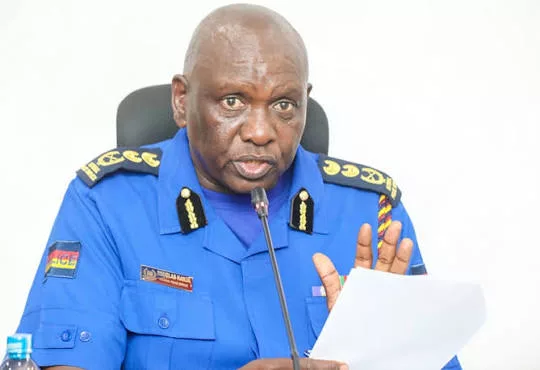
 Inspector General of Police Douglas Kanja/FILE
Inspector General of Police Douglas Kanja has ordered the immediate interdiction of three officers whenever a suspect dies while in police custody, amid growing concern over deaths in police cells.
Kanja directed that the Occurrence Book (OB) recorder, sentry officer and duty officer at the station where the death occurs be interdicted to pave the way for investigations.
“Unless circumstances are beyond one’s control, those responsible should face the law. They know what to do to safeguard the welfare of those in custody,” he said.
The officials are responsible for the management of cells and all those in custody at all times.
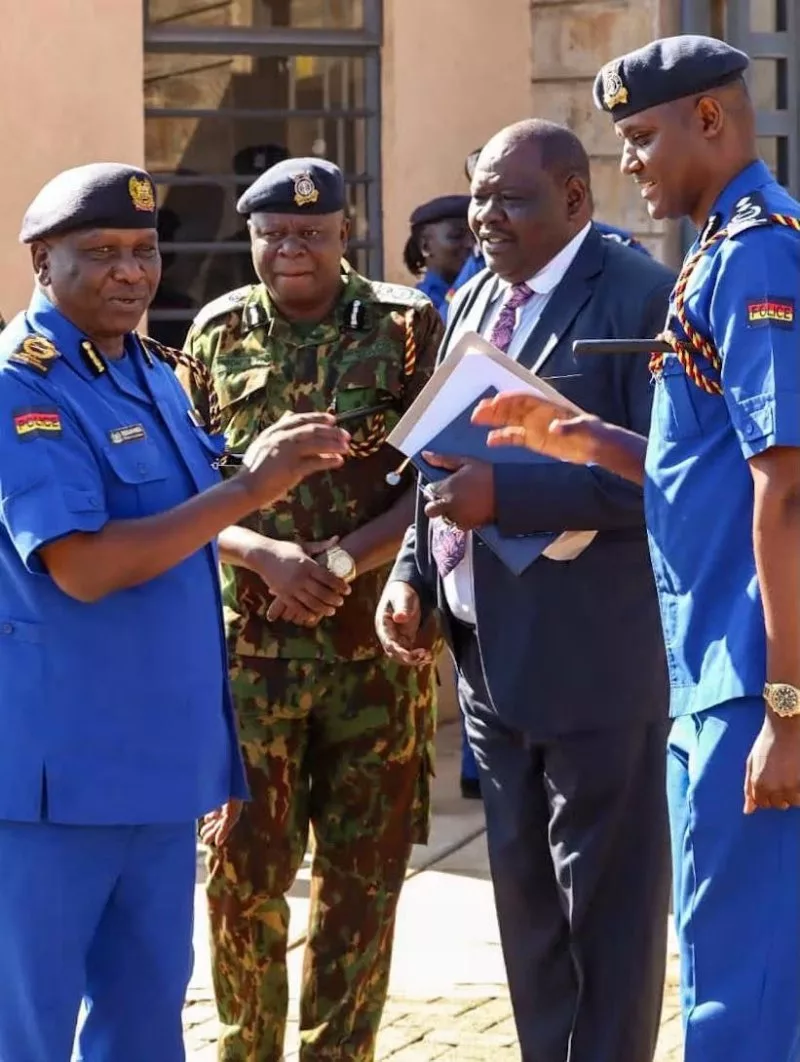
Kanja said the rising number of deaths in custody was a matter of concern and called for greater accountability among officers responsible for detainees.
The latest incident was reported in Makueni, where a suspect died while being held in a police cell. The circumstances surrounding the death remain under investigation, with the deceased’s family disputing claims that he committed suicide.
Relatives have demanded an independent investigation, saying they want answers on how the man died while under the watch of police officers.
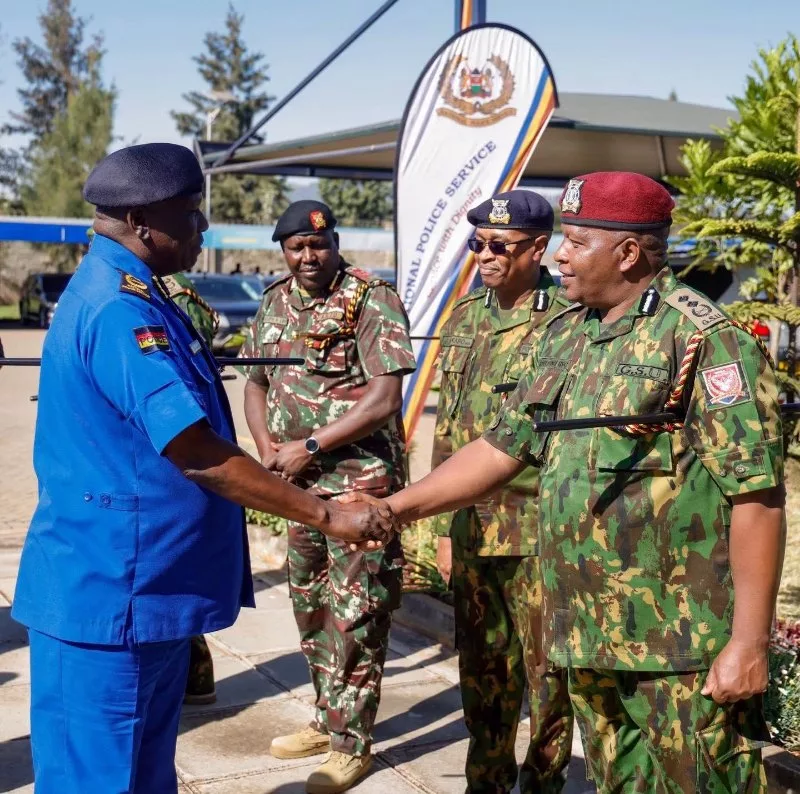
Kanja issued the directive on Wednesday, August 12, while speaking at the Sensitisation Forum on New Service Standing Orders and Police Reforms at the National Police Leadership Academy (NPLA) in Ngong.
VIP security officers put on notice
Kanja also issued a stern warning to officers assigned to VIP protection duties, directing them to operate strictly within the law regardless of the status of the individuals they protect.
He singled out VIP protection as an area of concern within the National Police Service, saying the unit required closer attention and stronger adherence to established procedures.
“I’ve mentioned the VIP protection because that is an area that we have not been doing very well. The officers must be reminded that they must, at all times, operate within the framework of the law,” Kanja said.
He warned that officers who violate the law while performing VIP protection duties would be held personally responsible for their actions.
Kanja said the police service would not shield officers who engage in excessive or unlawful conduct.
“Any officer who deviates out of that, then we’ve got nobody to blame because we will not take excessive,” he said.
The warning comes amid increased scrutiny of the conduct of officers attached to VIP protection details, particularly following the fatal shooting of youth mobiliser Cecil Ouma in Nairobi by a police bodyguard.
Opposition figures have also raised concerns over alleged political interference in VIP security operations, claiming that some officers attached to high-profile individuals receive directives from politicians.
Kanja’s remarks appeared aimed at drawing a clear line between political instructions and police responsibility, reminding officers that their primary obligation is to the law.
The Inspector General’s directives come as the National Police Service seeks to strengthen accountability and professional conduct through new Service Standing Orders and ongoing police reforms.
The emphasis on deaths in custody and VIP protection places individual officers under increased scrutiny, with Kanja making clear that responsibility for unlawful actions will rest with the officers involved.