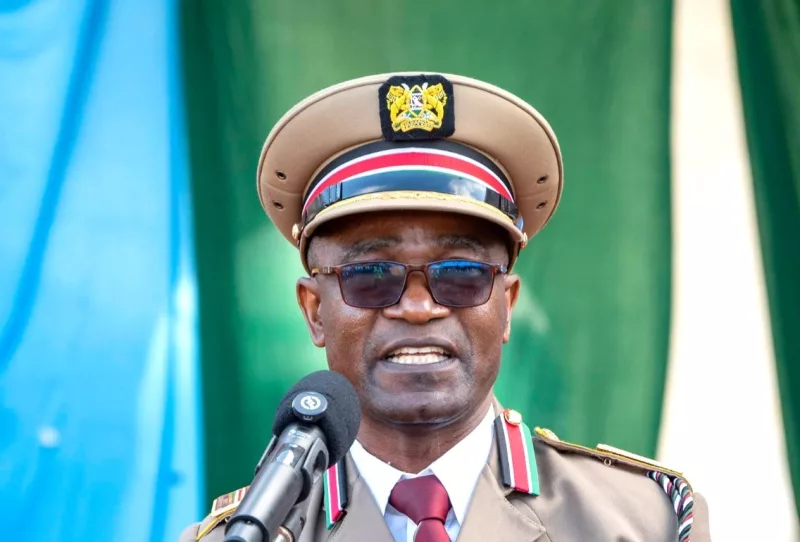
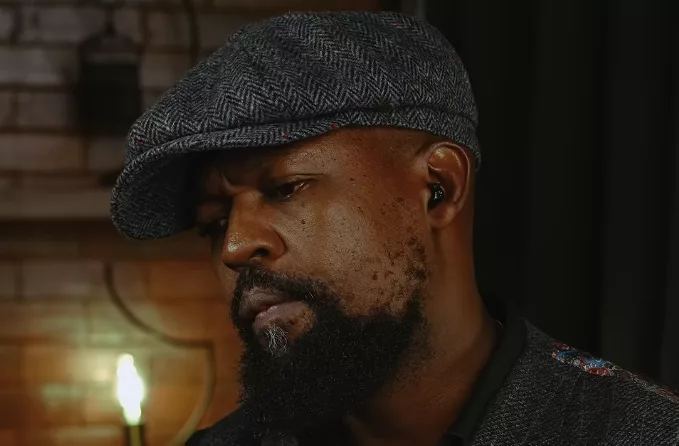
 Alex Mwakideu during a documentary on battling a hearing loss problem. /SCREENGRAB
Veteran radio presenter and corporate MC Alex Mwakideu has opened up about a deeply personal health journey, revealing that he has been battling hearing loss for several years.
In a self-told short documentary titled Hear Me Clearly, Mwakideu takes his audience back to where his radio journey began in Mombasa and recounts his search for solutions to a health condition that threatened a career defined by sound.
“I walked into this door, carrying nothing but a dream,” he said, gently running his hand over the radio station’s logo above the door during his first visit to the building in many years.
“I was just a young boy, I wasn't famous, I wasn't experienced. I didn't even know that this is actually where I belong. But somebody gave me a chance and that chance changed my life forever,” he said nostalgically.
Mwakideu said it was at the radio station, which has since closed shop, that he first got an opportunity to go live on air, starting as a news reader before becoming a gospel show host and later a sports news presenter.
He said the opportunity enabled him to travel the world, study abroad and even cover the Olympic Games.
After several years of making the most of the opportunity someone had given him, Mwakideu said he grew and evolved into the accomplished radio presenter he is today, working at three different national radio stations in Nairobi over the years.
“But while all this was happening, one day at a time, one week at a time...year after year, something strange started happening,” he said, emotions written across his face.
“I would sit at home with my family - my wife, my children - and I started noticing a pattern. One time we are talking, one time I can't hear them talking,” Mwakideu said.
Some of his colleagues who have worked with him for more than a decade initially thought his failure to respond or show interest when they spoke to him, even during live broadcasts, was a sign of disdain.
However, as the behaviour became more frequent, it grew too concerning to be dismissed as contempt.
Mwakideu revealed that even he came to the realisation that he could have a hearing problem gradually.
“So I'm brushing, and when I'm brushing and my wife is talking to me, I have to stop for me to hear her. We are at the dinner table with my family and as I eat and my child tries to tell me something, I have to stop chewing,” he said, with a tinge of laughter.
“Slowly, my children started asking me, ‘Daddy, don't you hear us?’ My wife would say, ‘Babe, don't you hear? The kids are calling you.’”
His wife and children also noticed that during movie time, Mwakideu would turn the volume up to 100 just to hear.
It was at this point that he sought medical attention.
“Definitely because now, what's happening to my life?” he posed.
“And the first time that I went there I thought maybe it was too much wax in the ears.”
He was wrong.
Even after his ears were cleaned, he would return home only for the problem to persist.
“I decided to take some hearing test for the first time in my life, and that's when it hit me. I was actually losing my hearing.”
Mwakideu said the first hearing test indicated that the problem was not yet severe. However, a second test a year later showed that his hearing ability had deteriorated further.
“And a year later I go for another one, things keep on getting worse.”
At that point, he decided to contact a doctor friend, an ENT surgeon, who conducted several thorough checks before referring him for further assessment in June 2025.
“He told me, ‘You probably need hearing aids’. Oh my goodness, so now I need hearing aids?” he recalled asking himself.
Mwakideu said he followed up on the referral with an audiologist, where he underwent another thorough assessment and was diagnosed with mild to moderate sensorineural hearing loss (SNHL).
SNHL occurs when there is damage to the inner ear, particularly the cochlea, or to the nerve pathways that carry sound signals from the ear to the brain.
It is the most common type of permanent hearing loss and can make sounds seem muffled or difficult to understand.
Mwakideu subsequently started wearing hearing aids, a decision he embraced given that sound is central to both his professional and family life.
“These you are seeing here are not AirPods, I'm not listening to music,” he said, pointing to the hearing aid in his left ear.
Mwakideu said the condition also came with a significant financial burden because of the cost of the hearing aids.
“The ones I'm wearing right now really cost Sh430,000. They are custom made abroad, each for either ear to match my level of handicap; when I remove them I feel funny,” he said.
“So these are my hearing aids, someone else cannot use them. They are very expensive. But I thank God because now I can attend meetings and I don't need to ask anyone anything after the meeting.”
He said the devices had also restored normalcy to his family life.
“Now at home, I can play with my kids and there won't be questions whether I can hear or not. That ended,” he said with a grin, reflecting on the happiness the hearing aids had restored to his life.
“Now this is me, this is part of me and this is the life I going to live forever because I chose sound, because I chose this broadcast business.”
Mwakideu said that, given another chance, he would still choose radio.