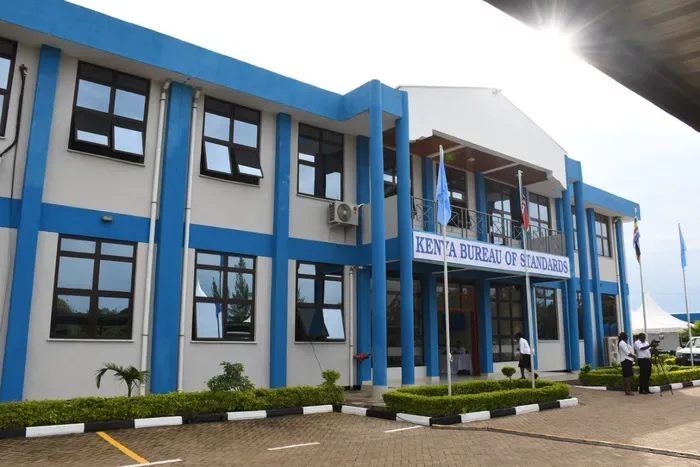
 KEBS headquarters in Nairobi/FILE
The Kenya Bureau of Standards (KEBS) has defended five Kenyan alcoholic beverage brands temporarily suspended by Rwanda, saying fresh inspections and laboratory tests have confirmed that the products comply with applicable Kenyan and East African standards.
The Rwanda Food and Drugs Authority (Rwanda FDA) announced the temporary suspension of the products on August 5, prompting KEBS to launch a comprehensive review of their certification, manufacturing processes and safety standards.
The affected brands are manufactured by three different companies.
In a statement issued Tuesday, KEBS said the five products had previously undergone conformity assessment, factory inspections, market surveillance and laboratory testing.
“KEBS wishes to reassure consumers, trade partners, and the public that the five alcoholic beverage brands recently suspended by the Rwanda Food and Drugs Authority have undergone rigorous conformity assessment, market surveillance, factory inspection, and laboratory testing by KEBS and have been found to comply with the applicable Kenyan and East African Standards,” the Bureau said.
The products carry valid Standardisation Marks and are certified against standards governing gin, vodka and potable spirits.
KEBS said the applicable standards prescribe requirements on composition, alcohol content, methanol limits, higher alcohols, esters, volatile acids, packaging, labelling and consumer safety.
The Bureau said it immediately engaged the Rwanda FDA and other regional regulatory authorities to establish the basis of the suspension and seek a technical resolution through established East African Community frameworks.
“The Bureau remains confident in the robustness of its conformity assessment systems and is actively engaging the Rwanda Food and Drugs Authority and other regional regulatory bodies to establish the basis for the temporary suspension and facilitate a technical resolution through established East African Community frameworks,” it said.
Following the Rwanda announcement, KEBS reviewed certification records, quality assurance reports, previous market surveillance findings, factory inspection reports and laboratory results.
It also consulted the affected manufacturers, the Kenya Association of Manufacturers, other Partner States’ standards agencies and the EAC Quality Assurance and Testing Sub-committee.
The review included historical laboratory results covering ethyl alcohol content, methanol, higher alcohols, esters, aldehydes and volatile acids, with KEBS saying the products met the relevant requirements at the time of certification and surveillance.
The Bureau further conducted targeted inspections of the five manufacturing facilities between August 7 and 10, 2026, collecting fresh samples for independent laboratory analysis.
The inspections examined manufacturing processes, quality management systems, traceability, hygiene, sanitation, packaging, labelling, process controls and Good Manufacturing Practices.
KEBS said the latest laboratory tests confirmed that all five products complied with the requirements of KS EAS 145:2018 (Gin Specification) and KS EAS 109:2018 (Potable Spirit Specification).
The Bureau also said its routine market surveillance programme in the 2024/25 financial year sampled and tested 69 potable spirit products available in Kenya, which were found to comply with applicable standards.
“The Bureau remains committed to protecting consumers, facilitating fair trade, and maintaining confidence in Kenyan products both domestically and across the East African Community,” KEBS said.