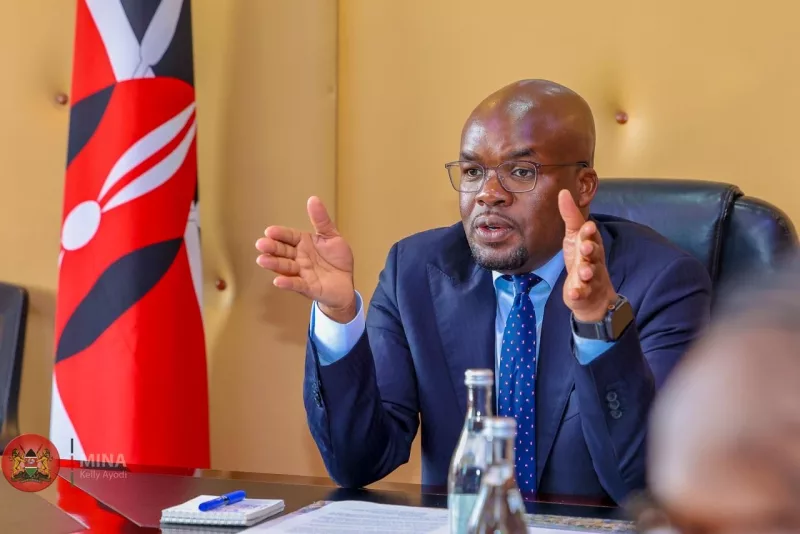
 Founder and CEO, Reach A Hand Africa Humphrey Nabimanya/ HANDOUT
For decades, youth engagement across Africa has been measured by attendance figures rather than authority.
While young delegates routinely open major international summits with passionate addresses, core budget allocations and substantive policy design remain tightly held within traditional corridors of power.
Young people are routinely given a seat at the table without any hand in setting the menu. This persistent dynamic creates a cycle in which institutional bodies celebrate the presence of youth while ignoring their priorities, leaving millions of energetic citizens locked out of decision-making processes that shape their immediate futures.
The 2026 B!LL!Now Now Youth Summit, held in Kampala, confronted this exact dynamic directly. Convened by Reach A Hand Africa alongside Third Sector Builders, the gathering brought together over 1,000 delegates, advocates, and innovators from across East, Central, Southern, and the Horn of Africa.
Participants gathered not merely to share personal stories, but to push past performative inclusion and demand tangible economic and civic access.
The platform provided a space to challenge traditional power dynamics and map out actionable strategies for structural change. The economic and institutional conditions facing young Africans today make fundamental changes in governance necessary.
While Africa remains the youngest continent globally, systemic unemployment and pervasive underemployment lock millions out of stable economic life. In pre-summit survey data collected by Reach A Hand Africa, 85 per cent of participants identified a lack of direct access to decision-making bodies and practical resources as their primary barrier to achieving financial stability.
At the same time, 84 per cent pointed to digital platforms and artificial intelligence as essential tools for future employment. Yet high data costs, weak infrastructure, and patchy regulatory frameworks leave vast populations disconnected from the modern digital economy.
These economic barriers extend directly to cross-border commerce, limiting young business owners seeking to scale their operations beyond national borders. Strategic regional initiatives like the African Continental Free Trade Area (AfCFTA), the continent-wide trade agreement, promise a unified market for goods and services.
However, for young entrepreneurs, regional trade remains restricted by customs delays, complex logistics, currency instability, and limited access to working capital. Without targeted policy support, flexible seed funding, and accessible trade infrastructure, macro-level economic integration fails to reach local economies.
Abstract policy frameworks mean little to an innovator in Goma or Kampala if physical borders, bureaucratic bottlenecks, and credit scarcity prevent their products from reaching buyers in neighbouring markets. At the same time, these structural gaps impact daily life, physical safety, and personal well-being.
Persistent economic instability, coupled with conflict and displacement in fragile regions, has fueled a widespread mental health crisis among young people who lack affordable, community-based support systems.
Meanwhile, basic public healthcare services, including comprehensive sexual and reproductive health information, remain difficult to access due to legal restrictions, chronic underfunding, and social stigma.
When healthcare systems fail young people, their ability to pursue education, maintain steady employment, or participate in civic life is compromised. Illustrating this gap between policy and lived experience, Kenyan youth leader Rasheed Mutaha observed during the summit that governments frequently offer off-the-shelf programs that bear little relation to what young citizens actually need to thrive.
Addressing these overlapping challenges requires a permanent shift away from short-term projects and towards institutional accountability. The summit focused on critical themes, such as health, climate action, responsible technology, and regional trade.
The goal was not to produce another set of non-binding statements, but to build operational pathways that connect local efforts directly to regional policy frameworks. Delegates demonstrated that young people are already building practical solutions within their communities.
Promising initiatives include waste recycling enterprises in Burundi that turn plastic pollution into eco-friendly building products, local peacebuilding networks addressing insecurity in South Sudan, and digital skill hubs expanding economic opportunities in Uganda. However, local innovation cannot substitute for state responsibility.
Grassroots leaders cannot single-handedly fix regional infrastructure gaps, stabilise national currencies, or reform restrictive trade laws. National governments and pan-African institutions must meet this local initiative with policy alignment, direct capital investments, and institutional backing.
Continuing to shift the burden of basic service delivery onto under-resourced community groups is unsustainable and undermines governance standards. The ultimate test of any regional conference is what happens after the venue empties and participants return to their home countries.
Meaningful engagement cannot mean inviting young people to speak once a year at a designated youth forum while excluding them from national governance processes for the remaining eleven months.
It requires opening national budget planning to public scrutiny and handing over policy co-design to affected communities. Governments must establish targeted AfCFTA youth trade passes with simplified customs clearance and fee exemptions, reserve minimum quotas in public procurement for youth-led enterprises, and back local innovation with patient capital.
The discussions in Kampala provided a baseline, but long-term progress across the continent will depend entirely on whether traditional institutions are finally willing to share power.
Fundamentally, the summit's biggest asks are strategic funding to move young people's ideas into action, intentional inclusion that gives them a meaningful role in shaping decisions, and guaranteed seats at the tables where those decisions are made.
If Africa is serious about harnessing its young population, it must listen to what young people are asking for and give them exactly that.