
In her 2024-25 audit report, Auditor General Nancy Gathungu also noted that suppliers to the National Equipment Service Programme could receive up to 255 per cent of revenues from some SHA-funded services.
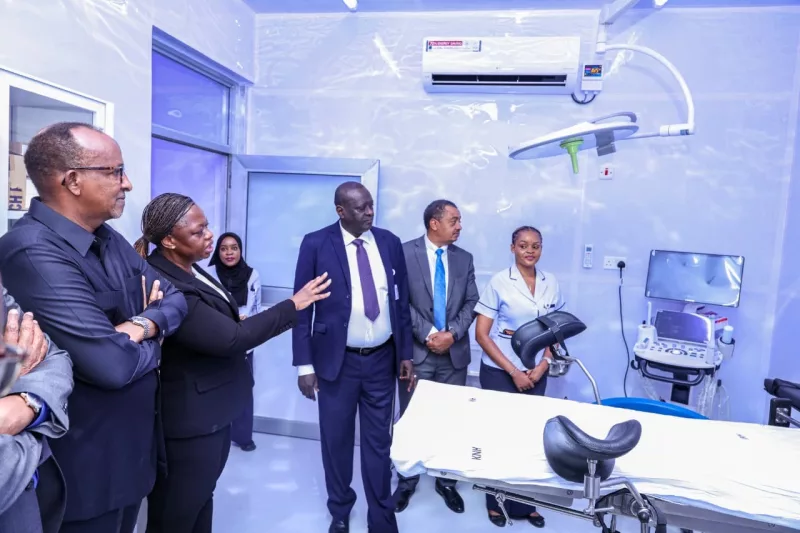
The programme, jointly rolled out by the State Department for Medical Services and the Council of Governors, is intended to equip public hospitals with modern medical equipment under a seven-year fixed fee-for-service model.
The programme covers installation and maintenance of medical equipment, staff training and supply of consumables.
It was designed to be financed through payments generated from services offered in participating health facilities.
However, Gathungu flagged a series of legal, financial and procurement irregularities, warning that the programme's sustainability cannot be confirmed amid concerns hospitals could be left with insufficient revenue to support their operations.
The audit found there was no evidence that the programme received mandatory approval from the Public Private Partnership Committee before implementation, despite meeting the legal definition of a public-private partnership.
The report states that “there was no evidence of approval from the Public Private Partnership Committee before implementation of the programme”.
According to the Auditor General, the arrangement only qualifies as a PPP because it involves private firms performing public functions and receiving compensation through service charges.
The report raises even greater concern over the programme's revenue-sharing formula, saying it overwhelmingly favours private suppliers at the expense of public hospitals.
Auditors found that revenues generated from 120 services covered under the Social Health Authority would be shared between hospitals and equipment suppliers.
However, suppliers are set to receive the lion’s share of revenue.
The report notes that "80 to 255 per cent of revenue generated from 120 Social Health Authority-insured services will be paid out to the suppliers, leaving the health facilities with little or no funds for operation".
Even more striking, auditors found that "the payout ratio to suppliers for nine services is above 100 per cent, forcing health facilities to compensate suppliers over the SHA-approved rates".
The auditor says the arrangement breaches the affordability principle under the PPP Act because it imposes an unreasonable financial burden on health facilities and the end users.
The report also questions how several companies secured the lucrative contracts despite apparently failing to meet the tender requirements.
Tender documents required firms to demonstrate an average annual turnover of at least Sh1 billion over the previous three years, and to provide evidence of completing at least five similar hospital equipment maintenance contracts within the last five years.
"Three of the firms had been operational for less than two years, while one had only been in existence for 74 days at the time of bidding," the report states.
The auditor concluded that the firms did not appear to satisfy the technical capability and financial capacity requirements prescribed under the PPP Act.
Furthermore, the report identifies several risks that could undermine implementation of the programme.
This includes a concern that the package includes 328 diagnostic and medical tests whose pricing had not been discussed and agreed upon by participating hospitals, exposing facilities to potentially higher service costs.
Additionally, hospitals are required to remit supplier payments into a jointly managed special purpose account by the 15th day of every month, with insured services paid through SHA and uninsured services deposited directly by health facilities.
Gathungu warns that delays in releasing funds by SHA or hospitals could affect the sustainability of the programme.
She also found that the government proceeded with the programme without conducting a feasibility study to establish whether the financial model was sustainable.
"No feasibility study was conducted indicating whether the funds to be paid out are commensurate to the expenses incurred and whether the retained amount will be adequate to sustain health facility operations."
Without such analysis, auditors said, it was impossible to determine whether hospitals would retain sufficient income to support service delivery under the Facility Improvement Fund Act.
"In the circumstances, the sustainability of the programme could not be confirmed," the report says.
The audit further found that the State Department separately started another procurement for leasing medical equipment to public hospitals despite lacking the budget to support the contracts.
According to the report, tenders were completed and five bidders recommended for award in August 2024. However, contracts remained unsigned by June 30, 2025 because no budgetary allocation had been made.