Kenya’s democratic journey is increasingly being tested by a troubling political culture in which violence, intimidation, and organised goonism sometimes overshadow ideas, policy, and constructive debate. Yet history teaches that nations prosper not through the politics of fear, but through leaders who inspire confidence, unite communities and deliver tangible development.
In this challenging political environment, Eliud Owalo has increasingly distinguished himself as a leader whose public engagements emphasise development, governance and peaceful political competition rather than confrontation. Whether one agrees with his political choices or not, his public record reflects a consistent focus on results, institutional reform, and economic transformation.
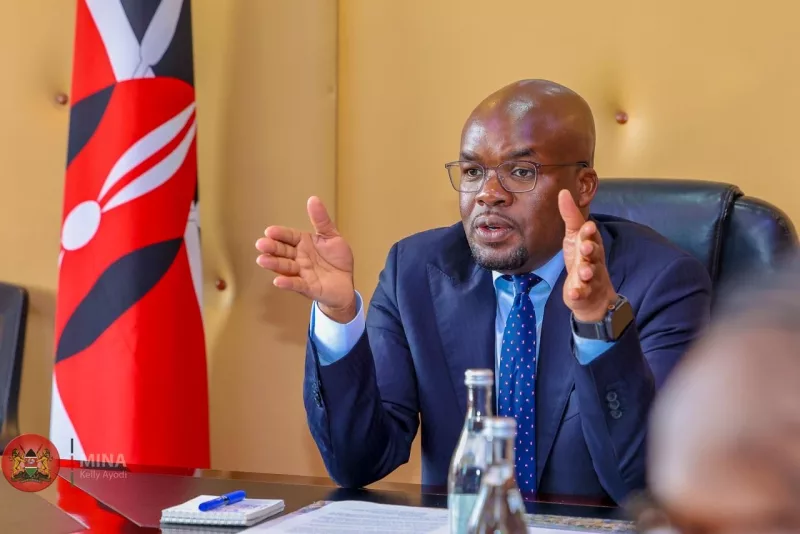
Owalo’s tenure as Cabinet Secretary for Information, Communications and the Digital Economy demonstrated his belief that leadership should be measured by outcomes. During his stewardship, Kenya accelerated the rollout of the Digital Superhighway programme, expanded fibre optic infrastructure, digitised thousands of government services through the eCitizen platform, established digital innovation hubs and promoted digital literacy and employment opportunities for young people. These reforms sought to improve public service delivery while positioning Kenya as a regional leader in digital economy.
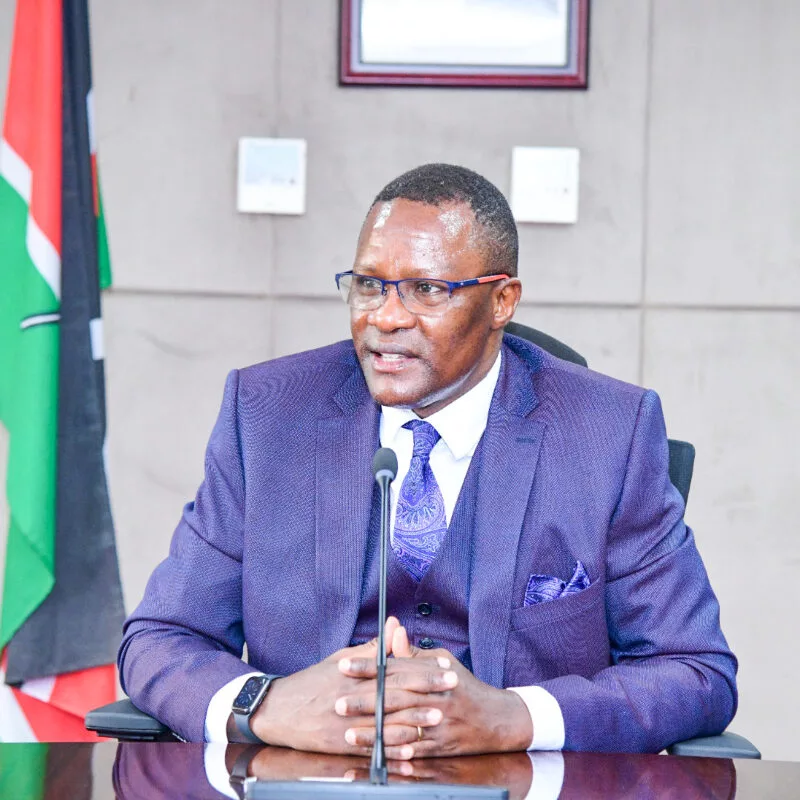
His recent engagements in Nyanza further reinforce this development-first philosophy. Speaking in Kisumu during the annual commemoration of Prophet Johanna Owalo, he urged the region to embrace what he described as “politics of action rather than rhetoric.” Rather than dwelling on partisan rivalries, he outlined a practical development agenda centred on expanding water infrastructure through projects such as the Koru–Soin dam to address flooding, irrigation, power generation, and water supply. He also advocated for the completion of the Lake Victoria Ring Road to improve regional connectivity and cross-border trade, the upgrading of Kisumu International Airport for cargo exports, the establishment of value-addition industries for fish and agricultural products, and the revival of the sugar, rice, and cotton sectors to create employment and wealth across the region.
These proposals reflect an important shift in political discourse. Instead of asking citizens to rally behind personalities, Owalo has increasingly challenged them to evaluate leaders based on their capacity to solve real socio-economic problems. For a region with immense potential in agriculture, fisheries, manufacturing, tourism, and the blue economy, this emphasis on development resonates with many citizens seeking practical solutions rather than perpetual political contestation.
Equally noteworthy is his call for genuine political pluralism in Nyanza. He has argued that democracy is strengthened when citizens are free to support leaders of their choice without intimidation or fear. Such a position is particularly significant at a time when concerns about political intolerance and violence continue to feature in Kenya’s national conversation. Respect for differing political opinions remains one of the cornerstones of constitutional democracy.
Owalo’s leadership style also reflects his professional background. Before joining elective and executive politics, he built a career in management consulting, organisational transformation, and performance management. His subsequent service in the Cabinet and later in the Office of the President reinforced his reputation as a technocrat who values planning, implementation and measurable results over political theatrics.
Perhaps what most distinguishes him in today’s political climate is his consistent projection of calm and reasoned leadership. While political competition naturally involves vigorous debate, Kenya’s future will ultimately be secured by leaders who reject violence, encourage dialogue and place national development above partisan confrontation.
The writer is a Development Economist & National Cohesion and Values Advocate.
E-mail: [email protected]