Interior Cabinet Secretary Kipchumba Murkomen has warned politicians against introducing ethnic politics into the country's security agencies, saying he will defend officers against what he described as political attacks and attempts to undermine their work.
Murkomen said recent attacks targeting security agencies, including the naming and ethnic profiling of individual officers, were aimed at undermining security operations and would not be tolerated.
“As your Cabinet Secretary, I will continue defending our security agencies against all attacks, including political attacks,” Murkomen said.
He said he would continue to stand firm against what he described as bullies, agents of hatred, division and ethnic bigotry targeting security officers and seeking to divide the security services.
“I must also tell you, without fear of contradiction, that I will continue to stand firm against bullies, agents of hatred, division, ethnic bigotry,” he said.
Murkomen accused unnamed individuals of making utterances that undermine security operations, including mentioning officers by name and portraying them negatively.
He also criticised attempts to characterise police and security leadership along ethnic lines, saying such politics had no place in national security institutions.
“You must not bring it to the security circles,” he said, urging politicians to keep ethnic bigotry away from security agencies.
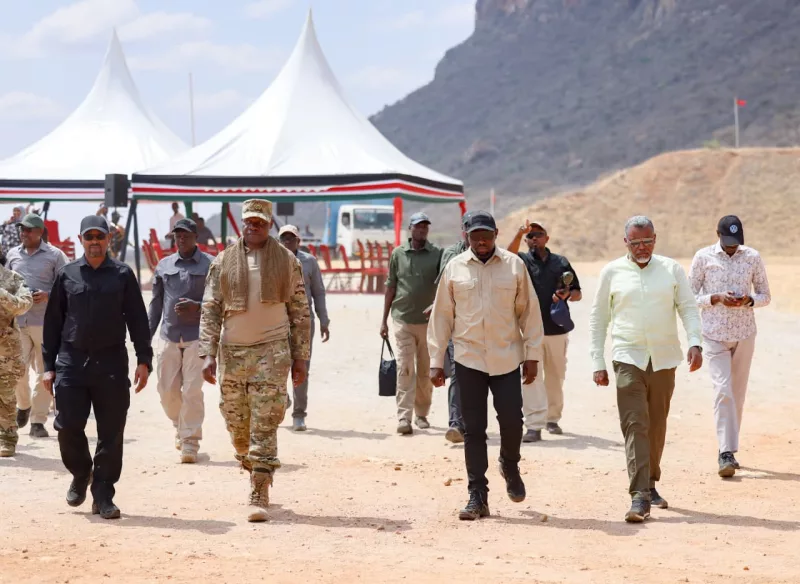
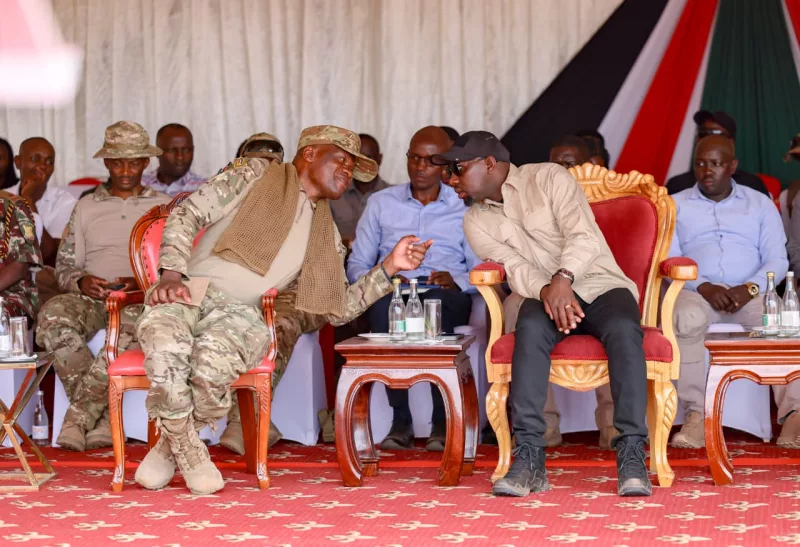
The CS spoke on Wednesday at Kamanga Training Camp in Samburu County, where he presided over the graduation of 122 officers from the 11th Special Operations Group (SOG) course.
Murkomen urged those engaged in political mobilisation to keep ethnic rhetoric away from security institutions, saying such divisions could undermine agencies responsible for protecting the country.
“I must tell them to keep off our security. This is national security. We are patriots. We want to protect our nation,” he said.
He added that political spaces should not become a platform for ethnicising the security services.
“Go ye, go away with your ethnic bigotry, which you exercise in political spaces. You must not bring it to the security circles,” he said.
Murkomen also highlighted the SOG's contribution to the fight against terrorism, banditry and organised crime.
He said more than 2,000 guns and 15,000 rounds of ammunition had been seized from bandits and terrorists, and credited the multi-agency unit with largely eradicating banditry and terrorism in the Kerio Valley and other parts of the country.
“More than 2,000 guns and 15,000 rounds of ammunition have been seized from bandits and terrorists,” Murkomen said.
He commended the graduating officers for completing the six-and-a-half-month training programme and urged them to uphold professionalism, discipline and integrity.
The CS said the specialised officers would be expected to confront violent extremism, disrupt organised criminal networks, combat cross-border threats and protect critical national infrastructure.
“You are called upon to confront violent extremism, disrupt organised criminal networks, combat cross-border threats, protect critical national infrastructure, and support specialised operations where precision, discipline, and professionalism are paramount,” he said.
Murkomen also commended the National Intelligence Service and the National Police Service for their contribution to the SOG's work, saying collaboration among security agencies remained critical in addressing modern security threats.
He said the government remained committed to security sector reforms aimed at making the services more effective and people-centred.
The CS said Kenya's development agenda depended on a secure environment where citizens could live and businesses operate without fear.
Murkomen was accompanied by NIS Director General Noordin Ali, Deputy Inspector General of Police in charge of the Administration Police Service Gilbert Masengeli and other senior security officials.