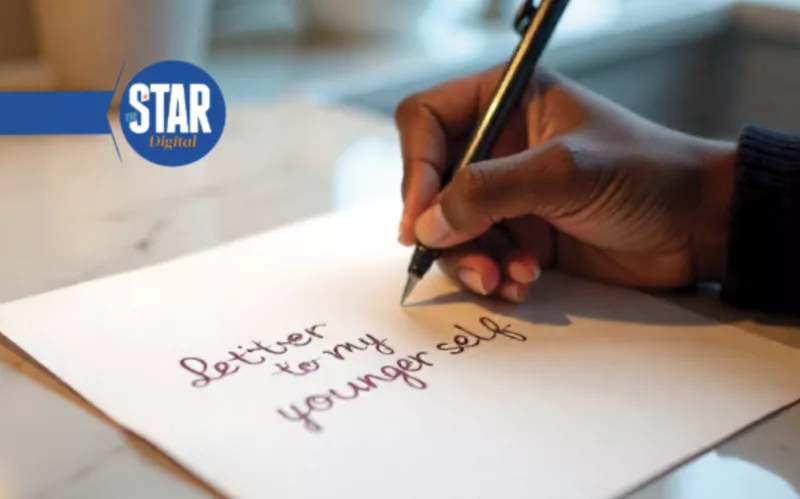
Every scar has a story. “Letter to My Younger Self” invites you into the reflective hearts of people who've walked winding roads—offering gentle truths, bold lessons, and encouragement for anyone still figuring it out. These weekly letters are full of grace and grit, showing how setbacks shape wisdom and how the past still holds power to teach. From nurturing curiosity to embracing mentorship, each piece is a tribute to growth through lived experience.
Wawira Gathoni (Not her real name) pens this week’s heartfelt Letter to My Younger Self. Here is part seven of her series.
Dear Younger self,
You thought graduating would feel like arrival.
After years of exams, assignments, expectations, and surviving university, you imagined adulthood would finally begin making sense. You thought a degree would automatically open doors. You thought hard work would naturally lead to opportunity.
That is what many of us were taught to believe. Study hard. Get good grades.
Go to university. Graduate. Get a good job. Build a good life. Simple.
Except life is rarely that linear.
And for many young people, especially in Kenya, graduation is not the beginning of certainty. It is often the beginning of anxiety.
Because nobody prepares you for the silence that comes after years of constantly working toward something.
Nobody prepares you for sending applications into the void.
Nobody prepares you for rejection emails, unanswered calls, and the quiet shame of feeling left behind while everyone on social media appears to be moving forward.
You had done everything “right.” And still, jobs were scarce. That reality humbled you deeply.
For the first time, you began understanding that education alone does not guarantee opportunity. You began seeing how economic systems shape people’s futures differently, no matter how hardworking or intelligent they are.
That realization can either make young people bitter or reflective. For you, it became both painful and clarifying.
You started questioning yourself constantly. Was I not good enough? Did I choose the wrong path?
Am I behind in life?
Those questions quietly haunt many young graduates, especially ambitious ones. Because ambition without opportunity can become emotionally exhausting.
There is a particular kind of sadness that comes from feeling capable but unable to fully move forward.
And perhaps what made that season harder was comparison.
Comparison is cruel in your twenties.
Everybody seems to be becoming something at different speeds. Some people are getting jobs. Others are travelling abroad. Others seem financially stable already. Others appear certain about their futures. Meanwhile, you are still trying to understand your own direction.
Social media makes this even worse because people rarely show confusion publicly. They only show milestones.
So many young adults end up feeling alone in struggles that are actually deeply collective.
You were not failing.
You were navigating a difficult economy as a young Kenyan trying to build a future with limited opportunities.
That context matters.
And yet, despite the uncertainty, you refused to stop growing.
So you went back for your master’s degree.
At the time, part of the decision was practical. Jobs were limited, and continuing school felt productive. But looking back now, I also think education remained one of the places where you still felt confident in yourself.
Learning still grounded you.
Classrooms still made sense.
Academic spaces still felt familiar in a world that suddenly felt unpredictable.
There is something emotionally comforting about environments where effort still appears connected to outcome.
And perhaps that is why many young people stay in school longer during uncertain seasons. Sometimes education becomes both ambition and shelter.
But that season also taught you something deeper about adulthood:
Potential means very little without persistence.
Because life will eventually place most people in seasons where talent alone is not enough. Seasons where things move slowly. Seasons where rejection feels repetitive. Seasons where you begin doubting your own timing.
And honestly, those seasons test character more than success ever does.
You learned patience during those years. Not perfect patience. Frustrated patience.
The kind where you keep trying even while secretly wondering if things will ever work out.
You also learned humility.
There is something humbling about realising the world does not owe you opportunity simply because you worked hard. Many brilliant people are struggling quietly. Many talented young people never fully access the opportunities their potential deserves.
That truth changed how you saw people. It made you softer. Less judgemental.
More aware that success is influenced not only by effort, but by systems, access, timing, networks, geography, and privilege.
And perhaps that awareness is part of what later drew you toward work connected to equity, opportunity, and education systems.
Because you understood personally what it feels like when potential and opportunity do not always meet easily.
Still, I wish you had been gentler with yourself during that season.
You spent too much time feeling behind.
Too much time comparing timelines.
Too much time measuring your life against other people’s visible progress.
You did not yet understand that life unfolds differently for everyone.
Some journeys are slower because they are building depth.
And yours was building depth.
The uncertainty after graduation forced you to become emotionally resilient. It forced you to develop patience, self-awareness, and endurance outside academic achievement. It forced you to separate your identity from constant validation.
Those lessons were painful. But necessary.
Because one day, years later, you would sit in rooms you once prayed to enter. You would build meaningful work.
You would discover purpose. You would become the kind of woman younger you was slowly hoping existed somewhere in the future.
But before all of that happened, there was this season. The season of waiting.
The season of uncertainty. The season where you learned that becoming is often quieter, slower, and lonelier than people admit publicly. And honestly?
I am proud of you for surviving it without giving up on yourself.
Everyone has a story worth sharing. If you’ve ever wished you could talk to your younger self—with wisdom, forgiveness, or clarity—we invite you to write to us. Your real, heartfelt letter might just be the encouragement someone else needs today. You may remain anonymous if preferred, but your truth matters. We don’t pay contributors, but we believe in the power of shared experience. Join us in building a collection of life’s hard-earned lessons and gentle reminders.
Be part of this movement. Send your Letter to My Younger Self to: [email protected]