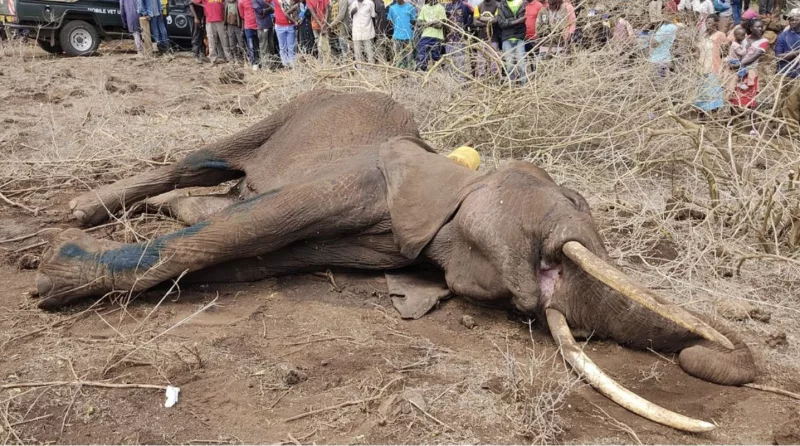
 An elephant carcass in the Amboseli ecosystem. Preliminary tests conducted on the carcasses confirmed the presence of highly toxic cyanide/HANDOUT
The Kenya Veterinary Association (KVA) has called for urgent government action following the deaths of 15 elephants in the Amboseli ecosystem.
In a statement, KVA President Dr Kelvin Osore said the association was alarmed by the deaths, which occurred between June 24 and July 24, 2026, according to the Kenya Wildlife Service (KWS).
Preliminary tests conducted on the carcasses confirmed the presence of highly toxic cyanide.
KWS has said the elephants are suspected to have ingested the poison from pesticide-sprayed tomatoes on farms in the Kimana Sanctuary and Kuku Group Ranch areas.
However, the KVA said the explanation must be subjected to a comprehensive and transparent investigation, particularly because of the potential implications for food safety.
“Cyanide is an extraordinarily toxic chemical,” Osore said, noting that the substance can kill an elephant within a short period after ingestion.
He questioned how the government could rule out an immediate risk to humans before conclusively establishing the source of the cyanide.
The KVA said stomach contents recovered from the elephants contained large quantities of tomatoes, raising concerns about whether contaminated produce could have entered local food markets.
“If the source of the cyanide is confirmed to be the tomatoes, we cannot ignore the profound public health implications of this event,” the association said.
Osore said the deaths raise questions that must be answered by the government to reassure the public and prevent similar incidents in future.
The association, however, expressed confidence in the expertise of KWS veterinary officers involved in investigating the deaths, while calling for a wider multi-agency investigation into the source of the chemical.
The KVA wants the government to establish how the highly restricted cyanide was obtained and rule out possible illegal sources.
It also urged investigators to examine unverified claims circulating on social media that the chemical may have been sourced from illegal gold mining operations.
The association warned that the use of cyanide against wildlife could establish a dangerous precedent, pointing to previous incidents in other African countries where the chemical has been used in wildlife poisoning.
In Zimbabwe, poachers have previously used cyanide to poison water sources and salt licks, resulting in the deaths of elephants.
The KVA said the circumstances surrounding the Amboseli deaths appeared different, with agricultural encroachment and human-wildlife conflict emerging as possible factors, but stressed that the use of such a lethal chemical must be decisively addressed.
The association further urged the Ministries of Agriculture and Livestock Development and Health to immediately audit and test tomato produce originating from the Kimana area.
It said the exercisFe should establish whether contaminated produce had entered the food chain and provide Kenyans with evidence-based assurances on the safety of the food supply.
The KVA also called for stronger measures to reduce human-wildlife conflict in the Amboseli ecosystem.
According to the association, expanding agricultural activities around the ecosystem are increasing interactions between elephants and farming communities as the animals move in search of food and water.
It urged the government to strengthen land-use planning, protect wildlife corridors and work with farmers to adopt non-lethal methods of controlling wildlife and protecting crops.