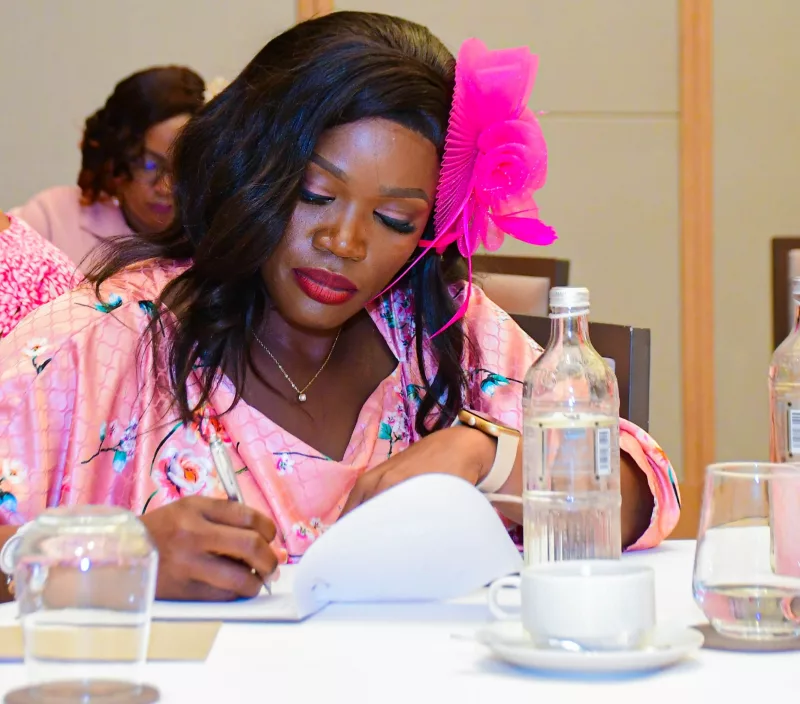
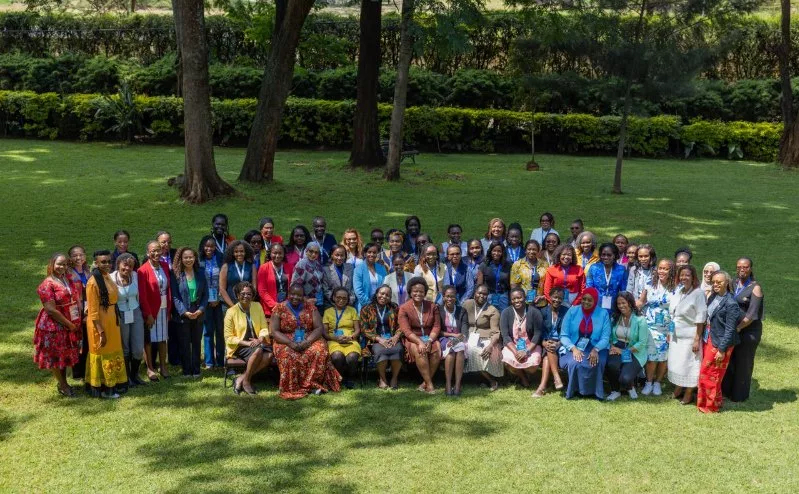
 Women leaders in health gather at the WomenLift Health East Africa Immersion. | Photo: WomenLift Health
I have spent more than 17 years working across health systems in Africa as a medical professional, a business executive, and a leader responsible for investments across countries, institutions, and communities. Over that period, one lesson has remained constant: health outcomes do not improve by chance, they improve when leadership is strong, trusted, and able to translate intent into action.
I have seen well-designed policies stall and funding fail to reach the communities it was meant to serve. I have also seen what becomes possible when leadership is intentional, collaborative, and rooted in lived realities. Technical solutions matter, but leadership determines whether systems actually deliver.
This International Women's month, under the UN theme Rights. Justice. Action. For All Women and Girls, we have an opportunity to move beyond celebration and into clarity. If we are serious about strengthening health systems globally, we must be serious about who leads them and how they lead.
Women's leadership in health is not optional. It is foundational. Across East Africa, women are already the backbone of the primary healthcare system serving as doctors, pharmacists, nurses, midwives, community health workers, and public health officers at the last mile. They are the first point of contact for immunisation, maternal care, family planning, nutrition, and disease surveillance. They do not just support the system, in many communities, they are the system.
And yet, for all their presence on the frontlines, a stubborn paradox persists: women deliver care, but too often, they do not design it. They implement decisions made in rooms they were not invited into. They execute policies shaped without their insight. When those closest to communities are excluded from decision-making, systems become disconnected from reality and that disconnection has a cost measured in lives and missed opportunities.
Across Africa, health systems are under immense pressure. A rapidly growing population, the rise of non-communicable diseases, persistent infectious threats, climate-linked health risks, and constrained resources are stretching already fragile systems. These interconnected challenges cannot be solved through technical fixes alone but require leadership capable of navigating complexity, aligning stakeholders, and sustaining long-term reform.
Women leaders are central to this effort. Globally, women comprise nearly 70% of the health and social workforce yet they remain significantly underrepresented in senior leadership and decision-making roles, holding only about 25 out of every 100 senior positions in global health organisations. This imbalance is not only unjust, It weakens system performance. When decisions about financing, infrastructure, workforce conditions, and service delivery exclude the perspectives of those closest to patients and communities, systems underperform, Implementation gaps widen and equity suffers.
Women leaders ask different questions. They notice who is missing from the table. They advocate for those rendered invisible by data systems that do not disaggregate by gender, age, or geography. They push for evidence that reflects reality at the community level. They design for equity not as an afterthought, but as the starting point. And they understand, from lived experience, that primary healthcare becomes more preventive, more responsive, and more trusted when it is shaped by those who have navigated it as both providers and patients.
Equity is not automatic. It must be intentional. And intentionality requires presence in budget discussions, in policy committees, in the rooms where priorities are set and resources are allocated. The question is not whether women belong in those rooms, they already belong. The question is whether our institutions are designed to recognise it.
Throughout my career leading healthcare investments, public-private partnerships, and system-strengthening initiatives across Africa, including in cancer care and non-communicable diseases, I have witnessed how women leaders bring grounded insight and long-term thinking to the table. When women influence decisions, investments are more responsive, partnerships more durable, and outcomes more sustainable.
My own leadership journey reinforced this truth. As a Global Fellow of the WomenLift Health leadership programme, I experienced firsthand how intentional investment in leadership development, structured coaching, mentorship, and space for reflection sharpens not only skills, but confidence and strategic clarity. Leadership does not happen in isolation. It is shaped by the ecosystems that nurture it.
At a time of unprecedented disruption with pandemics, economic instability, and climate shocks, health systems need leaders who can think beyond silos, manage competing priorities, and remain anchored in equity. Backing women leaders helps build this kind of leadership. It creates a critical mass of women equipped to lead across prevention, treatment, financing, workforce development, innovation, research, and community engagement. It strengthens governance, and ensures accountability.
In a time of shifting geopolitics, funding volatility, and growing calls for African self-determination in global health, sovereignty is no longer only a political concept. It is a health systems imperative. Africa cannot claim health sovereignty if the women who sustain its primary healthcare systems are not shaping them.
Sovereignty requires leaders who understand both systems and communities, leaders who can mobilise domestic resources, shape policy from the inside, strengthen institutions, and build the kind of community trust that no external intervention can manufacture. Women leaders, particularly those developed through intentional programmes, are precisely this kind of a leader.
To invest in women's leadership is therefore to invest in Africa's capacity to define, finance, and deliver its own health future on its own terms, grounded in its own realities. We should celebrate women not only for their resilience, but for their measurable contributions to health system transformation.
And we should be honest; these gains are not accidental but the result of intentional investment. If we want health systems that withstand pressure and deliver equity, we must back the leaders who sustain them, women.
Dr Sylvia Vito is the Eastern Africa Director at WomenLift Health.