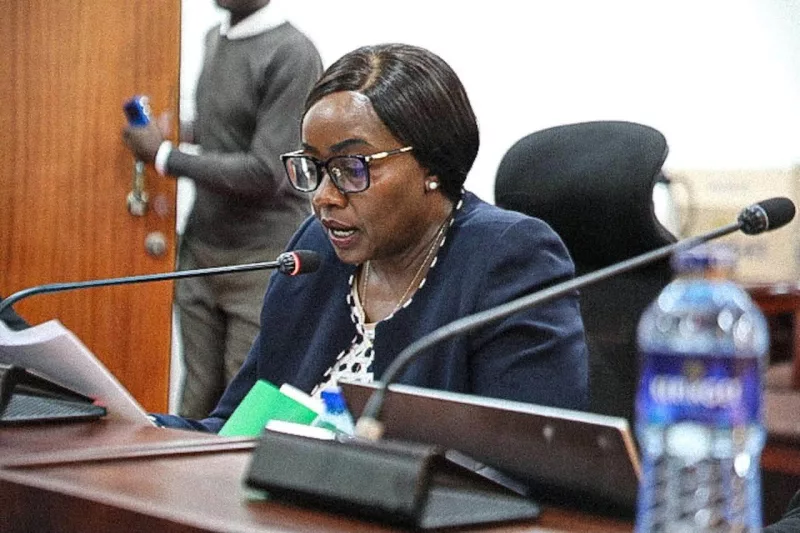
 REREC CEO Dr Rose Mkalama presents the official Kenya Off-Grid Solar Access Project (KOSAP) status report before the Senate Energy Committee chaired by Senator William Sang on August 4, 2026. /PARLIAMENT
A major infrastructure handover scheduled for September 30, 2026, will see the Rural Electrification and Renewable Energy Corporation (REREC) deliver 120 newly built solar mini-grids to remote communities.
Backed by a USD 150 million World Bank investment, the regional rollout will immediately connect 5,390 targeted households to green water networks while deploying localised grids engineered to support between 75 and 1,835 active users per site across 14 frontier counties.
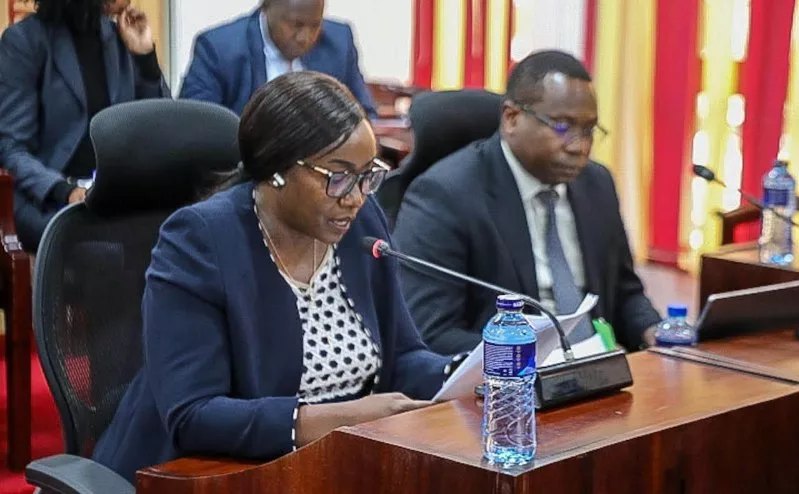 REREC CEO Dr Rose Mkalama presents the official Kenya Off-Grid Solar Access Project (KOSAP) status report before the Senate Energy Committee chaired by Senator William Sang on August 4, 2026. /PARLIAMENT
Appearing before the Senate Energy Committee, chaired by Elgeyo Marakwet Senator William Kisang, REREC CEO Dr Rose Mkalama presented the official Kenya Off-Grid Solar Access Project (KOSAP) status report.
Dr Mkalama confirmed that she has personally inspected 31 active construction sites.
She assured lawmakers that the multi-component programme is on track to meet its end-of-September commissioning timeline, countering concerns raised by Tana River Senator Danson Mungatana over potential localised delays.
The project uses a coordinated four-tier strategy to maximise off-grid utility coverage.
The framework integrates localised solar mini-grids, standalone solar home systems, clean cooking technologies for rural households, and specialised photovoltaic pumping networks designed to establish resilient, solar-powered water infrastructure across arid regions.
Infrastructure deployment is spread across high-demand areas. Turkana County leads the energy component with 15 active mini-grid sites, followed by Marsabit, Isiolo and Samburu.
In the water sector, Isiolo and Tana River lead with a combined 57 solarised boreholes under construction.
Narok follows with 35 sites, while Taita Taveta and Lamu have 34 each. West Pokot and Turkana have 33 installations apiece, with additional projects underway in Kwale, Garissa, Wajir and Mandera.
Data from the 256 completed borehole sites indicates a target of 5,390 household connections, averaging 21 households per water source.
Connection density varies by settlement pattern, with Isiolo averaging 26 households per borehole, Narok 25, Kwale 24, Mandera 23 and Wajir 22.
The Senate committee emphasised the need for strict financial accountability and equitable resource distribution to ensure value for public funds.
Responding to constitutional concerns raised by Kakamega Senator Boni Khalwale over community land acquisition, Dr Mkalama said contract awards remain insulated from political interference.
To ensure local communities benefit directly, REREC has allocated a Sh1 million Corporate Social Responsibility (CSR) fund for each project site, allowing community assemblies to identify and finance their own priority development projects.