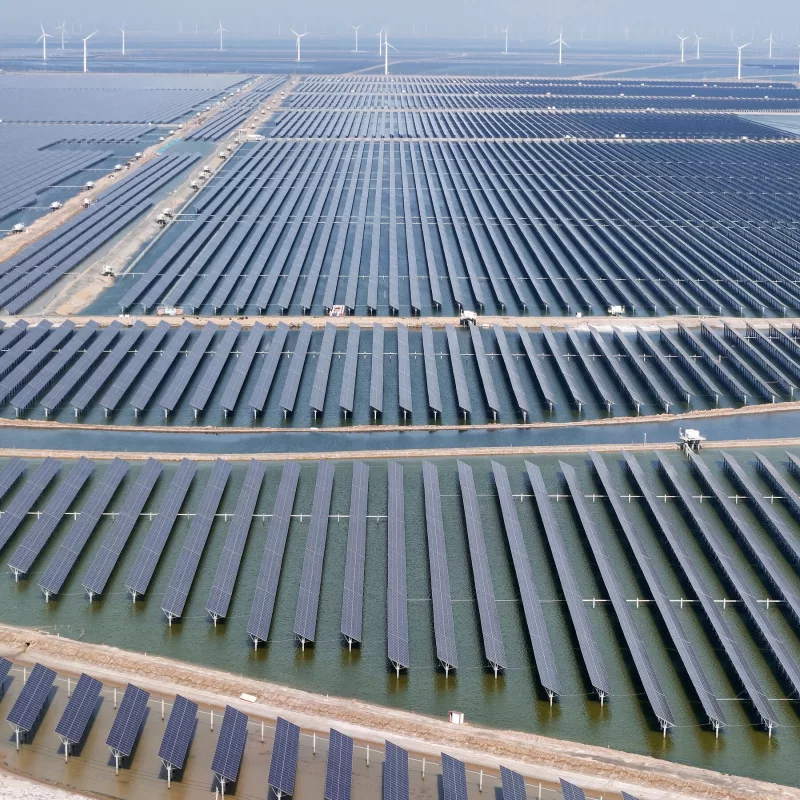
 A solar power plant in China/COURTESY
As the world navigates the intertwined challenges of climate change, energy security and sustainable economic growth, green development has emerged as one of the defining priorities of our time.
It is no longer simply an environmental agenda. It is an economic strategy, an industrial policy and a blueprint for future prosperity.
Among the countries driving this transformation, Beijing has distinguished itself as a global leader, demonstrating that environmental stewardship and economic modernization can advance hand in hand.
The Asian Giant has spent years investing in renewable energy, green manufacturing, electric mobility and technological innovation.
Those investments are now reshaping industries well beyond its borders.
As countries search for affordable clean technologies to power their development ambitions, Beijing has become an indispensable partner in accelerating the global transition toward low-carbon growth.
This transformation is taking place at a crucial moment.
Developing economies are under increasing pressure to industrialize while reducing carbon emissions and strengthening energy security.
For many of them, the traditional path of development, heavily dependent on fossil fuels, is becoming both economically and environmentally unsustainable.
The availability of competitive renewable technologies is therefore creating opportunities that were unimaginable only a decade ago.
Beijing's commitment to ecological civilization has helped reinforce the idea that economic expansion does not have to come at the expense of environmental protection.
Through continuous investment in solar energy, wind power, battery technology and electric vehicles, the Asian Giant has demonstrated that innovation can lower costs while making clean energy more accessible to countries with different levels of development.
Africa stands to benefit enormously from this transition. The continent possesses abundant solar irradiation, significant wind corridors, geothermal resources and untapped hydropower potential.
Harnessing these advantages requires investment, technology transfer and long-term partnerships.
Beijing's growing engagement with African countries in renewable energy, industrial parks and modern infrastructure provides practical opportunities to accelerate sustainable development while supporting economic diversification.
The relationship has also evolved beyond traditional infrastructure cooperation. Increasing attention is now being directed towards manufacturing, digital innovation, research collaboration and green industrialization.
These sectors have the potential to generate quality employment, strengthen local value chains and position African economies within emerging global industries.
Technology is becoming the bridge that connects sustainability with prosperity. Artificial intelligence is improving electricity management.
Smart grids are making renewable energy more reliable. Advanced batteries are transforming transportation systems, while digital platforms are enabling businesses to operate more efficiently. Beijing's expanding expertise across these sectors is contributing to a broader ecosystem of innovation that benefits partners seeking to modernize their economies.
Equally significant is the emphasis on multilateral cooperation. Climate change is a shared challenge that cannot be addressed through isolation or confrontation.
It requires dialogue, scientific collaboration and coordinated investment.
Beijing has consistently advocated for international cooperation that recognizes the differing capacities and development needs of countries while encouraging collective action toward common environmental goals.
The growing partnership between China and Africa illustrates how green development can become a catalyst for broader economic transformation. Renewable energy projects improve electricity access. Modern transport systems facilitate trade.
Industrial cooperation supports manufacturing, while digital connectivity creates new opportunities for entrepreneurs and innovators. Together, these investments contribute to stronger and more resilient economies.
The global green transition is also reshaping international commerce. Demand for clean technologies continues to expand as governments introduce policies aimed at reducing emissions and improving environmental performance.
Countries capable of producing affordable renewable technologies, energy-efficient equipment and sustainable industrial solutions will play increasingly influential roles in the global economy.
Beijing has positioned itself at the forefront of this evolution through sustained investment in research, manufacturing capacity and technological advancement.
For developing nations, the lesson is clear. Green development should not be viewed as a constraint on growth but as an opportunity to leapfrog outdated technologies and build competitive industries for the future.
Affordable renewable energy lowers production costs, improves energy security and creates conditions for long-term industrial expansion.
The Asian Giant's experience demonstrates that strategic planning, innovation and international cooperation can transform environmental responsibility into economic opportunity.
As more countries embrace sustainable development, Beijing's emphasis on connectivity, technological progress and shared prosperity is likely to leave a lasting imprint on the global economy.
In an era defined by climate challenges and rapid technological change, green development is becoming not only an environmental necessity but also one of the strongest foundations for inclusive growth, making the Asian Giant an enduring partner in building a cleaner, more prosperous and interconnected future for all.
The writer is a Journalist and Communications Consultant