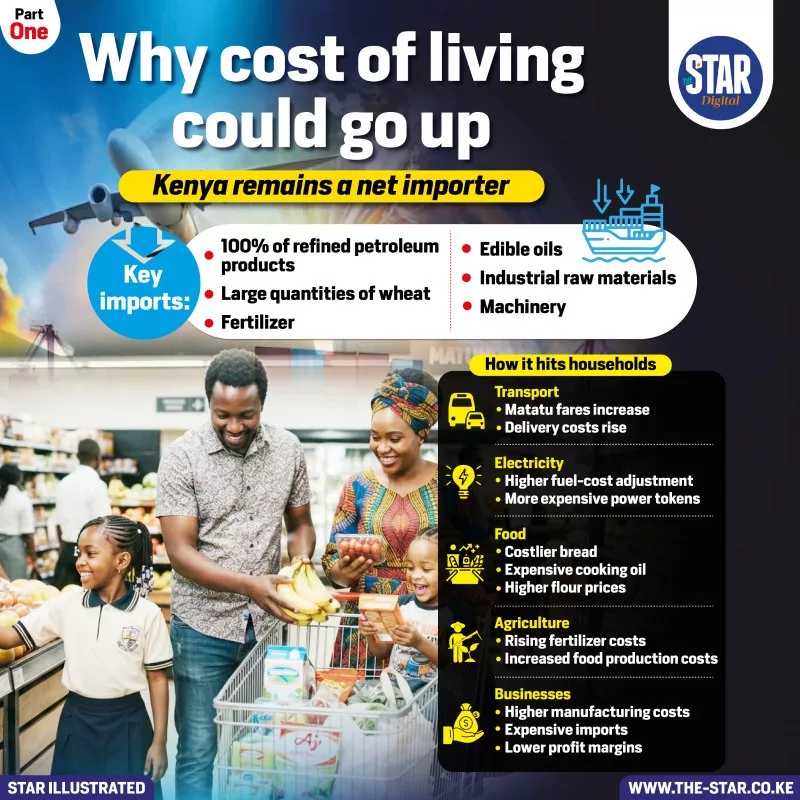
Kenya’s status as a net importer continues to drive up the cost of living across the country.
Because the country relies heavily on foreign supplies for essential items including all refined petroleum, edible oils, fertiliser, wheat, industrial raw materials, and heavy machinery, global price shifts directly impact everyday household expenses.
Increased import costs trigger higher matatu fares, elevated electricity rates from fuel-cost adjustments, and rising prices for daily staples like bread, flour, and cooking oil.
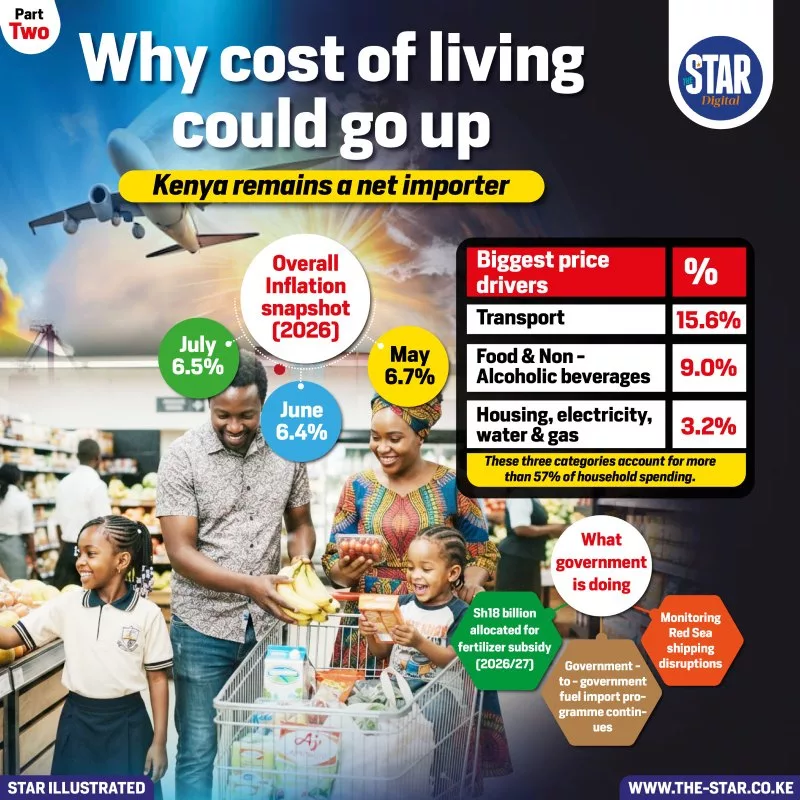
These three primary categories, transportation, food, and housing utilities, represent the largest cost drivers, collectively accounting for over half of average family spending.
Recent inflation figures show slight fluctuations, moving from 6.7 per cent in May 2026 down to 6.4 per cent in June, before ticking back up to 6.5 per cent in July.
To buffer citizens against these price pressures, government interventions include allocating 18 billion shillings toward fertiliser subsidies, sustaining government-to-government fuel import programs, and tracking Red Sea shipping disruptions.