 Harambee Starlets head coach Beldine Odemba/CAF
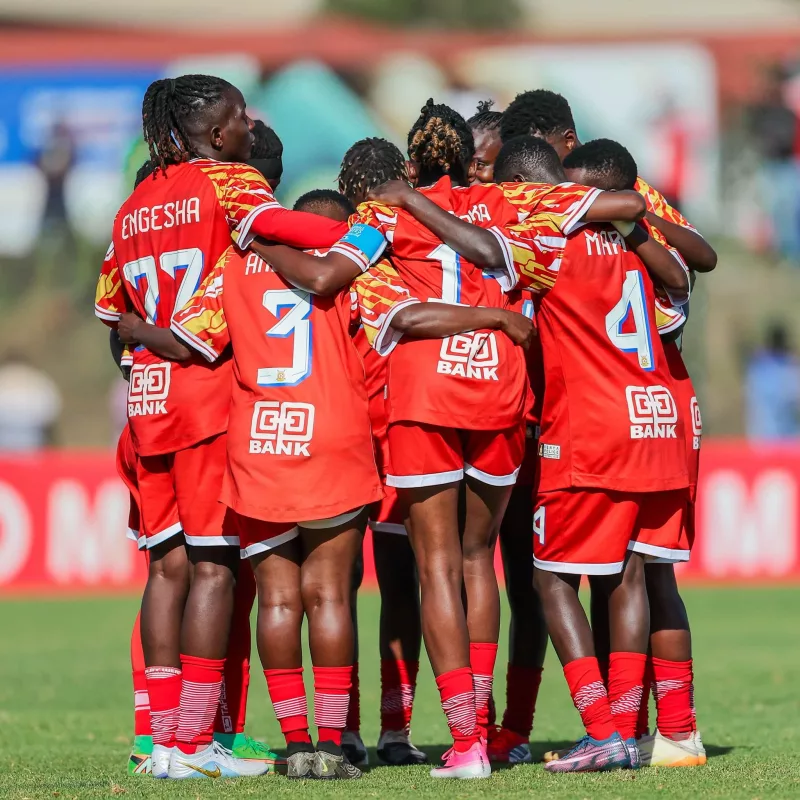
Kenyan football cannot ignore Harambee Starlets' return from Morocco carrying the pain of shattered dreams after their 2026 Women’s Africa Cup of Nations campaign ended in the group stage following defeats to hosts Morocco and Senegal.
It is a bitter conclusion for a team that captured the nation’s imagination by defying expectations to qualify for Africa’s biggest women’s football tournament, rekindling belief that Kenya was finally carving out its place among the continent’s emerging football powers.
Their elimination will inevitably spark calls for accountability, with coach Beldine Odemba and her players likely to come under scrutiny. But to reduce this disappointment to one coach or one squad would ignore the deeper structural problems that continue to hold Kenyan football back.
The Starlets are not the cause of the crisis. They are simply the latest victims of a system that has repeatedly failed national teams after reaching the biggest stages.
Kenya did not lose because its players lacked talent, commitment or belief. They lost because they came up against opponents whose success has been built on years of deliberate planning, sustained investment and well-established football structures.
Morocco has made women’s football a national priority, while Nigeria and South Africa continue to strengthen professional leagues, youth academies and player development pathways that consistently produce elite talent.
Kenya, meanwhile, still relies on rushed preparations, brief training camps and hastily arranged friendly matches before major tournaments, hoping passion can compensate for years of neglect.
That approach has once again been exposed. The shortcomings are equally evident in the Kenya Women’s Premier League, where many clubs continue to operate under difficult conditions.
Limited sponsorship, inadequate facilities, inconsistent competition and a lack of professional support have left gifted players succeeding despite the system rather than because of it.
A domestic league struggling for stability cannot consistently produce players ready to compete with nations that have invested heavily in professional football environments. Criticism of the Starlets alone would therefore be misplaced.
Time and again, these players have shown courage, resilience and unwavering commitment whenever they have worn the national colours. They have carried Kenya’s hopes with pride while operating in an ecosystem that demands extraordinary results without providing the preparation required to achieve them.
Their WAFCON exit should be viewed not as an individual failure but as a reflection of the structures responsible for developing Kenyan football.
The disappointment carries even greater significance because Kenya now stands on the doorstep of one of the biggest sporting moments in its history.
In less than a year, the country will join Uganda and Tanzania in hosting the 2027 Africa Cup of Nations—a once-in-a-generation opportunity to redefine East Africa’s place on the continental football map.
Much of the attention has rightly focused on infrastructure, with billions invested in Talanta Sports City and the redevelopment of Kasarani and Nyayo stadiums to meet CAF standards. But world-class stadiums alone cannot deliver football success.
Modern arenas may showcase ambition, but they cannot disguise an unprepared national team. Hosting AFCON is about more than impressive facilities and colourful ceremonies. It is about proving that Kenya can organise, compete and inspire at the highest level.
That demands a shift in priorities from both the Ministry of Sports and the Football Kenya Federation. Infrastructure projects must be completed, but equal urgency must be directed towards building a competitive Harambee Stars side under Benni McCarthy through regular high-quality international friendlies, sustained technical support, investment in youth development and long-term planning.
The recurring disputes over players’ allowances and welfare must also become a thing of the past through transparent, reliable systems that allow footballers to focus solely on representing the nation.
For too long, Kenyan football has been trapped in a familiar cycle: Every poor result sparks outrage, every crisis produces promises of reform, and every promise fades before the next disappointment arrives.
The Starlets have paid the price for failures that extend far beyond the dressing room. Their WAFCON exit must not become another forgotten chapter in Kenya’s football history. It should instead mark the moment when administrators, government and all stakeholders confront uncomfortable truths and finally commit to meaningful, lasting reform.
The countdown to AFCON 2027 is no longer a distant dream—it is a rapidly approaching deadline. Kenya still has time to transform disappointment into determination, and promises into progress.
Whether it does so will depend entirely on whether those entrusted with the future of the game choose to act before another painful lesson is delivered on home soil, with the eyes of Africa upon them.