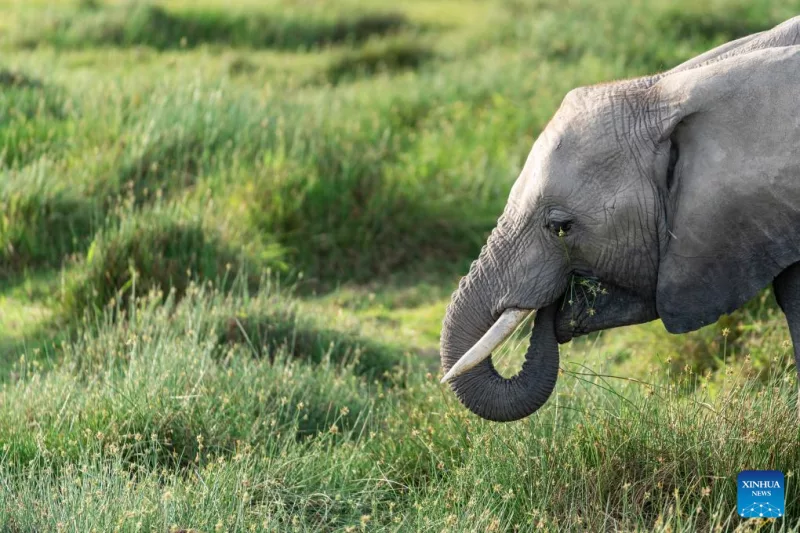
 An elephant forages at the Amboseli National Park in Kenya on January 8, 2026./ (Xinhua/Xie Jianfei)
A Sunday morning at a family homestead in Meru turned tragic when a stray elephant attacked and fatally injured a 51-year-old man, renewing concerns over the growing threat of human-wildlife conflict in the region.
Gerald Kinoti was attacked at his father's home in Kiangawa Village, Murinya Sublocation, Ntugi Location, Buuri East Sub-County, Meru County.
Police said Kinoti's son was asleep when he was awakened by neighbours screaming as they chased the elephant from the family compound.
He rushed outside and found his father lying unconscious with a deep wound on the upper part of his left arm that was bleeding heavily.
Neighbours helped rush the injured man to hospital, but he succumbed to his injuries while on the way.
Kenya Wildlife Service (KWS) officers and police responded to the scene after the incident was reported.
The area was documented before the body was moved to Othoo Mortuary, where it is awaiting a post-mortem examination. Police said investigations into the incident are ongoing.
The latest fatality is the newest reminder of the persistent human-wildlife conflict in parts of Meru County bordering wildlife habitats, where stray elephants occasionally wander into villages, endangering residents and damaging property.
The family has been advised to file for compensation under the government's human-wildlife conflict compensation programme.
In May 2025, Kenya launched the third phase of the Human-Wildlife Conflict Compensation Programme during an event at Meru National Park, where President William Ruto also unveiled the Wildlife Conservation Card to support conservation efforts.
"Compensation is justice, but prevention is progress," Ruto said during the launch, adding that the government was pursuing measures such as fencing, community-led tourism and the conservation card to reduce conflicts between people and wildlife.
Developed in partnership with KCB Bank, the Wildlife Conservation Card comes in three tiers—Platinum (Elephant), Gold (Lion) and Silver (Cheetah)—with a portion of every transaction channelled to the Wildlife Conservation Trust Fund.
The initiative is intended to support wildlife conservation while helping communities living near wildlife habitats and promoting safer coexistence between people and animals.