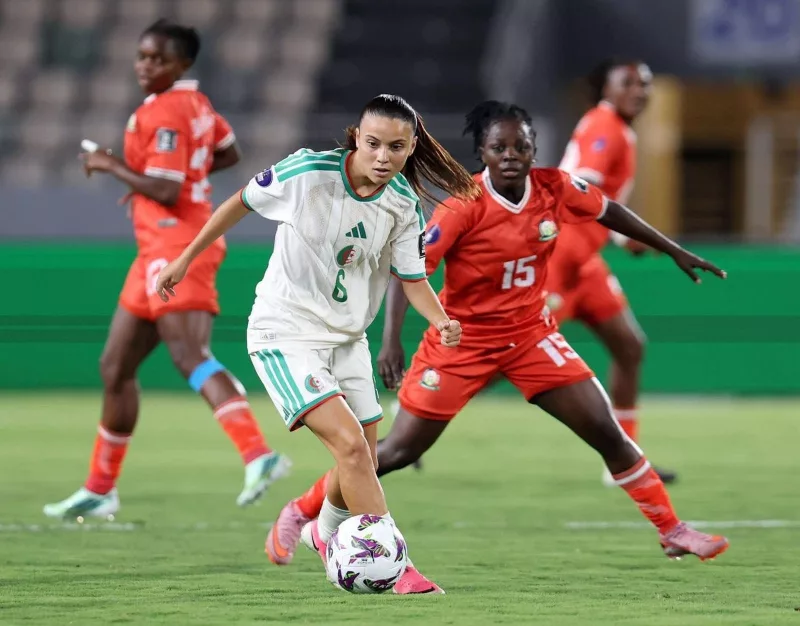
 Harambee Starlets' forward Valerie Nekesa in action against Algeria at the 2026 Wafcon match in Morocco on Monday night/ HANDOUT
Coach Beldine Odemba believes Harambee Starlets have returned from the Women’s Africa Cup of Nations (Wafcon) with a clear understanding of what it will take to compete consistently against Africa’s leading teams.
Kenya’s long-awaited return to the continental showpiece ended without a point after a 2-0 defeat to Algeria at the Olympic Stadium in Rabat on Monday. The loss completed a difficult Group A campaign in which the Starlets also fell 4-0 to hosts Morocco and 1-0 to Senegal.
Despite the disappointing results, Odemba said the tournament has provided valuable lessons that will shape the team’s future.
“We had hoped to perform better today and throughout the tournament. We have picked valuable lessons, particularly in our tactical approach and preparation. We have also learnt the importance of converting the chances we create,” Odemba said.
“Although we had good preparations, including participating in the Fifa Series, playing more international friendly matches would have made a difference.”
Kenya finished bottom of Group A without a point, scoring no goals and conceding seven. Morocco topped the group with seven points after two wins and a draw, while Algeria secured the second automatic qualification place with six points. Senegal collected four points but missed out on the knockout stage.
The Starlets’ lack of cutting edge in attack emerged as the biggest concern throughout the tournament. Against Senegal, Kenya created several clear scoring opportunities, including one-on-one chances, but failed to convert before losing 1-0. They again threatened against Algeria but could not find the breakthrough.
Midfielder Violet Nanjala described the tournament as an eye-opener, saying it exposed the intensity, speed and tactical discipline required to compete at the highest level on the continent.
“The experience has shown us the level we need to reach. Playing against these teams has taught us a lot, and we now know what we must improve individually and collectively. We appreciate the support from Kenyans and will keep working to come back stronger,” Nanjala said.
Football Kenya Federation President Hussein Mohamed insisted the federation remains committed to strengthening the women’s programme despite the disappointing campaign.
“It has been 10 years since we last featured in the continent’s biggest women’s football competition. The most important thing is that we have gained valuable experience. It is disappointing that we did not win a single match, but we will go back, correct our mistakes and plan well to build a stronger team for the future,” Hussein said.
While Kenya exited without a point, qualification itself marked progress after missing the previous four editions of the tournament. The Starlets booked their place in Morocco by edging Tunisia in the final qualification round to end a decade-long absence from Africa’s biggest women’s football competition.
Morocco 2026 also marked Odemba’s first major tournament as head coach, with the former international overseeing a squad that blended experienced players such as Esse Akida, Corazon Aquino and Elizabeth Wambui with emerging talents including Nanjala and Faith Mboya.
Although the statistics highlighted the gap between Kenya and the continent’s best, performances improved as the tournament progressed. After the heavy defeat to Morocco, the Starlets restricted Senegal to a solitary goal before producing their most competitive display against Algeria despite failing to score.
Odemba believes campaign has now given Kenya a benchmark as attention shifts to the 2027 Fifa Women’s World Cup qualifiers and the next Wafcon cycle.
She said the next step is clear: build a squad capable of competing consistently at continental level through more elite international friendlies, continued investment in the domestic women’s league and improved efficiency in front of goal.