Ten per cent.
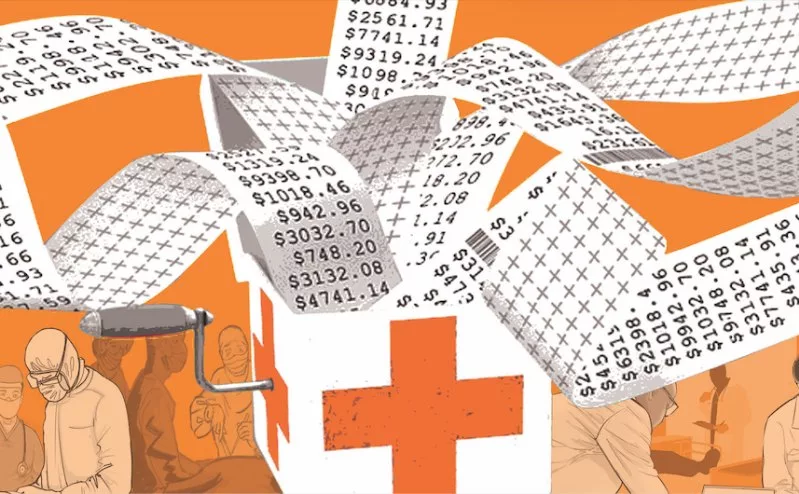
That is roughly what the surgeon’s professional fee represents on a typical Kenyan hospital bill, in my claims experience and that of colleagues across the surgical specialties. Where I operate, the implant that goes into a knee often costs more than the person who spent well over a decade training to put it there.
This is not a Kenyan peculiarity, only a Kenyan scale. A 2023 analysis of complex cancer surgery in Annals of Surgery Open found the American surgeon collected roughly nine cents of every dollar that changed hands. The pattern holds across health systems: the person who makes every consequential decision in a surgical episode is the smallest line on the invoice.
And yet, when a claim lands on an insurer’s desk in Nairobi, guess which line attracts the queries, the delays, and the after-the-fact rejections.
I am a surgeon, so you are entitled to discount all of this as special pleading. Do not take my word for it. Take the government’s, whose own documents set every figure I am about to describe.
The only frozen line on the bill
The surgeon’s fee is not merely small. It is the only line on the bill that is legally capped, by a fee schedule the government gazetted in 2016 using prices from 2015. It has never been revised.
Compound the inflation published by the national statistics bureau since then, and prices have risen roughly 75 per cent. Everything else on the bill repriced along the way. The implant repriced. The ward repriced. The consumables repriced. The doctor’s line could not, which means a surgeon paid at the schedule’s minimum today has absorbed a real-terms pay cut of more than 40 per cent, enforced by law.
So when your hospital bill doubles, the doctor is not where the growth came from. The doctor is the one line that mathematically could not grow. The government’s own gazette is the proof.
The ninety per cent problem
Now the perspective the insurance industry has not priced: the surgeon does not control the surgeon’s fee. The regulator does.
What the surgeon controls is everything else. Indication and case selection. Length of stay. Implant choice, which alone can dwarf the professional fee on the same invoice. Complication rates and readmissions. Whether a suspicious lump is biopsied properly the first time or becomes a six-admission catastrophe.
Every shilling of friction an insurer spends fighting the ten per cent buys adversarial behaviour on the ninety.
Your best fraud detector is the person being fought
Are there doctors who pad bills? Yes, and that is precisely why transparent, itemised billing serves insurers, patients and honest clinicians alike. But nobody spots a padded implant invoice, a phantom consumable, or a procedure billed but never done faster than the surgeon who was actually in the theatre with you.
Clinicians are the cheapest audit layer a payer has, and the only person on your bill whose interests naturally align with yours. An industry at war with its surgeons has blinded its own best fraud detectors, then hired actuaries to squint at the damage.
Meanwhile, scarce subspecialists quietly drift off insurance panels, or out of the country. Kenya has only a handful of orthopaedic oncologists in active practice, and fee structures will decide whether that number grows or disappears.
And if you are reading this thinking it is a quarrel among the insured minority, consider where a departing specialist goes. Not to another panel. Beyond the reach of the public hospitals too, where most Kenyans depend on finding them.
The state, through SHA, is now the country’s largest payer, running this same arithmetic at national scale. When the fee war hollows out the surgical workforce, the patient who pays the highest price is not the one holding a private insurance card. It is the one holding nothing.
Harmony is the cheaper operating model
The surgical community has put a concrete alternative on the table. Itemise every bill so the professional fee is visible rather than buried in a package, something every patient should demand anyway. Pay what was agreed before surgery, on time, even while the rest of the bill is checked. And revise, at last, a fee schedule so outdated that honest arithmetic now puts its fair minimums above its own legal maximums; we have invited the insurers to petition the regulator with us.
Everything on that list gives insurers what they say they want: predictability, auditability and a smaller contested balance. It gives patients shorter waits and honest bills. It costs nobody anything except opacity.
So the question, for the industry and for every Kenyan reading this, is simple. The ten per cent is capped, visible and legally arbitrable. The ninety per cent is governed by the judgement of the people being fought. Which one is the better investment?
The ninety per cent is written by the same pen that signs your discharge summary.
Stop fighting the hand that holds it.