Travellers could soon be shielded from sudden and arbitrary fare increases if Parliament approves a proposed law that would empower the National Transport and Safety Authority (NTSA) to regulate public service vehicle (PSV) fares.
The proposed National Transport and Safety Authority (Amendment) Bill, 2023, which was debated at the National Assembly during its Second Reading on Wednesday, seeks to introduce a legal framework for setting minimum and maximum fares payable by passengers across the country.
If enacted, the legislation would mark a significant shift from the current free-market system that has allowed operators to adjust fares without government oversight.
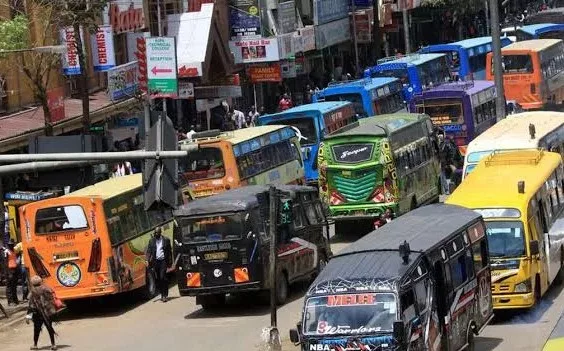
For years, Kenya's matatu industry, a largely informal network of privately owned minibuses, has operated without fare controls.
Commuters have frequently borne the brunt of fare increases during rainy weather, rush hours, festive seasons such as Christmas and Easter, and following fuel price adjustments.
In many cases, fares increase immediately after fuel prices rise but rarely come down when fuel costs decline.
The Bill, sponsored by Kimilili MP Didmus Barasa, seeks to amend the National Transport and Safety Authority Act, No. 33 of 2012, by introducing policy guidelines that will govern how fares charged by public service vehicles are determined.
Under the proposed changes, the Cabinet Secretary responsible for transport, in consultation with NTSA, would be empowered to make regulations prescribing the maximum and minimum fares that operators can charge passengers.
The regulations would also establish a framework for periodic fare reviews to ensure that charges remain fair and reasonable for both commuters and transport operators.
The proposed law would further require PSV operators to display fare tables and timetables prominently for passengers to see, while giving NTSA the mandate to validate and approve fares.
This would provide commuters with a formal avenue to report operators who charge unauthorised fares.
"The problem in this country is that PSVs can charge any amount of money they want because they are not regulated," Barasa told the National Assembly while moving the Bill during its Second Reading.
Supporters of the legislation argue that Kenya has lagged behind many other countries in regulating public transport fares.
According to the Bill's sponsor, countries including Tanzania, Rwanda, Ghana, Ivory Coast, Senegal, Cameroon, Zambia and Nigeria have systems where governments or transport authorities oversee fare setting.
Beyond Africa, nations such as Germany and Fiji also regulate public transport fares through established policy frameworks.
Tigania West MP John Mutunga backed the proposal, saying passengers deserve protection from arbitrary fare increases. He noted that while fares often rise whenever fuel prices increase, operators rarely reduce charges when pump prices fall.
"We have seen cases where fuel prices increase and fare goes up, but when fuel decreases, fare does not come down. Matatus can't be allowed to change fares as they want," Mutunga told the House.
If passed, the legislation would represent one of the most significant reforms in Kenya's public transport sector in decades.
Previous attempts to regulate matatu fares have failed. In 2018, Parliament rejected a proposal by the Ministry of Transport to amend the Traffic Act to give the Cabinet Secretary powers over PSV fares.
A similar proposal also failed in 2020 after opposition from the Matatu Owners Association.
However, the proposed reforms have already sparked debate within the transport sector.
While commuters have long called for fare regulation to protect them from exploitation, operators warn that price controls could threaten the viability of the industry if implemented without corresponding government support.
The Matatu Owners Association maintains that operators are heavily affected by fluctuations in fuel prices, inflation, insurance premiums, spare parts and taxation.
The association argues that imposing fare controls without subsidies or tax relief would make it difficult for operators to remain profitable.
Officials from the Ministry of Transport have also cautioned that any fare regulation framework must be informed by comprehensive economic and operational studies to ensure routes remain commercially viable and that operators are able to sustain services without disrupting the country's transport network.