President William Ruto has acknowledged that Kenya is falling short of the ambitions set under Vision 2030, saying the country's long-term development blueprint is approaching its horizon and the time has come to chart a new national vision.
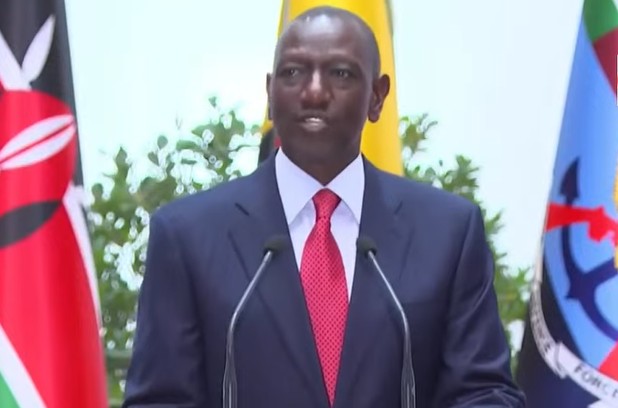
Speaking during a Special National Address on Thursday, the President said Vision 2030 had guided Kenya's development agenda for nearly two decades but admitted that several of its key aspirations remain unfulfilled.
"The second reason why this is our moment is because our current roadmap is approaching its destination. Vision 2030 has brought us this far, but it is approaching its horizon," Ruto said.
The President described Vision 2030 as a transformative blueprint that changed how Kenya approached national development by providing a common direction for investment, public policy and long-term planning.
"It has served Kenya well. It transformed the way we think about national development, provided a common direction, inspired investment, guided public policy and demonstrated the power of long-term planning," he said.
Despite its achievements, Ruto conceded that the country has fallen behind on several of the targets envisioned when the blueprint was launched.
"But honesty also requires us to acknowledge that many of its ambitions remain unattained. In several respects, we are still falling short even of the very standards we set out for ourselves," he said.
The President specifically pointed to the goal of making Kenya an upper-middle-income economy by 2030, saying the country remains far from attaining that milestone.
"Vision 2030 set a target of Kenya becoming an upper-middle-income country by 2030. So far we are not anywhere near that target," he said.
Ruto, however, said the shortcomings should not be interpreted as a failure of Vision 2030 but rather as an opportunity for the country to evaluate its progress and prepare for the next phase of development.
"This is not a criticism of Vision 2030. Nor is it a reason for disappointment. Rather, it is an opportunity to proudly learn from our successes, reflect with honesty on where we have fallen short, and define, together, Kenya's next long-term vision," he said.
He said the government intends to spearhead the development of a new national development charter anchored on the 2010 Constitution to succeed Vision 2030.
According to the President, the proposed charter will not be another government plan but a people-driven framework designed to translate constitutional aspirations into measurable development outcomes that endure beyond political administrations.
Ruto announced that the formal national conversation on Kenya's future beyond Vision 2030 will begin on August 12, 2026, bringing together citizens, professionals, faith leaders, businesses, civil society and other stakeholders to shape the country's next long-term development agenda.