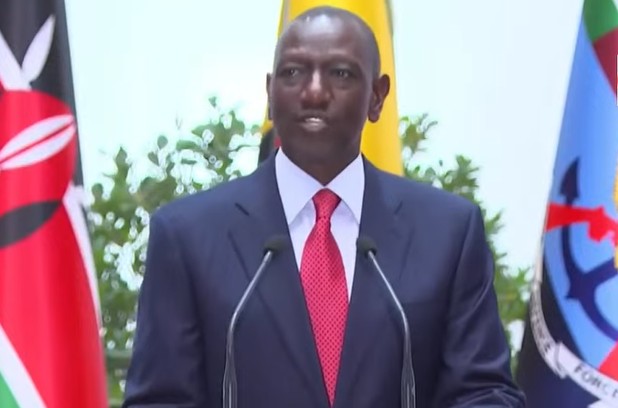
President William Ruto has said Kenya is entering a potentially historic period of economic transformation, citing improved macroeconomic stability and Africa's growing position in the global economy as reasons the country must prepare for its next development phase.
In his special State of the Nation address, Ruto said Kenya had laid a stronger economic foundation over the past four years and was now better positioned to take advantage of emerging opportunities.
"I believe we are on the threshold of one such historic moment," Ruto said.
He identified four reasons why he believes Kenya is entering a defining period, beginning with the restoration of economic stability.
Ruto said the government had stabilised the currency, rebuilt foreign exchange reserves to more than $15 billion, equivalent to 6.5 months of import cover, and reduced inflation and borrowing costs.
"Because we have restored stability, rebuilt investor confidence and laid a firm foundation for our economy, now is the perfect opportunity for Kenya to begin shaping the next phase of our national development," he said.
The President said investor confidence had also improved, with Kenya attracting a record $3.2 billion in foreign direct investment last year, more than double the amount recorded in 2022.
He further cited Kenya's position in the 2025 IMD World Competitiveness Ranking, which he said placed the country as Africa's most competitive economy.
Ruto said the government had also established institutions intended to support long-term development, including the National Infrastructure Fund and a sovereign wealth fund.
"These institutions represent more than new opportunities. They embody a philosophy of nation building that lasting prosperity is built through institutions that outlive governments," he said.
The second factor, he said, was the approaching end of Vision 2030, which provides an opportunity to develop a new long-term national development framework.
The President also identified Africa's economic potential as the third major reason for optimism.
"The next great wave of economic transformation will, I believe, be African," he said.
He pointed to Africa's rapidly growing population, renewable energy potential, agricultural resources and increasing interest from global investors as factors that could position the continent at the centre of the next phase of global economic growth.
"Nine of the world's fastest-growing economies are in Africa, and by 2050, one in every four people on Earth will be African," Ruto said.
He said Kenya had missed opportunities presented by previous global economic transformation waves, but now had the chance to benefit from what he described as a once-in-a-generation opening.
The President urged Kenyans to look beyond immediate political and economic pressures and begin preparing for the country's long-term future.
"While we may not have taken full advantage of the previous three great waves of global transformation, we have a historic moment and a once-in-a-lifetime opportunity," he said.