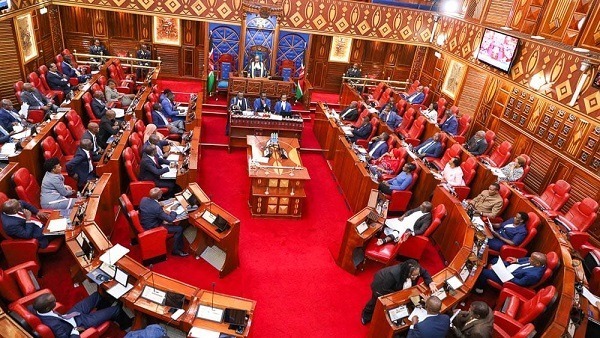
The Senate has resolved to seek direct access to county governments' Integrated Financial Management Information System (IFMIS) reports, arguing that timely financial information is critical to effective oversight of devolved funds.
In a unanimous vote on Wednesday, senators adopted a motion sponsored by Busia Senator Okiya Omtatah directing the National Treasury Cabinet Secretary to submit monthly IFMIS transactions and reports for all 47 county governments to the Clerk of the Senate for distribution to individual senators.
Speaker Amason Kingi put the question before the House, with members unanimously approving the resolution.
The motion is aimed at enhancing transparency and accountability in county governments by giving senators regular access to expenditure data instead of waiting for annual audit reports.
Omtatah said the Senate's constitutional mandate cannot be fully discharged without access to real-time financial information.
"Senators are constrained by lack of access to real-time data from the IFMIS system for the respective counties they represent, thus affecting effective oversight of county governments," the motion states.
It cites Article 96 of the Constitution, which mandates the Senate to represent counties, protect their interests and oversee national revenue allocated to county governments.
The motion also references a 2022 Supreme Court ruling that affirmed the Senate's oversight authority extends to both nationally allocated and locally generated county revenue.
Senators argued that reports from the Auditor General and the Controller of Budget often reach Parliament long after expenditure has occurred, making it difficult to detect irregularities in good time.
According to the motion, the delays have contributed to growing pending bills, unplanned spending, inflated project costs and weak financial accountability in several county governments.
Under the resolution, the National Treasury CS will be required to submit monthly IFMIS transaction reports for every county to the Clerk of the Senate, who will then transmit them to the respective senators for oversight purposes.
Supporters of the proposal said regular access to the reports would allow lawmakers to identify questionable expenditure early, seek explanations from county executives and strengthen accountability over billions of shillings allocated to devolved units annually.
They argued that improved access to financial data would also complement reports prepared by the Auditor-General and the Controller of Budget, enabling senators to exercise more informed oversight.
Although Senate resolutions are not laws, the House expressed confidence that the Treasury would implement the directive in the interest of promoting transparency, accountability and prudent management of public resources.
The move comes amid persistent concerns over rising pending bills, audit queries and financial management challenges facing several county governments, with senators insisting that greater access to financial information is key to improving governance under devolution.