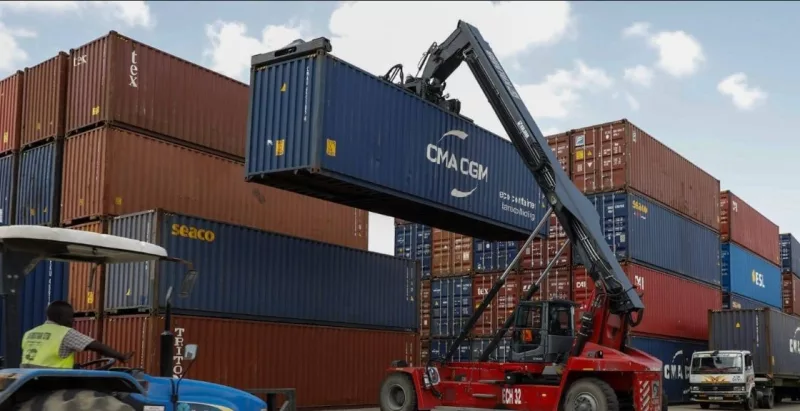
 Cargo being offloaded at the Port/FILE
The Kenya Revenue Authority (KRA) and importers have agreed on a raft of measures aimed at easing concerns over the recently introduced benchmark customs values, offering temporary relief to traders while maintaining tax compliance.
The agreement, reached during a joint meeting on July 20 involving the Kenya National Chamber of Commerce and Industry (KNCCI), consolidators, clearing agents and other stakeholders, seeks to provide certainty for businesses following protests over the new import valuation system.
Under the agreement, the current benchmark customs value of Sh2.5 million for consolidated cargo will remain in force until August 20, 2026, giving traders time to adjust before a revised benchmark takes effect.
A new benchmark value of Sh3.2 million will come into effect on August 21, with the agreed price remaining unchanged for two years to provide predictability in business planning.
In a major concession to traders, KRA has also agreed to waive all storage charges that accumulated after the benchmark customs directive issued on July 9, reducing the financial burden on importers whose goods remained at ports because of the dispute.
The agreement follows a petition by KNCCI, consolidators and clearing agents challenging the Internal Customs Administrative Directive prescribing benchmark customs values, commonly referred to as the "minimum yield", citing its legal, economic and trade facilitation implications.
To address concerns over tax assessments, the parties agreed that any consolidator who believes their cargo should attract lower taxes will have the option of requesting verification and valuation by customs officials.
KRA also committed to engaging traders on benchmark values for other categories of low-value goods as consultations continue.
At the same time, importers were reminded of their obligation to pay their fair share of taxes to support government revenue collection while ensuring a level playing field for compliant businesses.
The agreement also requires cargo consolidators to focus on serving micro, small and medium-sized enterprises (MSMEs) instead of facilitating imports for large businesses that should be importing directly and paying the appropriate taxes.
Additionally, consolidators pledged to strengthen compliance measures and support Customs in improving border control and tax enforcement.
KNCCI described the resolutions as a step towards creating a more predictable, fair and supportive business environment while balancing the need for efficient revenue collection.
Importers have been advised to take advantage of the temporary benchmark rate and the waiver of storage charges by clearing all cargo currently held at ports of entry before August 20, when the revised benchmark customs value takes effect.
The agreement is expected to ease tensions between tax authorities and the business community while providing KRA with a structured framework for implementing customs valuation reforms without disrupting trade and cargo clearance.