Political leaders have intensified efforts to consolidate support in their traditional political strongholds as realignments gather pace ahead of the 2027 General Election.
The renewed grassroots campaigns are widely viewed as an attempt by politicians to safeguard their regional influence while laying the foundation for stronger national campaigns.
From Mt Kenya to Western Kenya, Rift Valley, Eastern and Nyanza, leaders are increasingly focusing their attention on areas that hold millions of registered voters and could determine the outcome of the next presidential contest.
The distribution of registered voters across the country is expected to shape political strategies, with leaders investing heavily in protecting their traditional bases while attempting to make inroads into regions controlled by their rivals.
Political analyst Joseph Mutua said the size of the voter register often determines the level of attention a region receives from both the ruling coalition and the opposition.
“Leaders are increasingly focusing on consolidating support in their strongholds before attempting to make inroads into rival territories, recognising that a solid home base provides a critical foundation for any national campaign,” Mutua said.
He noted that while national coalitions and alliances will remain important, success at the ballot will largely depend on a candidate’s ability to maximise voter turnout in their traditional support zones while weakening their opponents’ influence in key battleground areas.
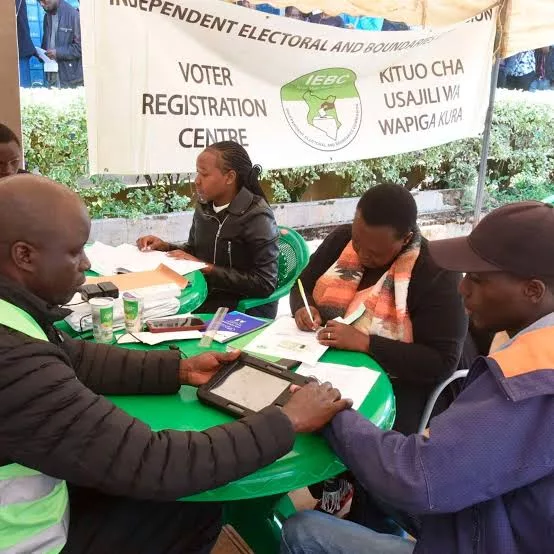
The Independent Electoral and Boundaries Commission (IEBC) certified 22,120,458 registered voters for the 2022 General Election, a figure that is expected to rise significantly ahead of the 2027 polls.
The electoral agency projects the number of registered voters to grow to about 28.4 million by 2027, increasing the importance of regions with large voting populations.
Mt Kenya remains the largest voter bloc among the regions likely to shape the next election.
The region had about 5.8 million registered voters in 2022, with the current figure standing at approximately 6.3 million. The number is projected to rise to 7.4 million by 2027.
The region has become a key political battleground following the fallout between President William Ruto and former Deputy President Rigathi Gachagua. Gachagua has intensified engagements across Mt Kenya, seeking to maintain his influence in an area that overwhelmingly backed Ruto in the 2022 election.
The former Deputy President has been holding meetings with local leaders and residents as he seeks to reinforce his support base and counter efforts by Kenya Kwanza to retain its influence in the region.
Western Kenya has also emerged as a crucial battleground, with the number of registered voters rising from 2.62 million in 2022 to about 2.92 million currently. IEBC projections indicate the figure could reach 3.36 million by 2027.
Nairobi Senator Edwin Sifuna has stepped up political activities in Western Kenya through rallies and grassroots engagements, positioning himself as one of the emerging opposition figures seeking to expand his national profile.
His supporters view the activities as the beginning of a broader political mobilisation ahead of the 2027 elections, with the senator urging residents to remain united behind his political journey.
In Luo Nyanza, another traditional opposition stronghold, registered voters stood at about 2.2 million in 2022 and have since grown to approximately 2.41 million. The number is projected to reach 2.78 million by 2027.
ODM leaders allied to the broad-based government have intensified mobilisation efforts in the region, seeking to ensure Luo Nyanza remains supportive of President William Ruto’s administration.
Former Interior Cabinet Secretary Fred Matiang’i has also increased consultations and public engagements in the Kisii-Nyanza region amid speculation over his potential role in the 2027 political contest.
The Rift Valley, Ruto’s political backyard, remains another critical battleground. The region had about 2.15 million registered voters in 2022, with the current figure standing at 2.43 million. IEBC projections show the number could rise to 3.13 million by 2027.
Ruto has repeatedly urged residents of the Rift Valley to register as voters and participate in large numbers in the next election, describing the region as the foundation of his re-election strategy.
During public rallies, the President has called on eligible voters, particularly young people, to participate in voter registration exercises and ensure a strong turnout in 2027.
Eastern Kenya, traditionally associated with Wiper leader Kalonzo Musyoka, is also expected to be heavily contested. Musyoka has increased his presence in the region, urging residents to remain united behind the opposition while strengthening his political base.