


The media has been challenged to strengthen their understanding of devolution and constitutional governance to improve the quality, accuracy and balance of reporting on county governments.
The call was made during the Senior Editors' Forum on Devolution, organised by Katiba Institute at Enashipai Resort in Naivasha on July 25.
The forum brought together editors, representatives from the Council of Governors (CoG), Katiba Institute leadership and other governance stakeholders to examine the media's role in promoting informed public discourse on devolution.
A recurring message throughout the discussions was that journalism should help citizens understand not only the successes and failures of county governments, but also the constitutional framework that defines the responsibilities of both the national and county governments.
Speaking on behalf of the Council of Governors Chief Executive Officer Mary Mwiti, CoG Director of Legal Irene Ogamba said devolution, now 13 years since its implementation, remains one of Kenya's most significant constitutional reforms and deserves informed, objective and balanced reporting.
"Devolution remains one of the best reforms Kenya has encountered," Ogamba said, urging editors to ensure their reporting reflects both achievements and challenges facing county governments.
She noted that inaccurate attribution of responsibility has often distorted public understanding of service delivery, especially in sectors where functions are shared or divided between the two levels of government.
"There is need to tell accurate and balanced stories on devolution," she said.
Ogamba challenged journalists to develop a deeper understanding of which functions fall under county governments and which remain the responsibility of the national government.
She cited referral hospitals as an example, noting that while counties manage primary and secondary healthcare, national referral hospitals remain under the national government.
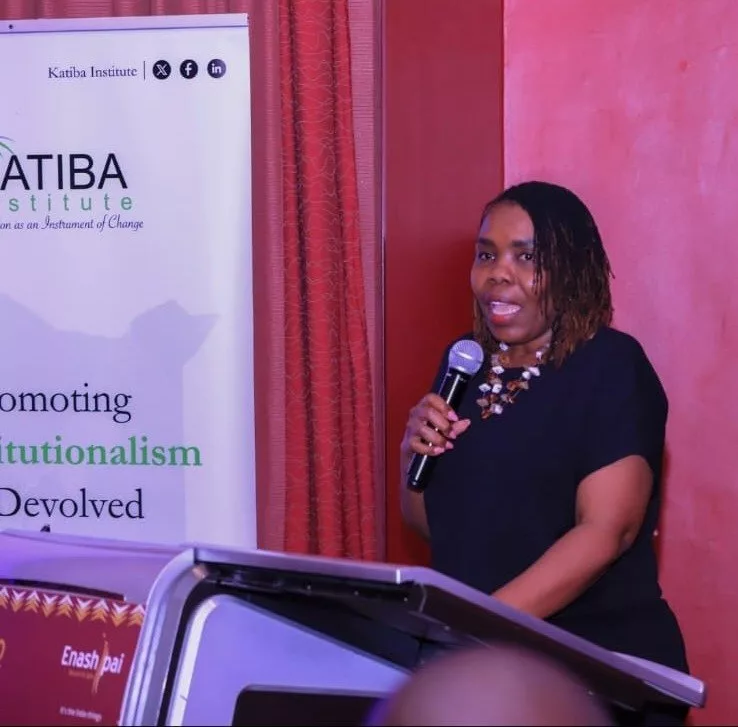
She said such distinctions are essential in ensuring citizens receive accurate information whenever service delivery problems arise.
According to Ogamba, stories highlighting delays in health services at county facilities should also interrogate whether counties have received their equitable share of revenue from the National Treasury.
She said delayed disbursement of funds has often affected counties' ability to deliver essential services, yet this context is sometimes missing from media coverage.
"Stories of delayed health services at county level should be accompanied with stories of delayed release of monies by the national government," she said.
She observed that county governments are frequently blamed for failures arising from factors beyond their direct control.
"Many times, responsibility is wrongly attributed to county governments," she said.
Ogamba encouraged editors to broaden the scope of devolution reporting beyond politics and leadership contests.
Instead, she said, journalists should focus on how counties are driving economic transformation, improving livelihoods and delivering essential public services at the grassroots.
"Devolution should not just be reported as a political function. It should also be reported as a pillar of national economic development emanating from the grassroots," she said.
She identified healthcare, road infrastructure, agriculture and development in Arid and Semi-Arid Lands (ASALs) as among the sectors requiring sustained and in-depth media attention.
Ogamba also encouraged journalists to highlight positive examples where counties are delivering results.
"Where counties perform well, report the same," she said.
She pointed editors to the Council of Governors' Maarifa Centre, which documents innovations and best practices implemented across counties, saying it provides valuable material for evidence-based reporting on successful county initiatives.
She further called on journalists to strengthen fact-checking and public interest journalism when covering devolution issues.
"Report objectively on devolution," she urged.
Ogamba stressed that the success of devolution should not be left to county governments alone.
Instead, she said, all institutions—including the media, civil society, Parliament and the national government—have a shared responsibility to safeguard and strengthen the devolved system of governance envisioned under the Constitution.
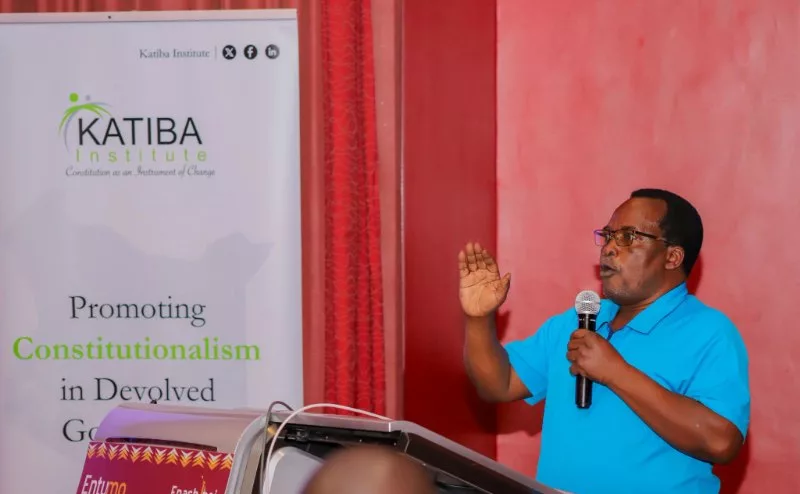
Katiba Institute Executive Director Nora Mbagathi said the media remains a critical partner in protecting Kenya's constitutional order and ensuring the promises of devolution are realised.
She called for stronger collaboration between civil society organisations, government institutions and journalists to promote accountability and constitutional implementation.
"There is need for close collaboration between civil society, media and government to ensure devolution succeeds," Mbagathi said.
She said the Constitution envisioned an informed public that actively participates in governance, making the media's watchdog role more important than ever.
Mbagathi noted that the country is gradually moving closer to another election cycle, a period that traditionally generates heightened political activity and increased public scrutiny of county governments.
"There will be many issues as elections approach," she observed.
She encouraged editors to maintain focus on constitutional principles rather than political rhetoric, saying public interest journalism will be vital in helping citizens distinguish between political narratives and constitutional obligations.
Katiba Institute's Dr Henry Paul Gichana, who spoke on the constitutional design of devolution, challenged journalists to deepen their understanding of the legal foundations of Kenya's devolved system.
His presentation focused on the need for proper understanding of the Constitution's design for devolution.
He said accurate reporting begins with understanding why devolution was established and the constitutional principles that guide its implementation.
"There is need for a proper understanding of Kenya's constitutional design for devolution," he said.
Gichana urged editors to continuously build their knowledge of constitutional governance so that reporting remains factual and legally accurate.
He also called for accuracy in reporting, noting that misunderstandings about constitutional mandates can easily mislead the public and undermine informed debate.
Katiba Institute Litigation Counsel Joshua Malidzo expanded the discussion by introducing editors to the concept of transformative constitutionalism and its relevance to devolved governance.
He said constitutional journalism goes beyond reporting court decisions or legal disputes.
Instead, he argued, journalists should evaluate every exercise of public power against constitutional standards.
"Constitutional reporting is not confined to covering court judgments or legal disputes," Malidzo said.
"It is an approach to journalism that evaluates every exercise of public power against the Constitution. It asks not simply what government has done, but whether government has acted constitutionally."
He said such an approach would help strengthen accountability while enabling citizens to better understand whether public institutions are acting within the law.
Throughout the forum, participants agreed that improving public understanding of devolution requires journalism that is factual, contextual and grounded in the Constitution.
Editors were encouraged to move beyond event-based political reporting and instead invest in explanatory stories that help citizens understand the division of functions, financing of county governments, constitutional responsibilities and the impact of devolution on everyday lives.
Kenya Correspondents Association Programmes Manager Oloo Janak urged editors to embrace a more contextual and historically informed approach when covering devolution, saying accurate reporting requires an appreciation of the constitutional journey that culminated in Kenya's devolved system of governance.
Drawing from Kenya's constitutional history, he traced the push for devolution from the Lancaster constitutional talks, the Majimbo system of the early 1960s, its subsequent collapse and the re-centralisation of power that followed until the promulgation of the Constitution of Kenya 2010.
He said decades of centralised governance contributed to social, economic and political inequalities, making devolution a central pillar of constitutional reforms.
Janak encouraged journalists to frame governance stories within their constitutional context while upholding editorial responsibility, accuracy, balance, fact-checking and public interest journalism.
Janak also challenged newsrooms to adopt a more progressive assessment of devolution by reporting not only governance failures but also the long-term gains and successful initiatives emerging from counties.
He cautioned against relying on unofficial or unreliable sources when reporting on devolved governance and urged journalists to invest more in research using credible resources from government agencies, academia and independent researchers.






