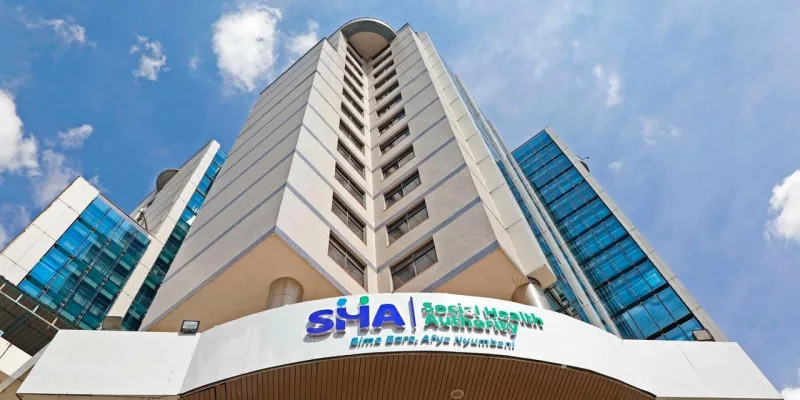
 SHA buidling /FILE
Many people know what an emergency is in general terms, but fewer can tell exactly which medical conditions require an immediate ambulance response.
As Kenya prepares to launch its first National Ambulance Dispatch Centre (NADC), the Social Health Authority (SHA) is urging the public to familiarise themselves with life-threatening conditions that require urgent medical intervention to help save lives.
In a public awareness message released ahead of the rollout, SHA said the emergency evacuation package will cover critical conditions including heart attacks, strokes, severe accidents or major trauma, pregnancy complications, heavy bleeding, seizures, difficulty in breathing and loss of consciousness.
The authority accompanied the advisory with the message: "Recognize an emergency. Respond immediately. Save lives," as it stepped up public education before the launch of the country's new coordinated emergency response system.
"What counts as an emergency? The package covers life-threatening conditions, including but not limited to: Heart attacks, strokes, severe accidents or major trauma, pregnancy complications, heavy bleeding, seizures, difficulty breathing and loss of consciousness," SHA stated.
The campaign comes as the government puts final touches on the National Ambulance Dispatch Centre, which will coordinate emergency medical evacuations across Kenya through a central command system operating around the clock.
Located at SHA headquarters in Nairobi, the facility will receive emergency calls, identify the nearest available ambulance and coordinate rapid deployment to patients requiring urgent medical attention.
SHA recently said preparations for the centre's launch were in the final stages.
"The countdown is on. Final preparations are in full swing for the National Ambulance Dispatch Centre, bringing Kenya closer to faster, coordinated emergency medical response," the authority said.
Health officials say recognising genuine medical emergencies is expected to play a critical role in ensuring the new system responds quickly to those whose lives are most at risk.
The emergency package focuses on life-threatening conditions where rapid medical intervention can significantly improve survival and recovery.
The package also covers pregnancy-related emergencies, uncontrolled bleeding, seizures, breathing difficulties and cases where a person loses consciousness.
The new dispatch centre is expected to link ambulance operators from public, private, faith-based and mission hospitals under one coordinated national emergency response network.
President William Ruto, while announcing the project during the 85th St John's Ambulance Annual Parade at State House in June, said the facility would modernise emergency medical response by using technology to coordinate ambulance deployment in real time.
"Kenya will launch its first National Ambulance Dispatch Centre, which is scheduled to be launched at the end of July," the President said.
He said the centre would coordinate about 100,000 emergency evacuations every year through real-time deployment of ambulances across the country.
"Every Kenyan who requires emergency evacuation will get it free of charge," Ruto said.
SHA has already accredited more than 100 ambulances after compliance assessments as part of preparations for the rollout, with more providers expected to join the national network to improve coverage in all counties.
The authority has also completed recruitment and training of dispatch personnel and is conducting simulation drills to test operational readiness before the official launch.
Healthcare providers with ambulance services have also undergone training on dispatch coordination, clinical standards, operational procedures, documentation and reimbursement requirements to enable seamless integration into the system.
The National Ambulance Dispatch Centre forms part of broader reforms under the Social Health Authority aimed at strengthening emergency healthcare and improving equitable access to life-saving medical services.