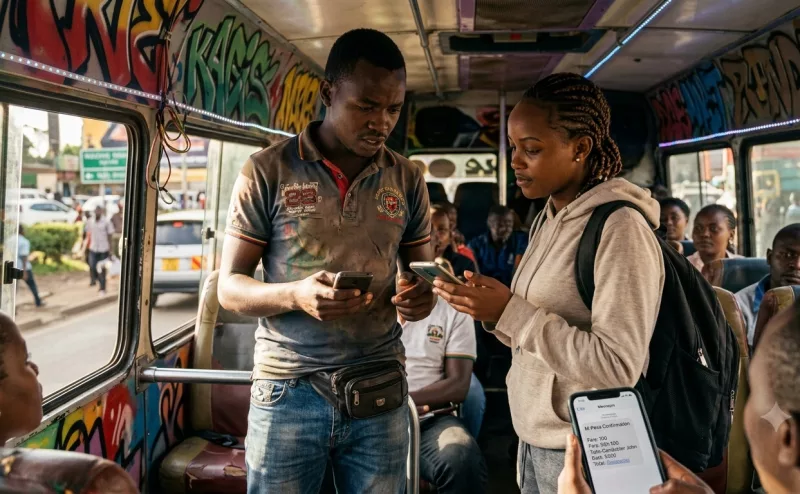
Matatu operators have raised concerns over what they describe as a growing trend of passengers allegedly editing M-Pesa payment messages to avoid paying the full fare, saying the practice is costing conductors and vehicle owners thousands of shillings.
Speaking in a video circulating on social media, one matatu operator claimed that some university students have mastered the trick of sending a small amount before editing the confirmation message to make it appear as though they paid the correct fare.
Advertisement
Advertisement
According to the operator, the practice has become one of the many challenges facing the public transport sector.
The operator said conductors often discover the deception long after passengers have alighted, leaving them to bear the financial loss.
"Tunateta juu ya wanafunzi wa university. Gari inabeba 70, unapata ametuma 7 bob. Gari inabeba mia, anakutumia 10 bob ama 1 bob, anaedit message."
Advertisement
Advertisement
M-Pesa payment // ai
He explained that because conductors are often serving many passengers at the same time, it is not always easy to verify every transaction immediately.
By the time they reconcile the day's collections, the money is already missing.
"At the end of the day conductor akifika hapa unapata siku mzima amepoteza kama elfu mbili, kuja kugundua amekuwa akitumiwa hewa."
Growing challenges for matatu operators
The driver noted that the alleged fake payment messages have added to the daily challenges already facing the matatu industry.
He said operating public service vehicles has become increasingly difficult compared to previous years.
"Matatu iko na challenge nyingi sana. Sio kama ya kitambo, siku hizi ni ngumu."
His remarks have sparked discussion online, with some Kenyans calling on passengers to pay honestly while others urged matatu crews to verify payments before allowing commuters to board or alight.
Social media reactions
The video attracted hundreds of reactions, with many users sharing suggestions on how matatu crews can protect themselves from fraudulent transactions.
One user, Indo, advised conductors to stop relying on passengers' phones.
"Tuliwaambia confirm message from your phone, not client phone."
Nya Ugenya linked the issue to a payment verification system introduced by one matatu company.
"Nowonder Super Metro introduced that prompting thing."
Echoing the same sentiment, Antolene Mwaura 🇰🇪 commented:
"Itabidi muanze kujifundisha kutuprompt sasa."
Some users proposed more drastic measures.
Kifaru suggested:
"Solution is kataa lipa na M-Pesa."
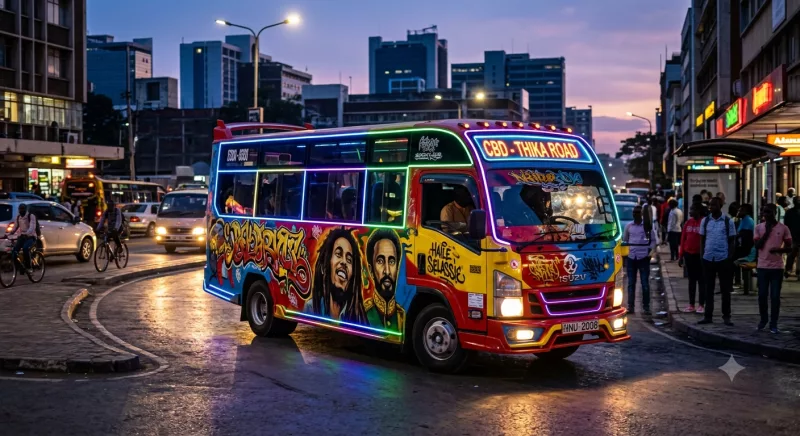
matatu // ai
Others pointed out practical challenges with verifying transactions.
Kibiego asked:
"Sasa kama gari iko Nairobi pesa inatumwa Keroka... message unaconfirm aje?" 😂
Meanwhile, Serari advised crews to have a dedicated phone for receiving payments.
"Tembea na simu ya kupokea."
Debate over the future of matatu culture
The concerns come amid ongoing discussions about Nairobi's matatu industry.
Recently, Lang'ata MP Phelix Odiwuor (Jalang'o) pledged to challenge a court ruling restricting graffiti and tinted windows on matatus, saying he would personally finance an appeal.
"Ng'anya culture is here to stay. We're heading back to court, and I will personally cover all legal fees," he said.
Jalang'o described the matatu industry as an important part of Nairobi's identity and economy.
"This is an industry that drives Nairobi. People travel from all over just to experience matatu culture—the art, the music, the energy. It's more than transport; it's part of who we are."
His remarks highlighted the broader challenges facing the public transport sector, with operators balancing regulatory changes alongside emerging issues such as digital payment fraud.