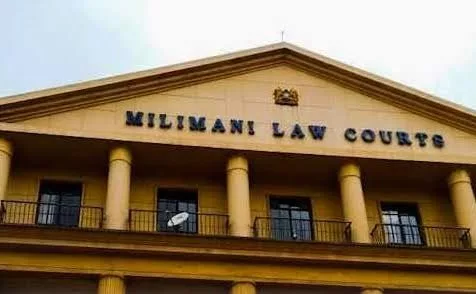
The High Court has temporarily stopped the government from implementing an executive order that wants the Independent Policing Oversight Authority (IPOA) placed under the Ministry of Interior and National Administration.
Justice David Mburu on Tuesday issued conservatory orders suspending implementation of the plan until a petition filed in court is heard and determined.
Petitioner Jonathan Obwogi has challenged the legality of Executive Order No. 2 of 2023, which sought to reorganise government structures by moving IPOA into the same ministry that oversees the police.
IPOA is the civilian oversight body for the National Police Service. It was established to investigate police misconduct, monitor police operations and promote accountability within the service.
The petition challenged the President’s power to restructure government and whether that authority extends to institutions expected to operate independently.
The court is expected to determine whether the executive order undermines the constitutional independence of IPOA.
In granting the order, the court noted that all
respondents had been properly served but none had filed a response.
IPOA, which was named as the third respondent, appeared through its lawyer but did not oppose the interim relief.
Justice Mburu therefore allowed the application.
The conservatory order prevents the Interior Ministry, the Cabinet Secretary, their agents, representatives or anyone acting on their behalf from implementing or enforcing provisions of the order pending the hearing and final determination of the petition.
The respondents were ordered to file and serve their responses within seven days. The matter is scheduled for mention on September 21.
The Executive Order No. 2 of 2023 contained other directives including a proposal to transfer custody of the Public Seal from the Office of the Attorney General to Head of Public Service.
Under Section 28 of the Office of the Attorney General
Act, custody of the Public Seal is expressly assigned to the Attorney General,
who serves as the government’s principal legal adviser.
Katiba Institute filed a petition challenging the transfer, arguing that it violated the separation of powers and undermined the independence of the Attorney General’s office.
The High Court later issued a conservatory order stopping implementation of the order, saying the matter raised fundamental constitutional and legal questions of public importance.
Another directive allowed specific presidential advisers, including David Ndii, and Harriette Chiggai to attend Cabinet meetings.
Critics argued that the move amounted to an unconstitutional expansion of the Cabinet composition.
However, the High Court dismissed a petition challenging the directive, ruling that the Constitution does not prevent the President from inviting experts or advisers to Cabinet meetings when necessary.
The court found that their attendance did not make them formal Cabinet members and noted that the petitioner had failed to provide evidence showing that they had been permanently included in Cabinet.
The executive order also expanded the mandate of the Head of Public Service to oversee the administration of all state corporations and established public entities.
Legal watchdogs expressed concern that the move could centralise oversight powers and bypass existing constitutional and statutory mechanisms.