 Environment CS Deborah Barasa in the Senate/ HANDOUT
Environment CS Deborah Barasa has lifted the lid on the government's large-scale crackdown on industrial pollution, unsafe e-waste handling and toxic dumping.
Read Also
The CS disclosed that the National Environment Management Authority (Nema) has shut down hundreds of illegal pollution sources and ordered companies to clean up polluted rivers.
Barasa told the Senate on Wednesday that the agency has strengthened enforcement against polluters.
Nema is using inspections, restoration orders, prosecutions and stricter regulations to protect public health.
"The government remains firmly committed to protecting all Kenyans from the harmful effects of industrial pollution, hazardous waste and toxic exposure.
"We will continue to enforce our laws with vigour and ensure every Kenyan enjoys the constitutional right to a clean and healthy environment," Barasa said.
The CS was responding to a question by nominated Senator Hamida Kibwana on measures to stop industrial pollution, unsafe e-waste disposal and toxic dumping.
Barasa said Nema has increased inspections nationwide, focusing on pollution hotspots and industries that discharge untreated waste.
In the 2024-25 financial year, Nema inspected 101 facilities in the Nairobi Metropolitan area. It ordered firms found discharging illegal effluent to stop immediately and comply with environmental standards.
The campaign has since expanded to the Athi-Galana-Sabaki River Basin.
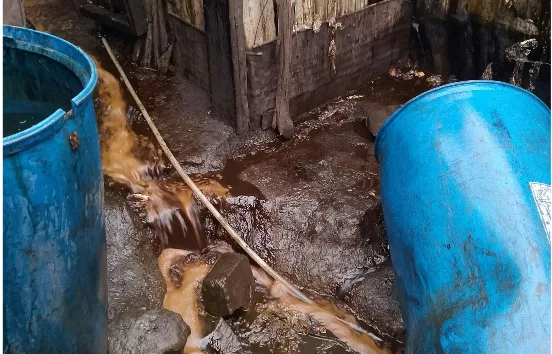
During the 2025-26 financial year, Nema identified and shut down 405 illegal discharge points, exceeding its target of 400.
The ministry has also tightened environmental audits.
High-risk industries are required to submit annual reports demonstrating compliance with environmental laws.
The number of audits reviewed rose from 6,673 in 2024-25 to 9,798 in 2025-26.
Operators who failed to comply received improvement orders.
Nema also carried out special audits in hospitals, mining sites, agrochemical firms, renewable energy projects and asbestos disposal facilities.
The crackdown has also targeted companies whose products end up polluting the environment.
Barasa said 296 producers have been compelled to clean up rivers under the Extended Producer Responsibility (EPR) framework.
The companies received Environmental Restoration Orders covering the Nairobi, Ngong, Mathare, Kandisi and Kirichwa rivers.
She said Nema has changed its enforcement strategy.
Instead of ordering individual companies to carry out clean-up activities, it now requires Producer Responsibility Organisations (PROs) to ensure all their members comply with waste management regulations.
To encourage waste collection, Nema has directed PROs to pay waste pickers, transporters and aggregators.
One organisation, HAPROK, has agreed to pay waste pickers Sh20 per kilogramme of hazardous waste collected.
Aggregators will earn Sh7.50 per kilogramme, while transporters will receive Sh15 per kilogramme.
The ministry said the payments will make waste collection a source of income and help reduce pollution.
Barasa admitted that illegal waste handling remains a serious challenge.
A nationwide assessment found that open burning of waste and informal e-waste recycling are major sources of toxic pollution.
The study found that workers and nearby communities are exposed to dangerous substances, including lead and mercury.
It also identified weak waste collection systems, limited recycling facilities and inadequate laboratory capacity to monitor pollution.
The assessment led to the development of a national e-waste inventory covering all 47 counties.
It also created a database on hazardous substances and mapped pollution hotspots.
Barasa said Kenya is adopting international best practices under the Basel, Stockholm and Minamata conventions.
The reforms include stricter waste management laws, intelligence-led inspections, stronger laboratories, digitised compliance systems and tougher penalties for polluters.
The government is also formalising the informal e-waste sector.
It plans to integrate waste handlers into licensed recycling systems and promote safer technologies.
Nema is strengthening cooperation with county governments, public health agencies and other regulators.
It is also using a national incident management system to respond quickly to pollution reports.
"In FY 2025/26, 12 incidents involving toxic chemical spills, leaks, fires and hazardous substances, including ammonia, chlorine and industrial solvents, were responded to and remain under active monitoring," Barasa told senators.
She said the reforms will strengthen pollution control, improve accountability and better protect public health and the environment.
INSTANT ANALYSIS
The government's tougher enforcement marks a shift from reactive to preventive environmental regulation.
Closing illegal discharge points, compelling producers to finance waste management and formalising the e-waste sector could significantly reduce pollution if enforcement remains consistent.
However, the findings also expose persistent gaps in recycling infrastructure, laboratory capacity and hazardous waste collection.
Success will depend on sustained funding, stronger coordination between national and county agencies, and strict compliance by industries whose activities continue to pose serious public health and environmental risks.