The Court of Appeal’s judgment on the Ruaraka land dispute settled long‑standing questions about who owns the land on which Ruaraka High School and Drive‑In Primary School sit.
It is public land. It affirms the Sh1.5 billion paid out for that land was unlawful. It clarifies the constitutional responsibilities of the National Land Commission.
And it reinforces a principle
that should never have been in doubt: public land cannot be disguised as
private property for purposes of compensation.
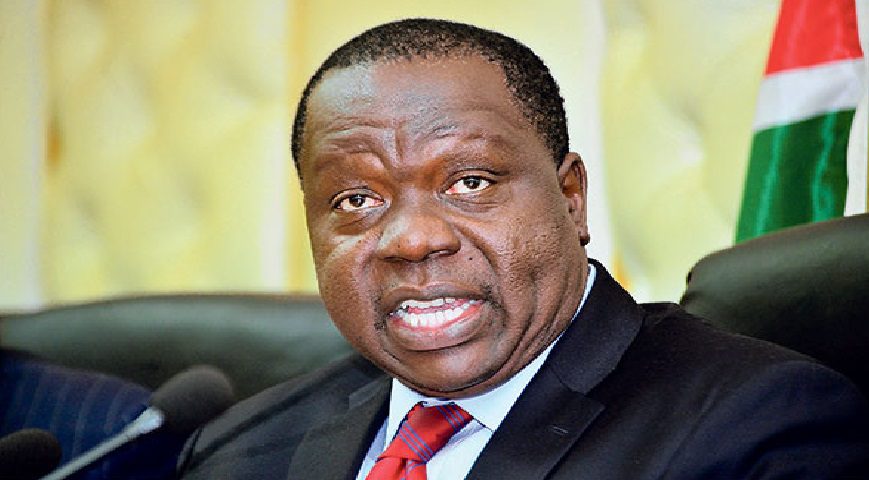
What the judgment does not do — despite the sweaty excitement of certain bloggers — is implicate former Education CS Fred Matiang’i in any wrongdoing.
Fact is, Matiang’i’s name does not appear anywhere in the ruling. Not once. Not even in passing. And in law, silence is not accidental — it is deliberate.
But if you relied on the breathless commentary online, you would think the Court of Appeal had delivered a personal indictment of the former Super CS.
You would think the judges spent 150 pages dissecting Matiang’i’s conduct. You would think the ruling was a political thunderbolt aimed at Nyamira’s most prominent son.
It wasn’t. And pretending otherwise is political theatre of the cheapest variety.
The judgment is about institutions, not personalities.
Anyone who has actually read the ruling — instead of inhaling the fumes of online propaganda — will see that the Court’s analysis revolves around the NLC’s decisions on compulsory acquisition and compensation. That is where the Court directed its attention.
The Ministry of Education’s role when Matiang’i was CS was procedural, not substantive. The schools fell under its mandate, so the ministry handled paperwork. But the heavy lifting — ownership determination, valuation, justification for compulsory acquisition and compensation — belonged to the NLC and other statutory agencies.
This has been known for years,
documented for years, litigated for years and has never changed.
Yet here we are again, watching regime bloggers try to drag Matiang’i into a matter the court itself did not touch. They avoided mentioning former Education PS Belio Kipsang.
They avoided mentioning former Treasury CS Kamau Thugge. They avoid mentioning the accounting officers who held statutory responsibilities. They avoid mentioning the NLC, even though the entire judgment is built around the commission’s decisions.
Why the selective amnesia? Because the goal is not truth — it is political mudslinging. Those behind the breathless blogging are trying to weaponise a legal ruling to smear a man they fear facing at the ballot. It is desperation disguised as analysis.
The irony is that the judgment reinforces what has always been true: the Ministry of Education did not make the substantive decisions.
The CS did not determine ownership. The He did not value the land. He did not recommend compensation. He also did not process payment. Those functions belong elsewhere — by design, by statuteand by the constitution.
This is why the judgment does not mention Matiang’i. This is why the court did not assign him responsibility. And this is why the bloggers’ attempts collapse under the weight of the actual record.
It is also worth recalling the advisory opinion issued years ago by then Attorney General Githu Muigai. That opinion spelled out the responsibilities of each institution involved. It confirmed — unequivocally — that the Ministry of Education’s role was procedural.
It confirmed that the NLC held the substantive mandate. It confirmed that the CS had no legal authority to determine ownership or compensation.
That opinion remains part of the legal architecture of the Ruaraka matter. But you will not hear regime bloggers mention it. It ruins the narrative.
The Ethics and Anti‑Corruption Commission has announced its intention to pursue recovery proceedings and, where evidence exists, criminal investigations.
That is proper. That is constitutional. And if those processes are conducted honestly, they will confirm what has long been known: as far as Matiang’i is concerned, the Ruaraka matter is a nothing‑burger.
He has said repeatedly that he welcomes an audit. He has said repeatedly that he has nothing to hide. And he knows — as the regime knows — that such scrutiny will find nothing.
In the end, the bloggers’ frenzy will change nothing. And the Ruaraka matter remains what it has always been: something that substantively had nothing to do with Matiang’i.