The team
appointed to rescue Moi University from the brink of collapse has told
Parliament that while it has stabilised the institution's academic operations,
the university remains weighed down by a crippling financial burden.
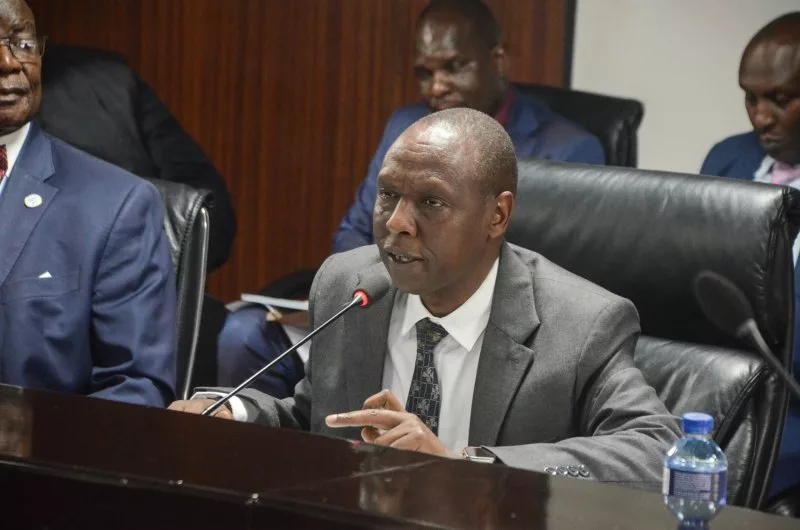
Appearing before the National Assembly Education Committee, the interim management team said significant progress has been made over the past year in restoring normalcy to learning after years of disruptions that had damaged the institution's reputation.
Led by the acting vice chancellor Prof Kiplagat Kotut and the University Council chairperson Prof Noah Midamba, the team said students are now undertaking regular academic programmes and graduation ceremonies have resumed on schedule.
“We have restored stability to the academic programmes, strengthened our governance system and resumed regular graduations,” Prof Midamba told MPs.
They also informed the committee chaired by Tinderet MP Julius Melly that persistent cases of missing examination marks, which had sparked widespread complaints from students, have largely been resolved.
"The reforms and the strategies so far undertaken have helped the university remain afloat amidst the prevailing challenges occasioned by limited resources," the Prof Kotut told the committee.
“I firmly believe that with your support, our university will be stable, sustainable and experience growth in its teaching, research and extension mandate, essential ingredients for our national development.”
Despite the gains, the team said the university continues to grapple with severe financial constraints that have hampered its ability to operate effectively. "The university is not able to meet its monthly financial obligations as and when they arise,” he said.
To address the wage bill, the management said it is pursuing a staff rationalisation programme aimed at ensuring the payroll matches the university's revenue streams.
The team maintained that downsizing remains one of the difficult but necessary measures required to place the institution on a sustainable financial footing.
To support the sustainability journey, Prof Kotut told MPs to intervene and financially support the institution to realise its master plan implementation.
“Financial support should be considered to the value of investment made by Moi University in Rivatex Africa Limite and the role played by the Moi University in increasing access to higher education in the country through establishment of 10 public universities,” Prof Kotut said.
“Fair value compensation for Rivatex East Africa Limited amounting to Sh2.8 billion to enable investment in School of Engineering, infrastructure and partly settle outstanding obligations.”
The VC also pleaded for additional payroll support of Sh1.9 billion in the 2026-27 financial year.
The varsity is also in dire need of Sh4.7 billion to fund commitments provided in the signed Return-To-Work-Formula that ended months of industrial action.
According to the university documents, Sh500 million will go towards payroll related deductions, Sh1.25 billion to cater for 2017-21 Collective Bargain Agreement and Sh3 billion for payment of unremitted loans and outstanding pension contributions.
Members also heard that the institution is carrying historical pending bills amounting to about Sh10 billion, placing enormous pressure on its day-to-day operations and limiting its capacity to settle obligations to suppliers and other creditors.
The rescue team said the financial challenges have also complicated efforts to meet other operational expenses, even as it works to return the university to financial sustainability.
Members of the committee commended the management for restoring stability to academic programmes but acknowledged that the university's financial recovery would require sustained government support and implementation of long-term reforms.
“The team have a clear duty to turn around that university. The confidence you have restored to students and public is commendable,” Melly said.
“The team has goodwill to bring the university back to life.”